300 East Broadway & Elm
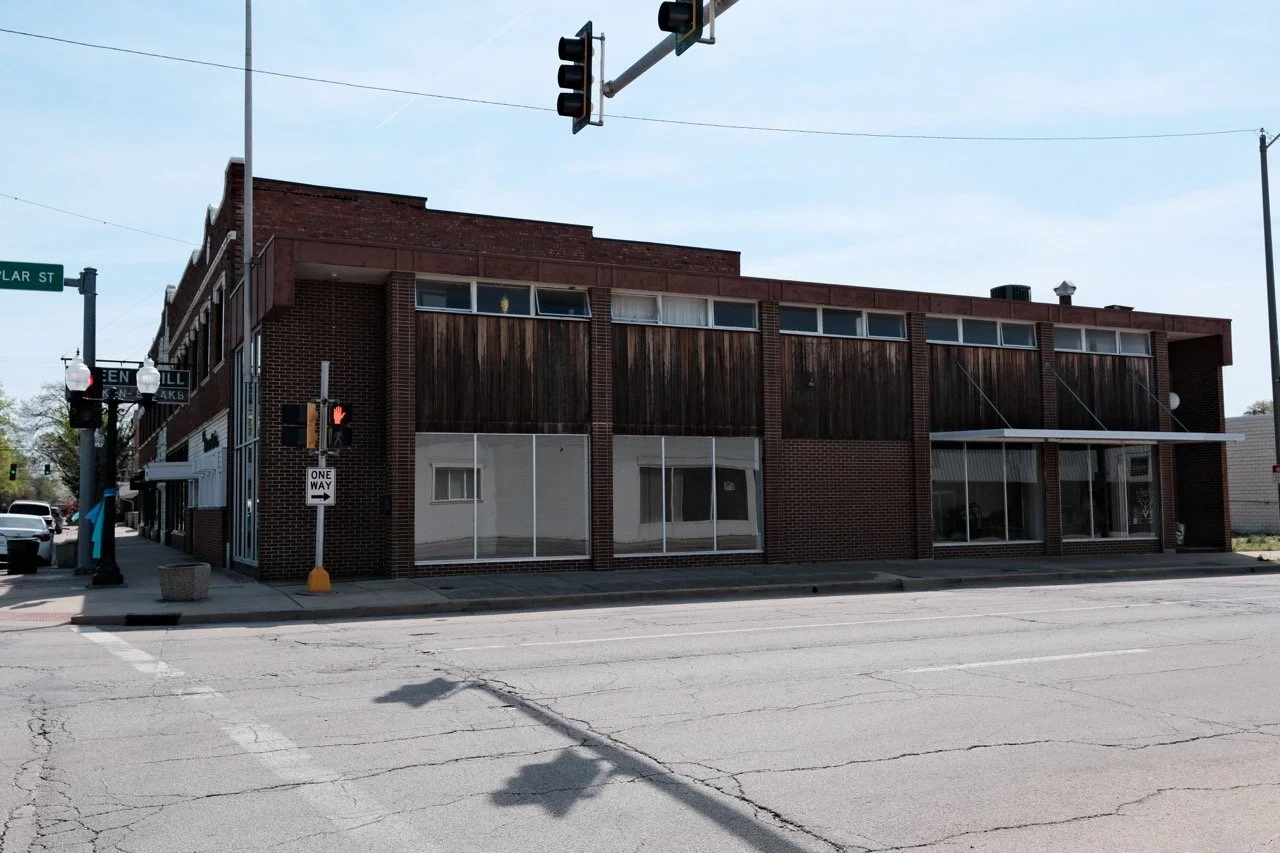
301 East Broadway/107 South Poplar, ca 1926
History of 301 East Broadway
1894 - Fred Heppert Meat Market (1894 City Directory)
1900 - O.C. Post general merchandise. Mrs. Thomas Warren (1900-02 City Directory)
1904 - Keller's Cash Market grocery (1904 City Directory)
1906 - Harry M. Bond, engine cleaner IC shops
Oscar J. Grimes, wife Maude l. porter Centralia House (Source: 1906-07 Centralia City Directory)
1909 - A. & H.A. Stevenson Groceries
1910 - White Building. (Archives; 1910 Centralia City Directory)
Simon Susman clothiers (Archives; 1910 Centralia City Directory)
1920 - Broeker Cigar & Tobacco Co., Christian F. Broeker proprietor (1920 Centralia City Directory)
1931 - Gordon Shoe Repair Shop
1938 - City Cab, owner Alrid Ray Bogard
Gordon's Shoe Shop, owner R.C. Gordon (Source: 1938 Centralia City Directory)
1988 - The Shopper’s Weekly Publications, owners John and Cathy Stuehmeier.
Architecture
Elements of the International Style inform this brick, wood & glass structure. Along Poplar Street, simple brick piers define five wide bays, while at either end of this façade, recessed entries define a narrow bay. At the ground level, the central bay is brick, with the remaining bays on either side being glass. The two bays on the right are protected by a wide, flat metal awning. The materials above the other windows indicate that a similar awning once protected those windows as well. All five bays are treated identically on the second floor; a ribbon of short windows is positioned just beneath the flat roof’s soffit, and the rest of each bay is sheathed in vertical wood siding. The Poplar Street entrance presents a light fixture consisting of a single large glass globe. The Broadway façade once presented a full wall of windows next to the recessed entry. The windows have been covered in wood, but a metal flagpole attached to the main façade and extending to a height of approximately 50 feet has been maintained.
303-319 East Broadway, ca 1926
The Commonwealth Shoppes and Apartments
History of 303 East Broadway
1910 - J.M. Ross Co. Florists, office. (Archives: 1910 Centralia City Directory)
Wynn Stout Insurance. (Archivest 1910 Centralia City Directory)
James C. Bowles, painter & paper banger (Archives; 1910 Centralia City Directory)
1920 - Centralia Electric Shoe Shop, John Meyer proprietor
James G. Gragg real estate and insurance office (1920 Centralia City Directory)
1932 - Centralia Cafe (Source: Sentinel Ad)
1934, April - opened, Green Grill
1938 - Green Grill Liquor Store (Source: 1938 Centralia City Directory)
History of 305 East Broadway
1894 - F. Spinner Bakery
1912 - City Dry Cleaning and Dyeing Works
1920 - Charles Leong laundry & residence
1922 - Roped F. Jones cleaning, pressing, dyeing and repairing
1931, Nov - Centralia Bowling Parlor
1983 - Orystal-Vanity Beauty Shoppe (Source: 1933 Centralia City Directory)
1938 - Orystal Beauty School, owner Mrs. C.E. Pounds (Source: 1938 Centralia City Directory)
1941 - Green Grill Restaurant, Fred W. Johnson prop. (Source: 1941 Centralia City Directory)
History of 307 East Broadway
1904 - F. Spinner Bakery (1904 City Directory)
1935 - Singer Sewing Machine Co. (Source: 1933 Centralia City Directory)
1937 - Darling Shop
1941 - Crystal Beauty Shop (Source: 1941 Centralia City Directory)
History of 309 East Broadway
1933 - Baldwin Piano Store (Source: 1933 Centralia City Directory)
1938 - Singer Sewing Centre (Source: 1938 Centralia City Directory)
1941 - Singer Sewing Machine Co. (Source: 1941 Centralia City Directory)
History of 313 East Broadway
1894 - S.R. Cothern store; 1. Loewenberg &. Co. store (1894 City Directory)
1904 - Frank Guymon harness & saddles. (1904 City Directory)
1920 - Samuel Woghin, wife Tillie, shoe repair & residence here. (Source: 1920 Centralia City Directory)
1932 - White Cleaners 8. Dyers, quality cleaning and right prices. Alterations and relining. Hats cleaned and blocked. (Source: 1932 CTHS Sphinx Yearbook)
History of 315 East Broadway
1892 - Centralia Dye Works (Source: Sentinel Business Ad)
1900-02 - Charles A. Woodward, Wall papec, decorating; H.E. Tenney pianos & organs. (1900-02 City Directory)
1906-07 - W.G. Conover Cleaning & Repairing; C.W- Williams painter, decorator; C.W. Walton, upholsterer (1906-07 City Directory)
1909 - Nieman & Son Pianos
1910 - Brown Printing Co. (1910 Centralia City Directory)
J.T. Robinson, tea, coffee
A.J. McClelland Storage Room
National Rebate Trading Stamp Co,
Neiman & Son (1910 Centralia City Directory)
1929, Sep - Victor Martin moved his paint shop from 313 E. Broadway to the Vass Building. Charles Humes moved his grocery from 315 E. Broadway to Vass Building. (Archives: 19290513242)
1933 - E.I. Ford Barber Shop (Source: 1933 Centralis City Directory)
1938 - Hudson Music Co., C.C. Hudson owner
North Radio Service, John North Jr. owner (Source: 1938 Centralia City Directory)
Architecture
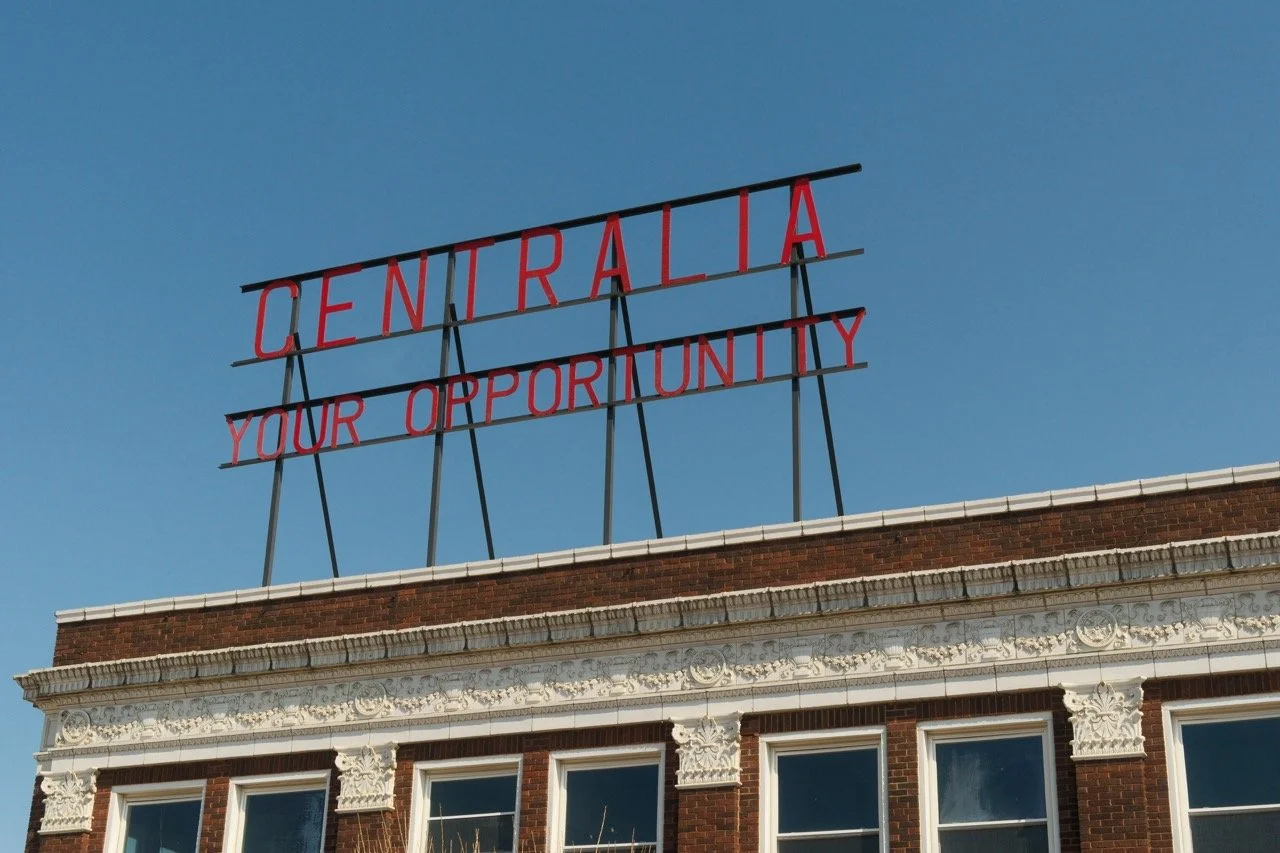
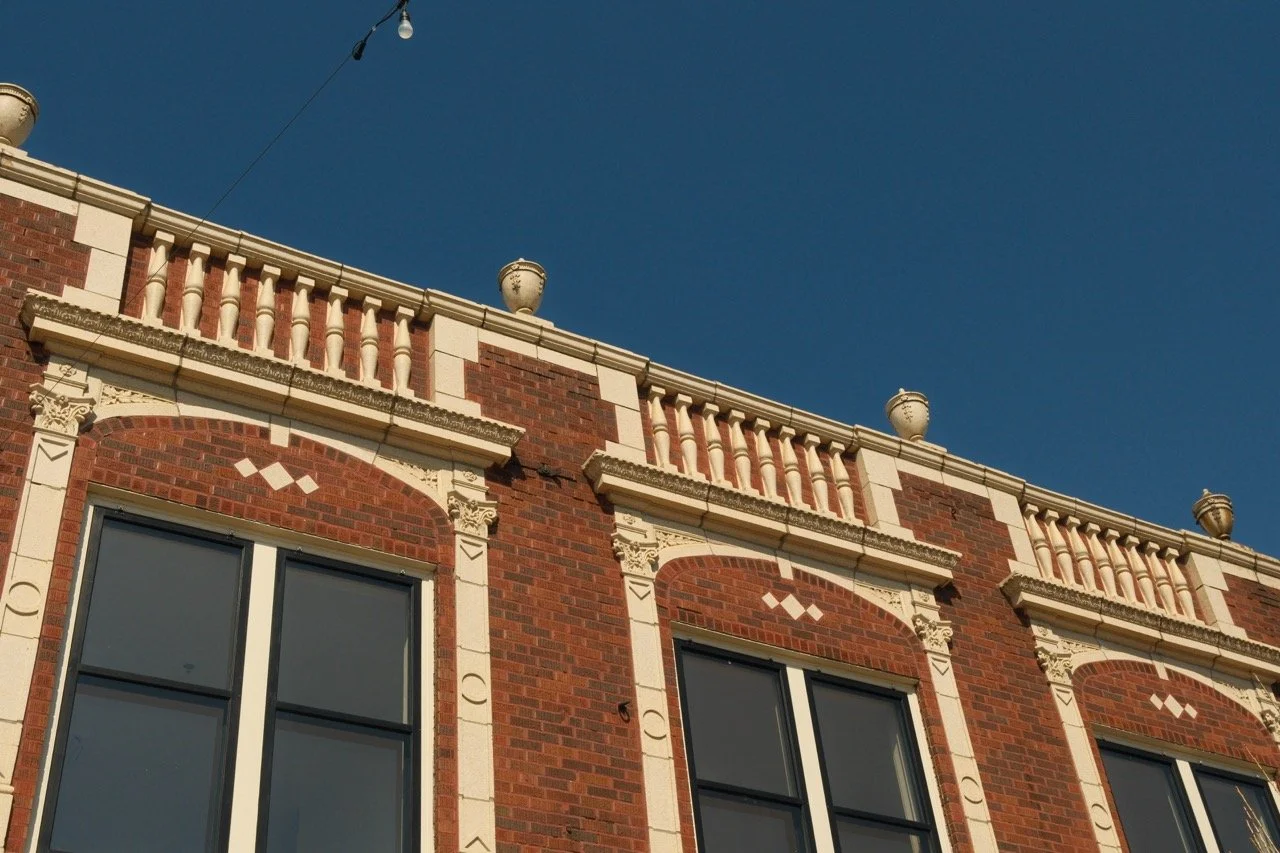
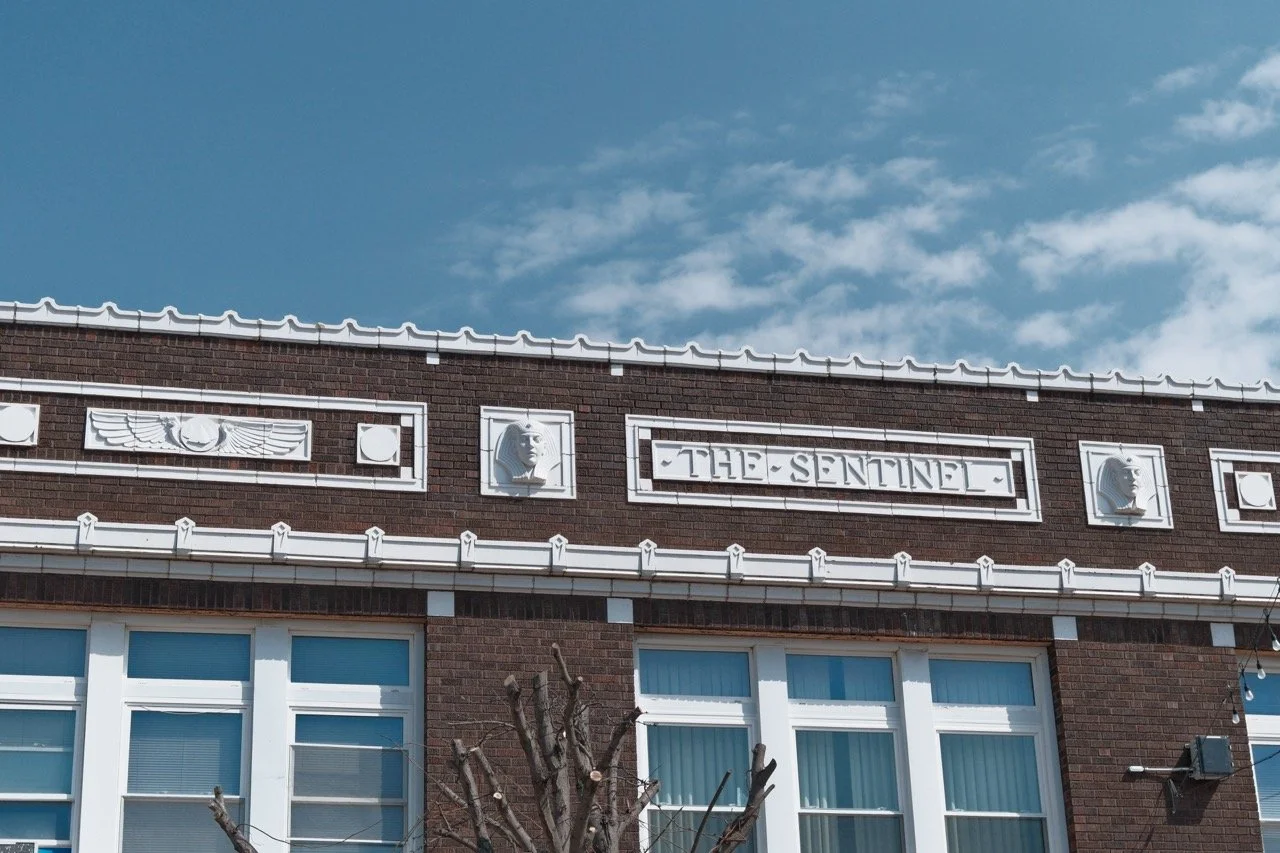
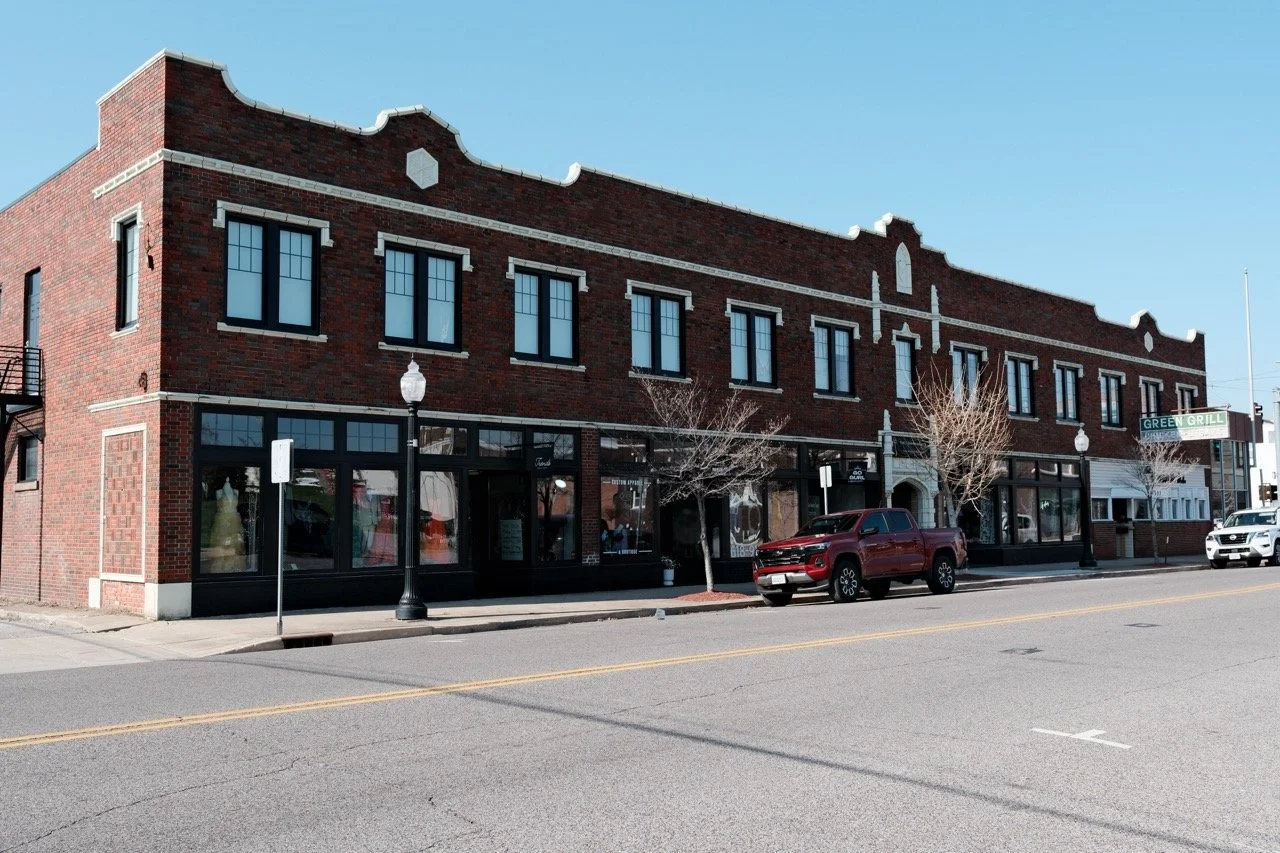
This half-block long brown brick building is designed in the popular Commercial Style of the early 20th century with terra cotta details that evoke the Collegiate Gothic Revival Style. The first floor presents a series of storefronts with a central entrance to the stair hall providing access to the second floor. Surrounding the recessed entry is a Tudor arch above which rises a panel of terra cotta framed by engaged angular Gothic spires. A string course of white terra cotta begins at the height of this panel and stretches across the building at the height of the lintels above the storefront windows and doors. The buildings' storefronts are variously finished with contemporary materials, including brick, plate glass, and metal.
The second floor divides into thirteen bays. The central bay, above the stair hall door, presents a single nine-over-one double hung window. On either side of this window, the remaining bays are evenly spaced across the façade, presenting a total of twelve pairs of windows. Each window grouping includes a narrow terra cotta sill and label molding. Above the windows at the roofline is another string course of terra cotta, intersected by a pair of engaged terra cotta spires on either side of the central bay. A tablet shaped like a Gothic arch surrounding a shield decorates the parapet above this bay. A six-sided rosette is positioned above the second set of windows from either end of the building, and the parapet rises above these rosettes and the central arch, finished with terra cotta coping and adding interest to the building's silhouette.
329 East Broadway, ca 1900, ca 1926
Apartments
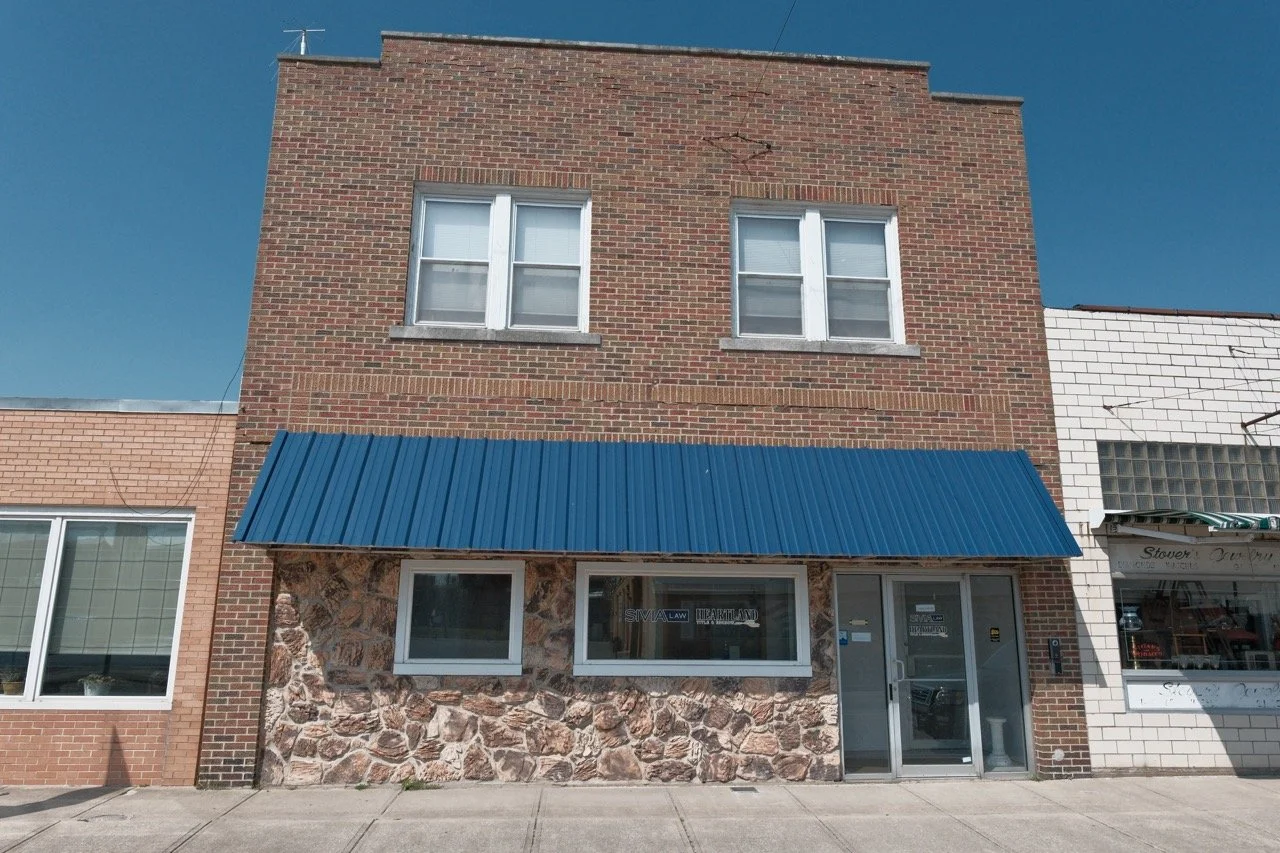
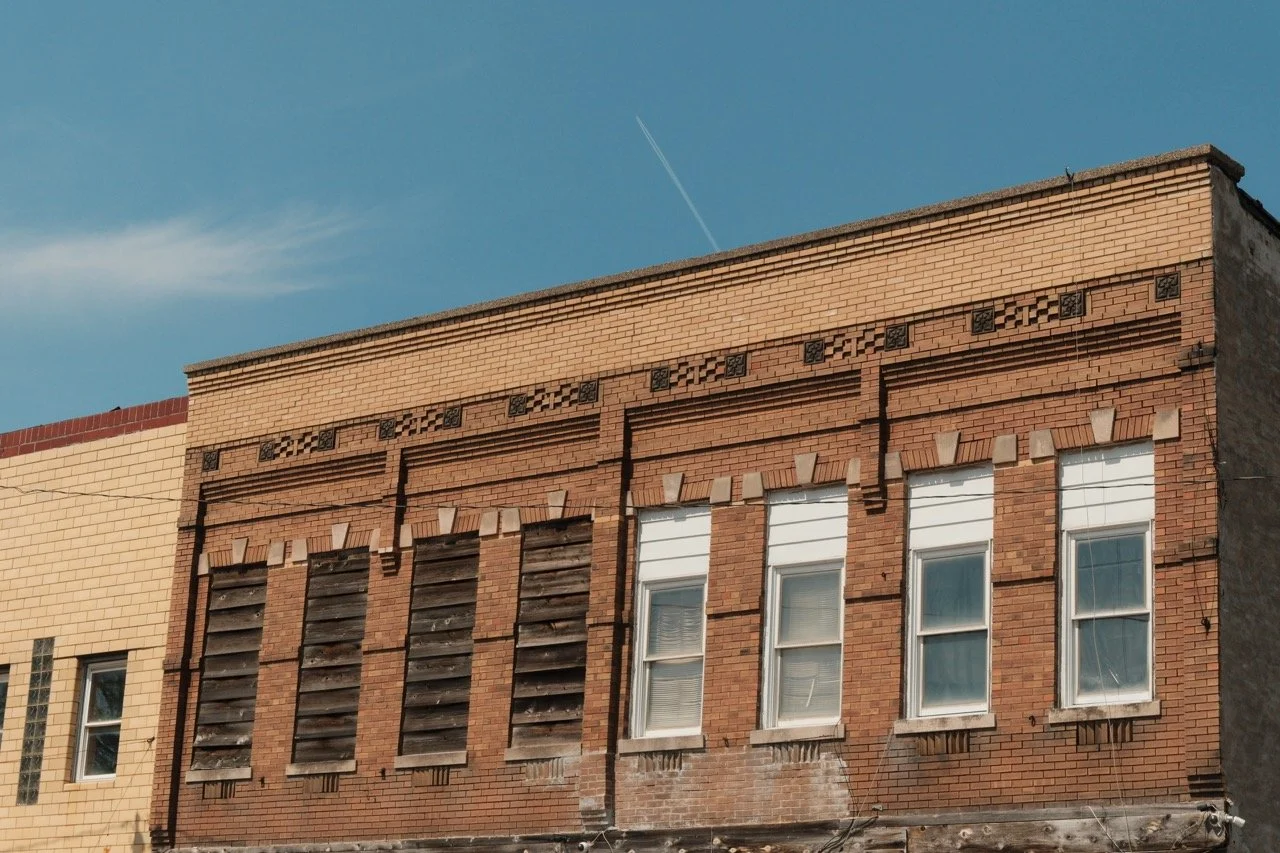
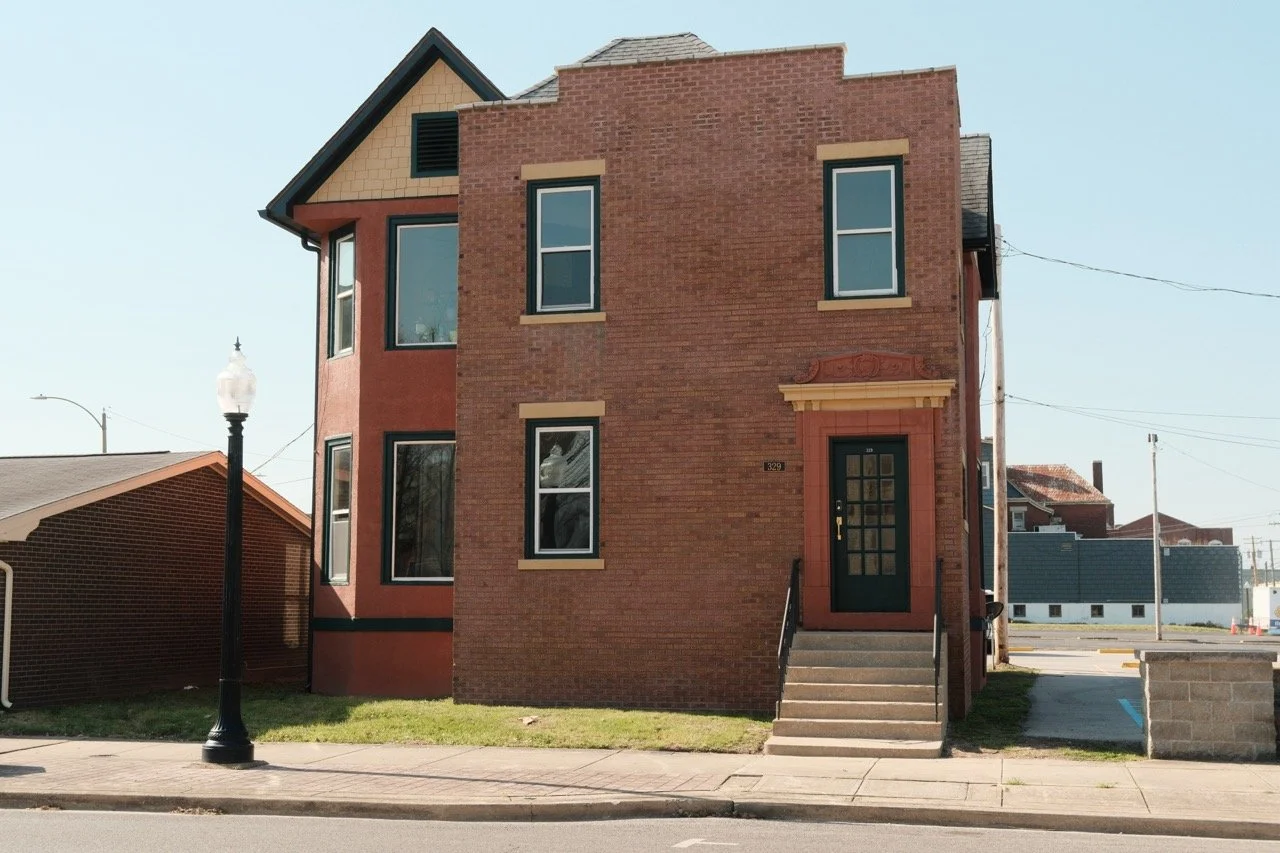
This two-story single family dwelling has a brick addition in the Commercial Style which changes the building’s appearance to that of an apartment building. Use of stone on lintels and sills, the simple surround for the main entry and coping for the parapet, which is slightly higher in the center than on the ends are all typical of the style.
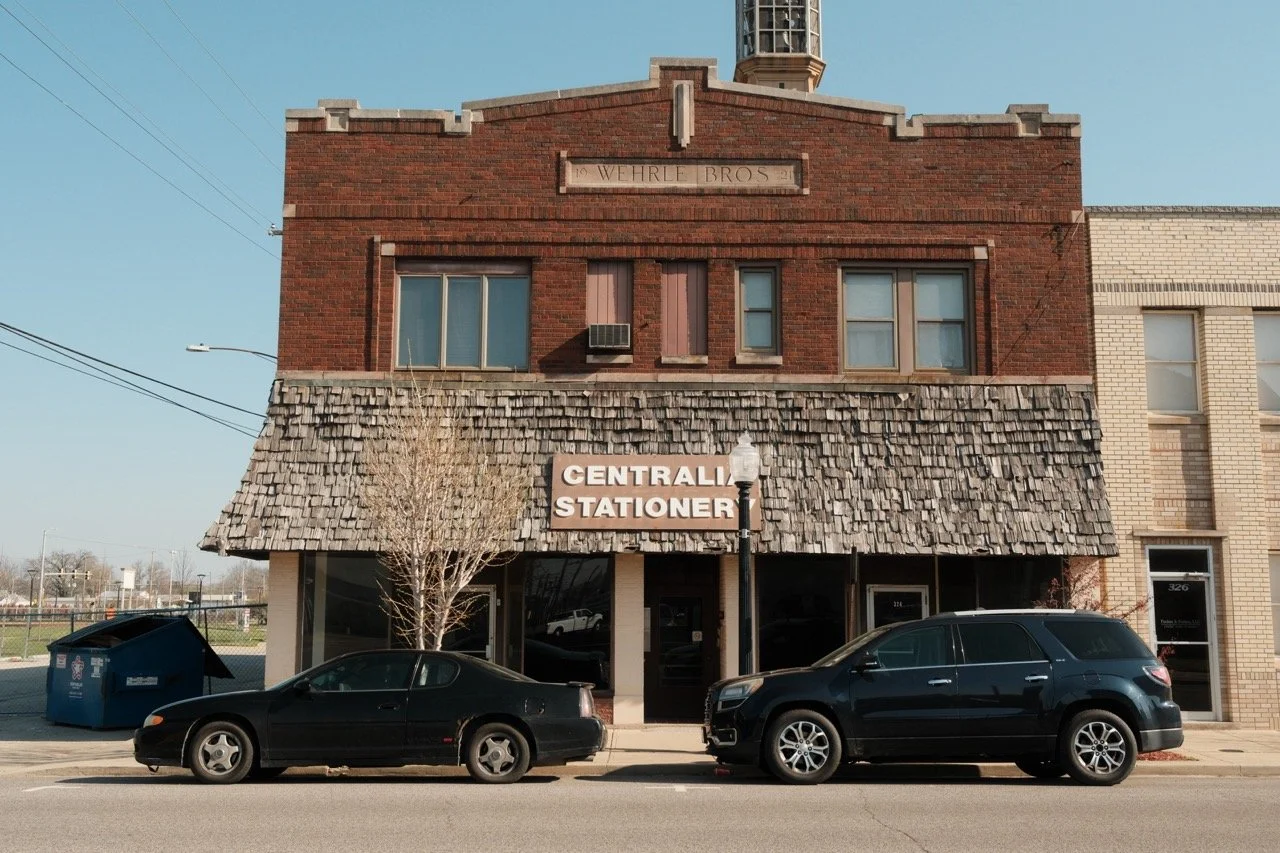
324 East Broadway, 1921
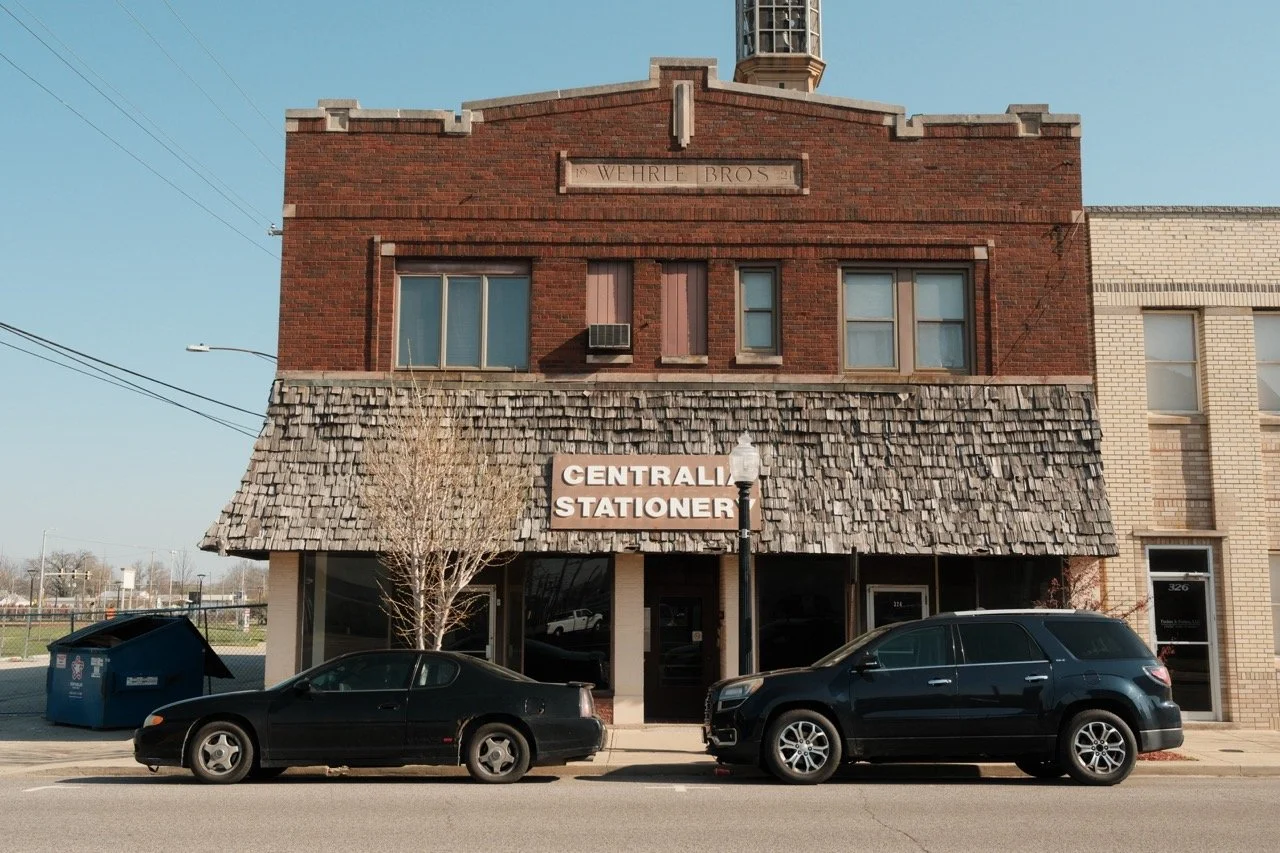
Wehrle Brothers Building | Centralia Stationary
History of 324 East Broadway
1894 - Dr. S.A. Wakeman (1894 City Directory)
~1932
324 ½ - Wehrie's Bakery
324 ½ - Centralia Stationery
1933
324 ½ - Waggoner Grocery (Source: 1953 Centralia City Directory)
324 ½ - Centralia Stationery
1941
324 ½ - Zahner Carpet Co, owner Clarence Zahner
324 ½ - Centralia Stationery
Architecture
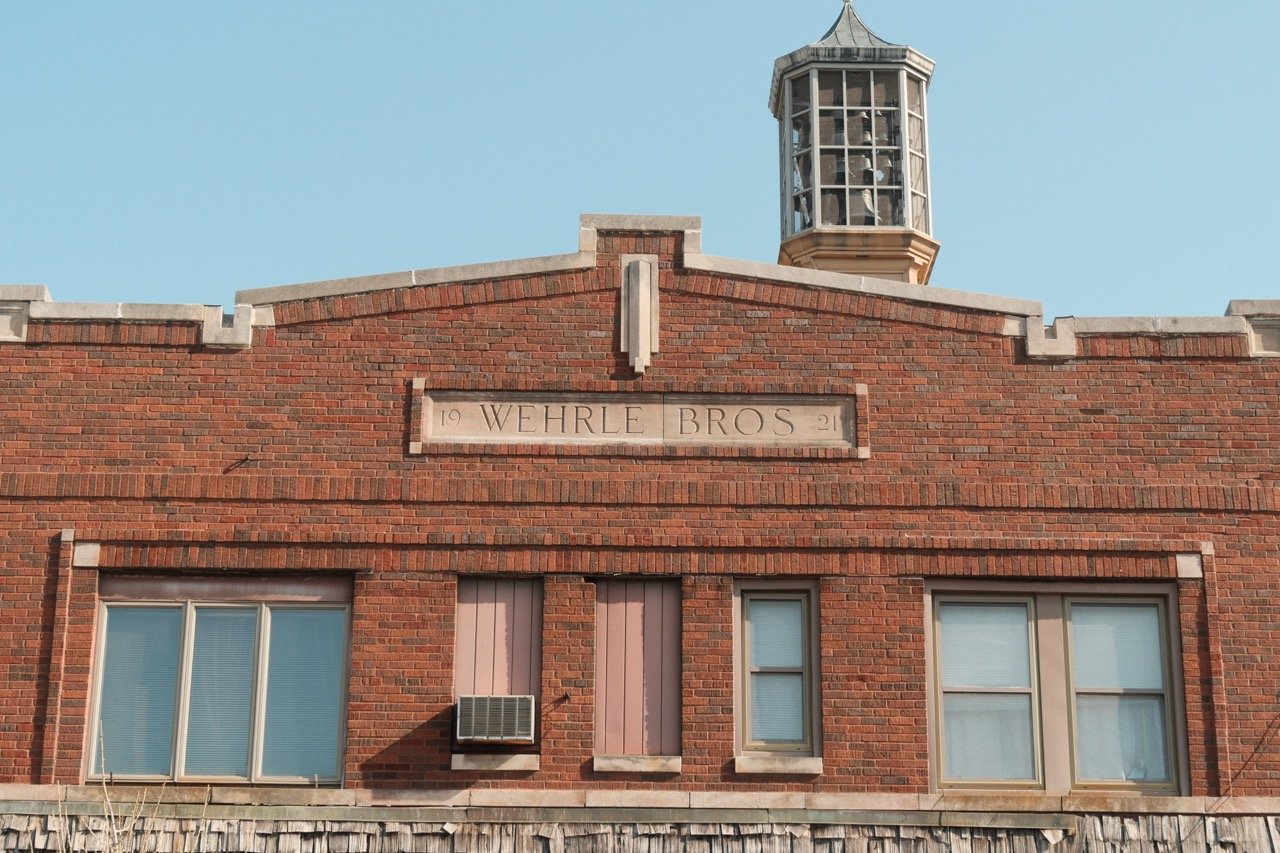
This brick two-story commercial structure presents many features typical of the popular later 19th century Commercial Style. The design of the plain brick façade relies on applied stone ornament and alternating bond patterns for interest Historic photos show that the first floor storefronts have not been substantially changed. Some brick has been painted, and the clerestory windows and moveable fabric awnings have been replaced with a fixed, mansard-type awning of wood and wood shingles.
A course of stone above the awning serves as a sill for the second floor windows. The original penetrations have been maintained despite the installation of contemporary replacement windows and some wooden fill. Brick soldiers and stretches form a frame for the fenestration on this portion of the façade, with a square of stone marking the corners of that frame.
A row of brick soldiers marks the base of the parapet, which rises above the windows, presenting a stone plaque with the building's name and construction date in the center of the façade. The parapet itself presents the suggestion of a single merlon at each corner. The center of the parapet rises gently toward the center the building, enclosing a stylized rectangular stone medallion. Stone coping contrasts with the brick and emphasizes the complex line of the parapet.
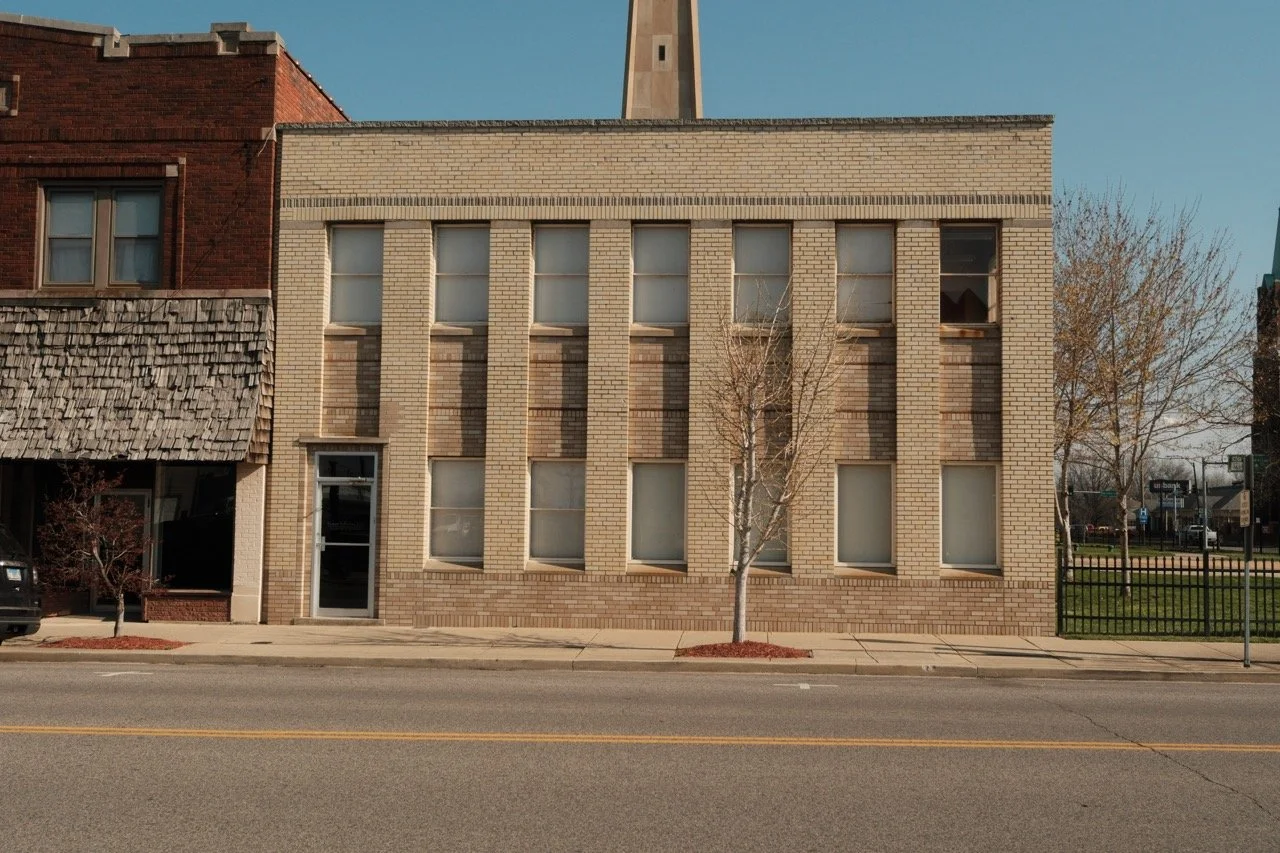
326 East Broadway, ca 1955
History of 326 East Broadway
1940, March - Construction got underway on a new office building for the Shell Oil Co.
Architecture
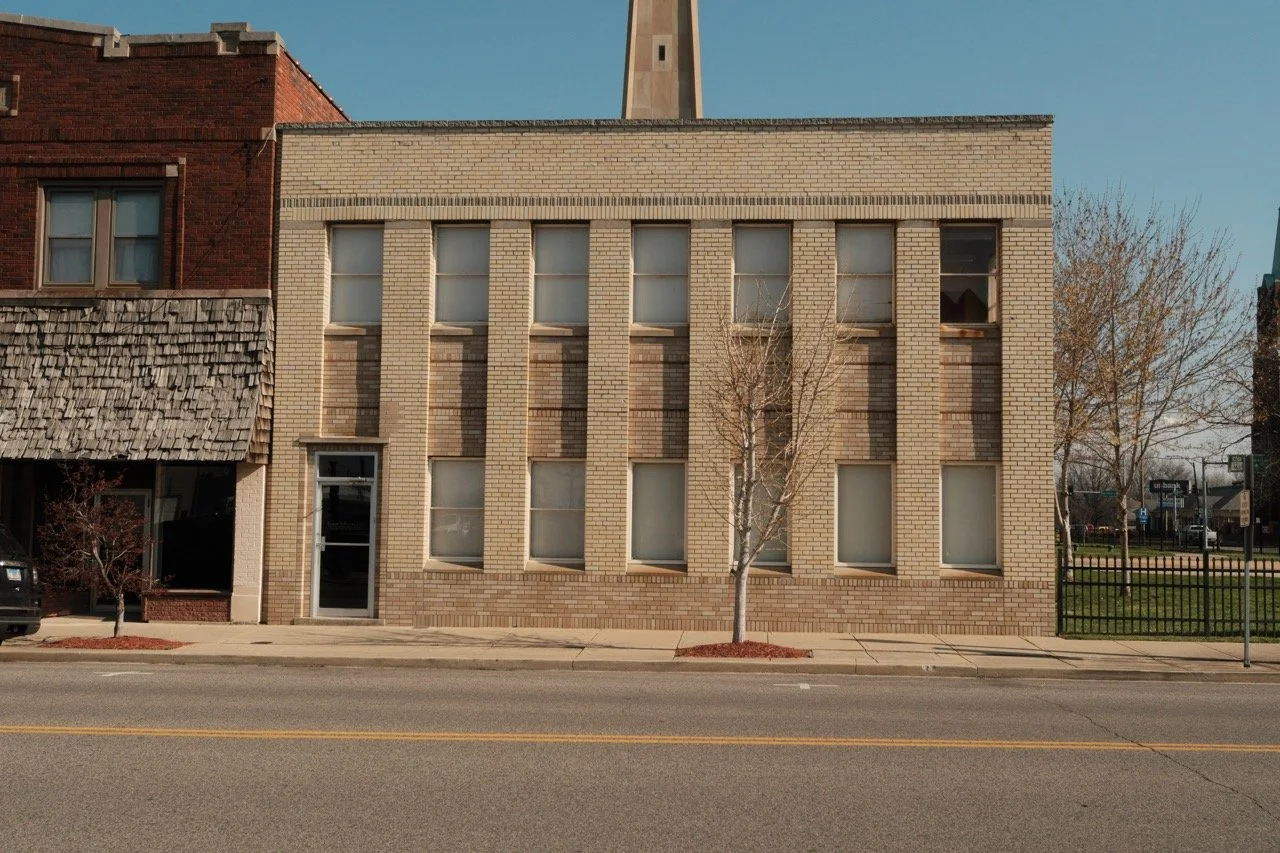
This two-story brick structure relies on the window penetrations and two shades of brick for its interest. Seven narrow bays are evenly spaced across the main façade. The far left bay on the first floor presents a single glass and metal door; all other penetrations present a single double-hung window on each floor. The windows are set back from the plane of the wall, as are spandrel panels of a slightly darker brick. The contrast in color and position provides interest. The only other decoration consists of relatively plain stone details: unadorned stone coping, a course of cast stone creating a gouge work band above the second floor windows, and simple stone work between each window just below a soldier course of brick at the second floor lintels. Each window has a plain angled stone sill.
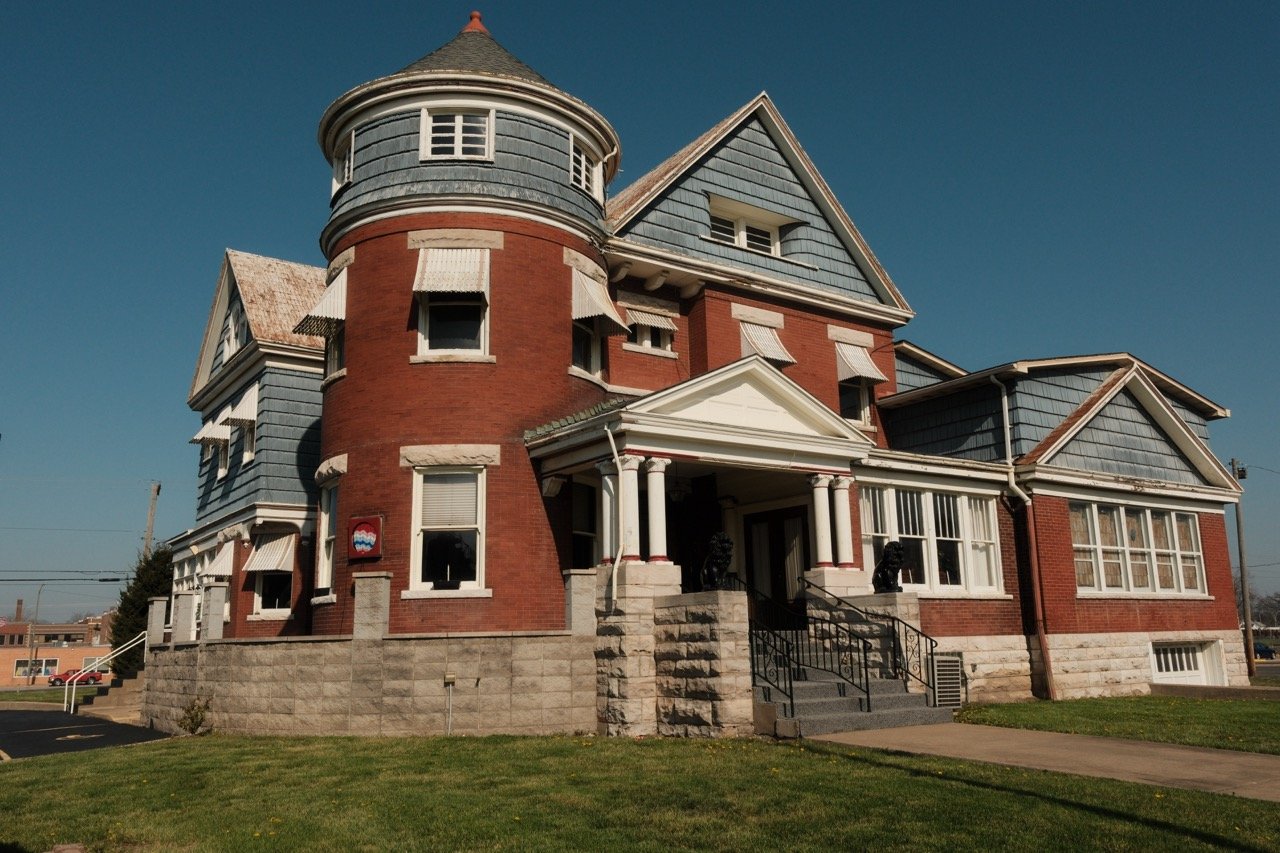
134 South Elm Street, ca 1900
Maxton-Rosado Funeral Home
This imposing brick and frame structure in the Queen Anne Style served as a single family home for about twenty years before becoming a mortuary. The irregular massing of the building is typical of the style, as is the use of many different sizes and shapes of windows. The Elm Street façade presents a two-story tower at the building's southern end, next to three-bay section topped by a gable roof. This portion of the façade presents two small recessed windows centered in the wooden-shingled gable end above three second-story bays, the one on the left being recessed. Centered below this recessed bay is a temple-front portico supported by multiple columns that marks the main entrance. To the north of this porch is a one-story dependency which connects the main portion of the building to one and one-half story wing.
The façade along 2nd Street presents the following forms from the corner tower heading west: a recessed narrow bay with a central group of second-story windows beneath a broad Roman arch, a pavilion faced with brick on the first floor and wood shingles on the second, and a final bay of brick, set the furthest back from the street. The rusticated stone foundation and porch wraps around the base of the building, unifying the porches and entrances under fabric canopies.