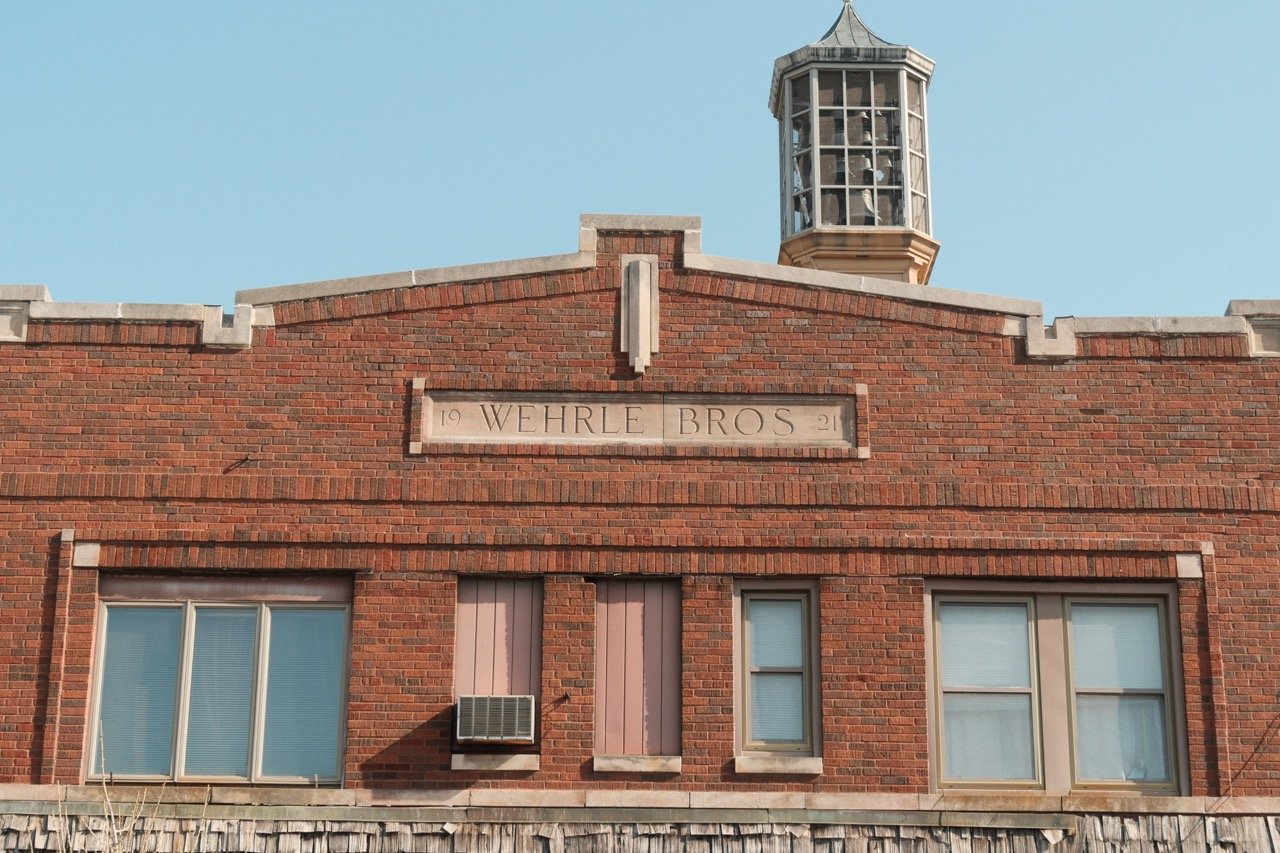
100 Block of Broadway
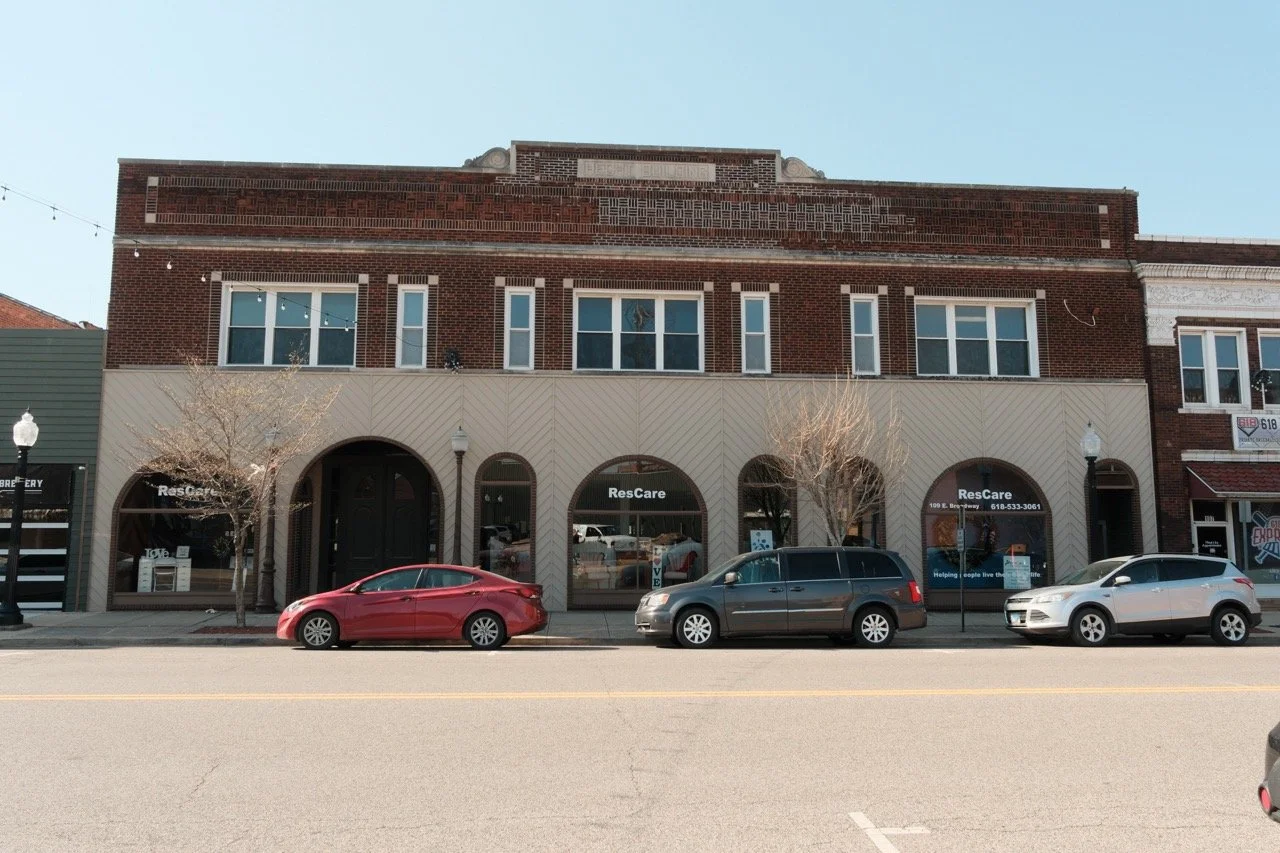
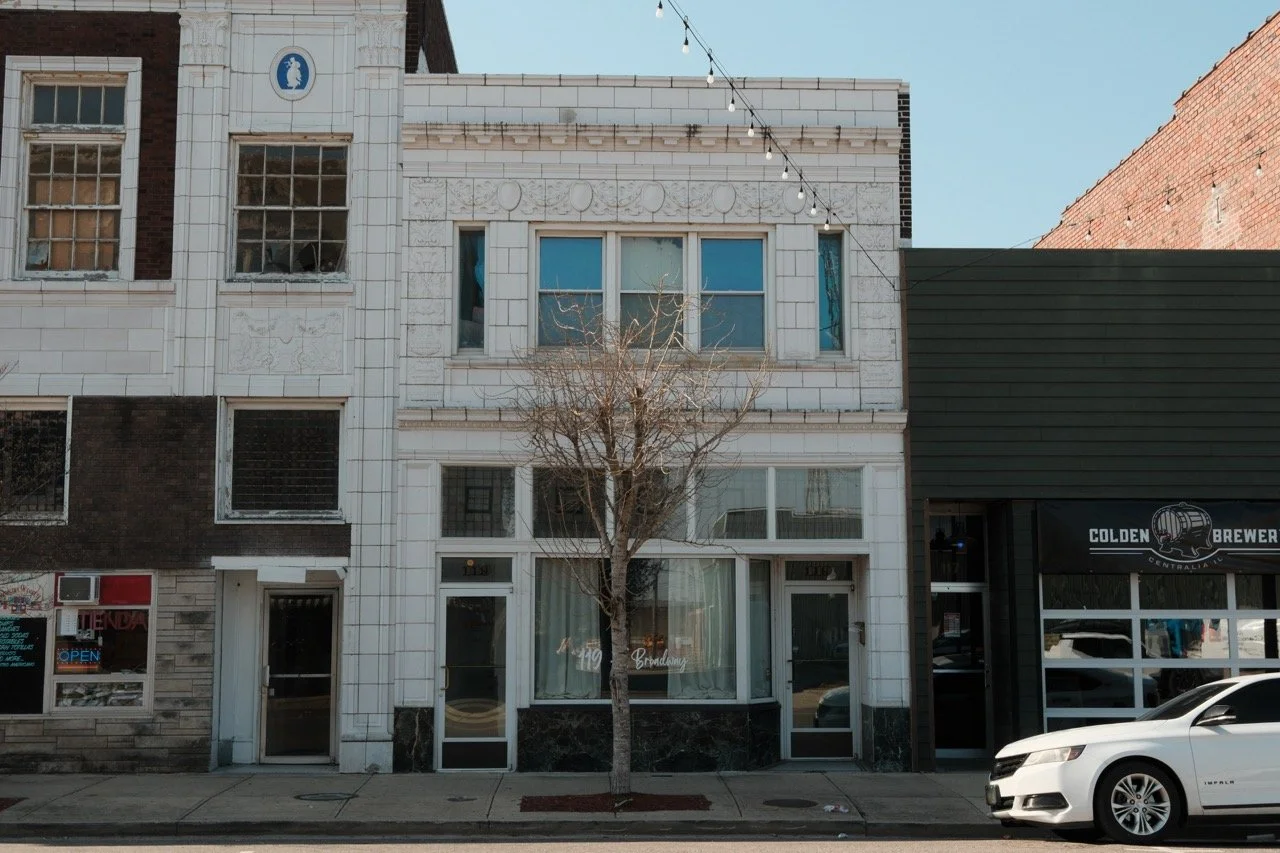
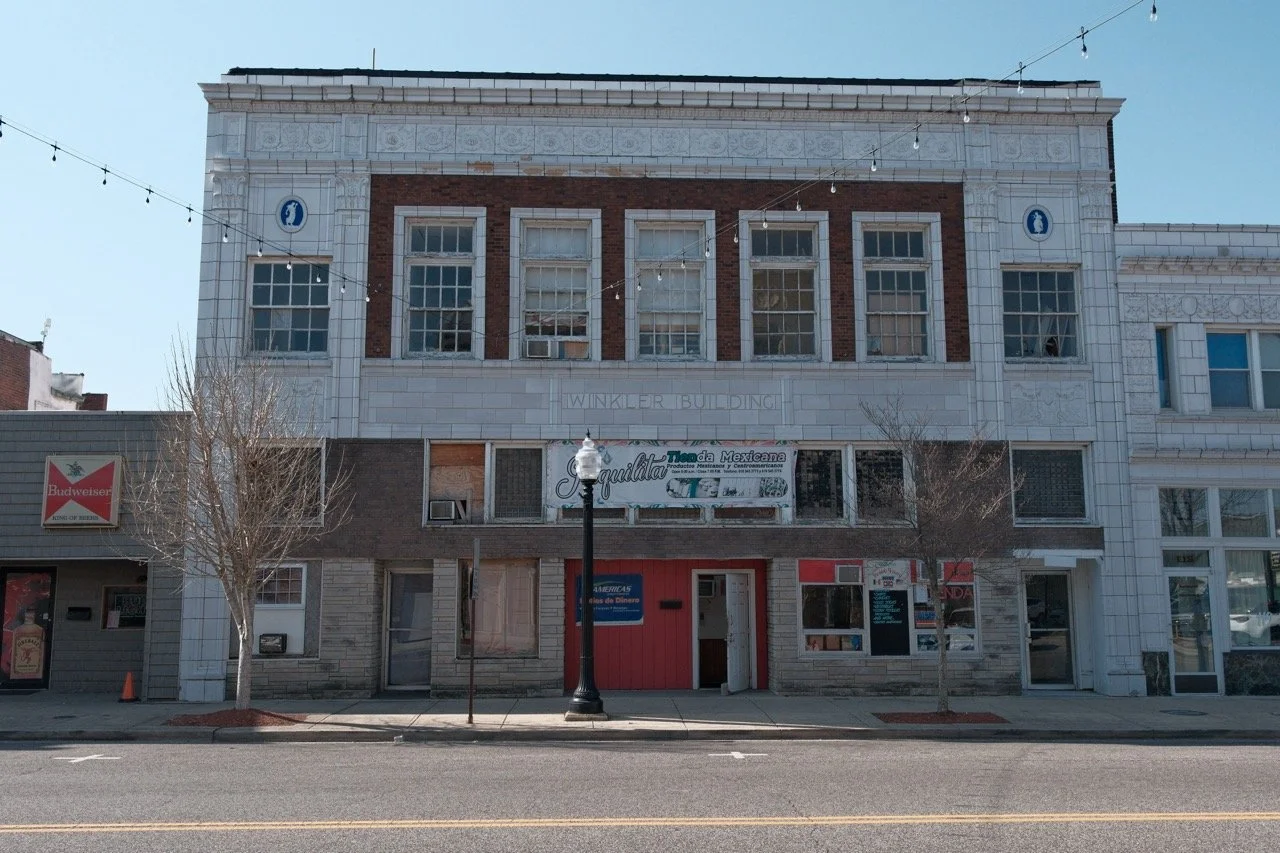
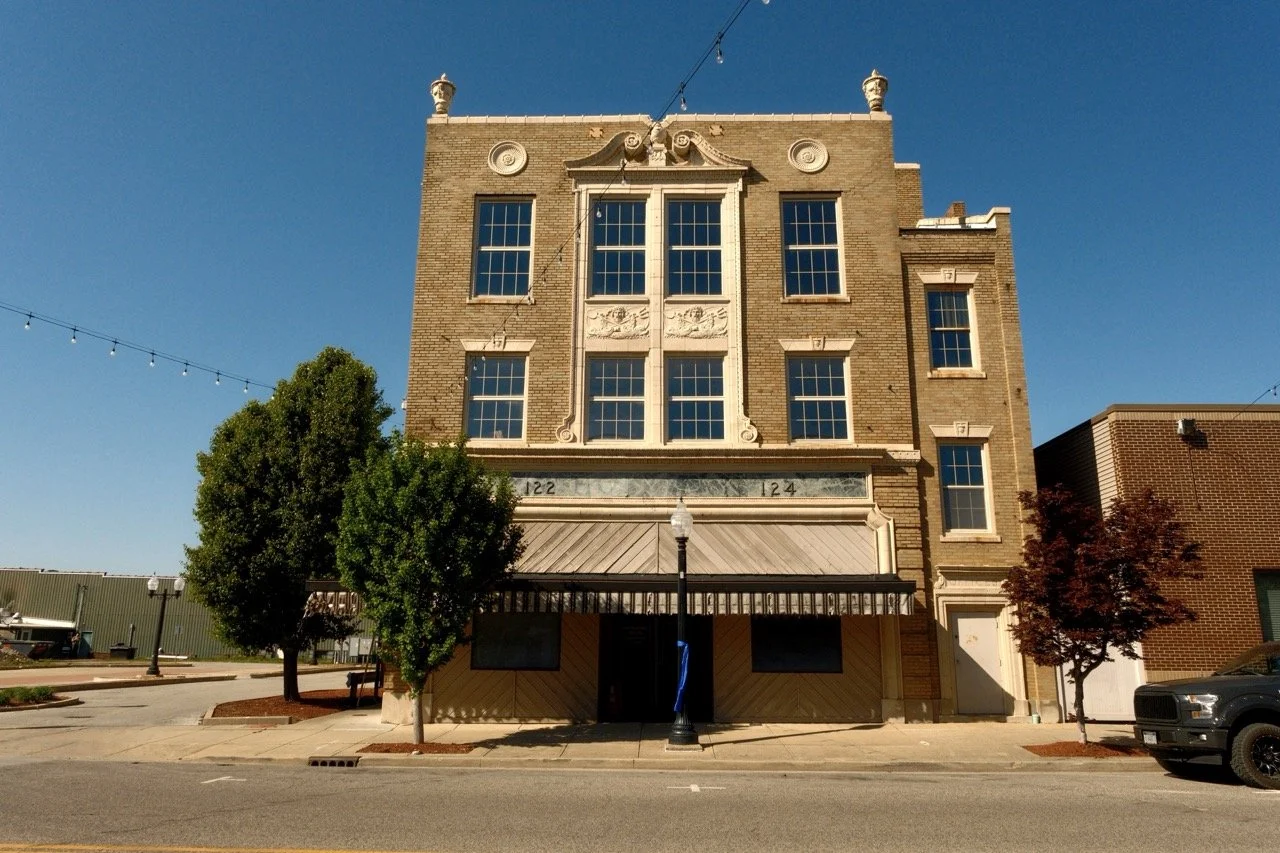
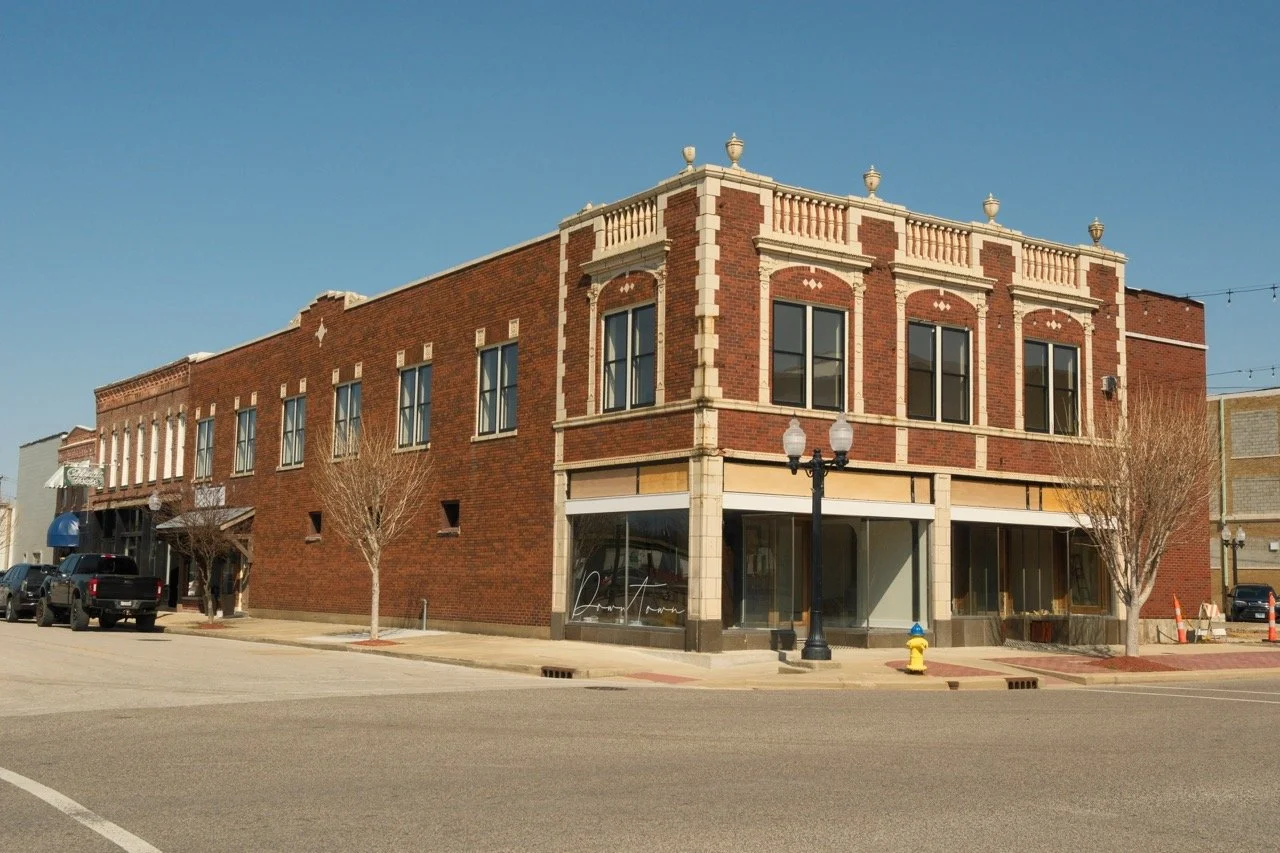
100 East Broadway, 1923
Crooked Creek Winery Downtown
History of 100 East Broadway
1900-02 - A. Harding wholesale & retail fruits, cigars, ice cream. (1900-02 City Directory)
1904 - S.P. Sicher & Co. clothing. (100-104 E. Broadway) (1904 City Directory)
1906-07 - S.P. Sicher & Co. Clothing, tailor (100-104 E. Bwy.) (1906-07 City Directory)
1920 - William Hutter clothing, tailoring & furnishings (Source; 1920 Centralia City Directory)
1945 - Yancey Electric
Architecture
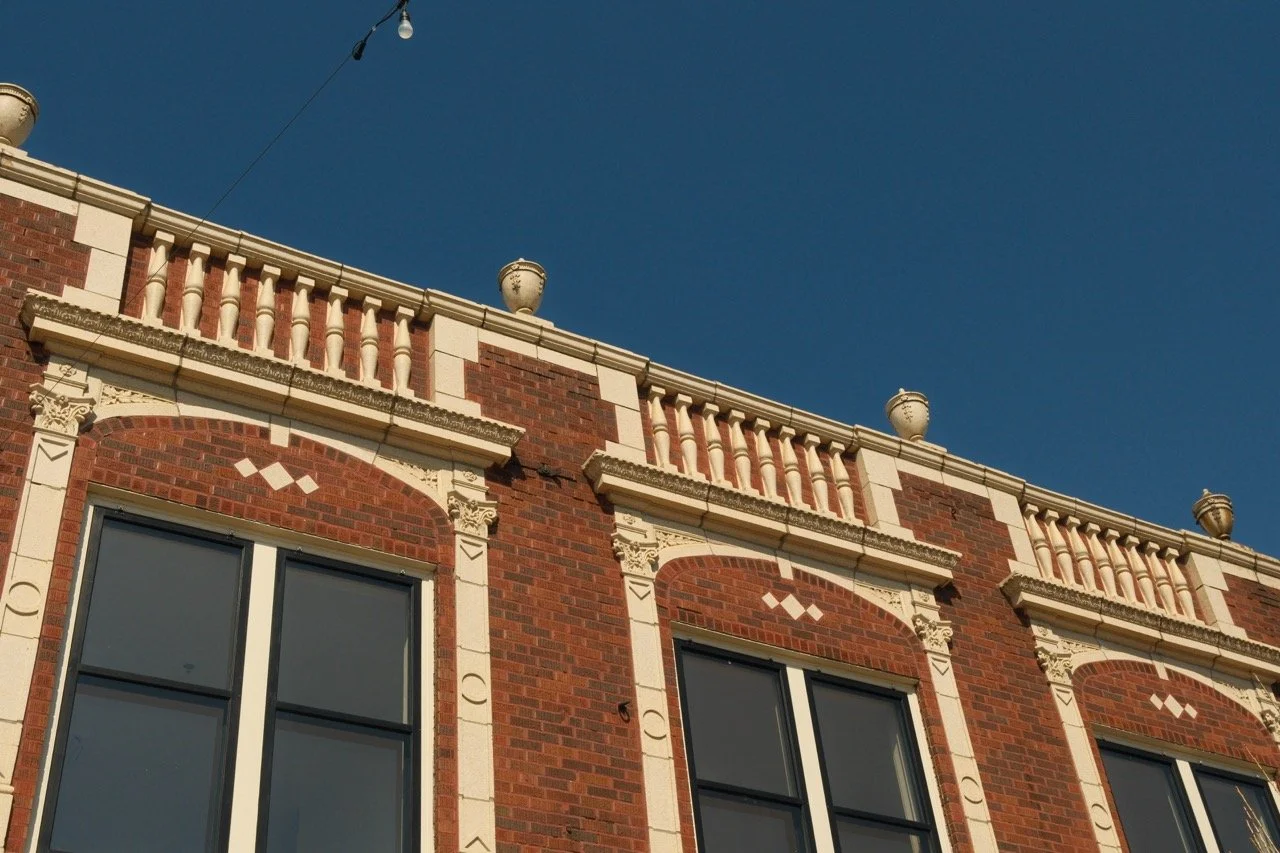
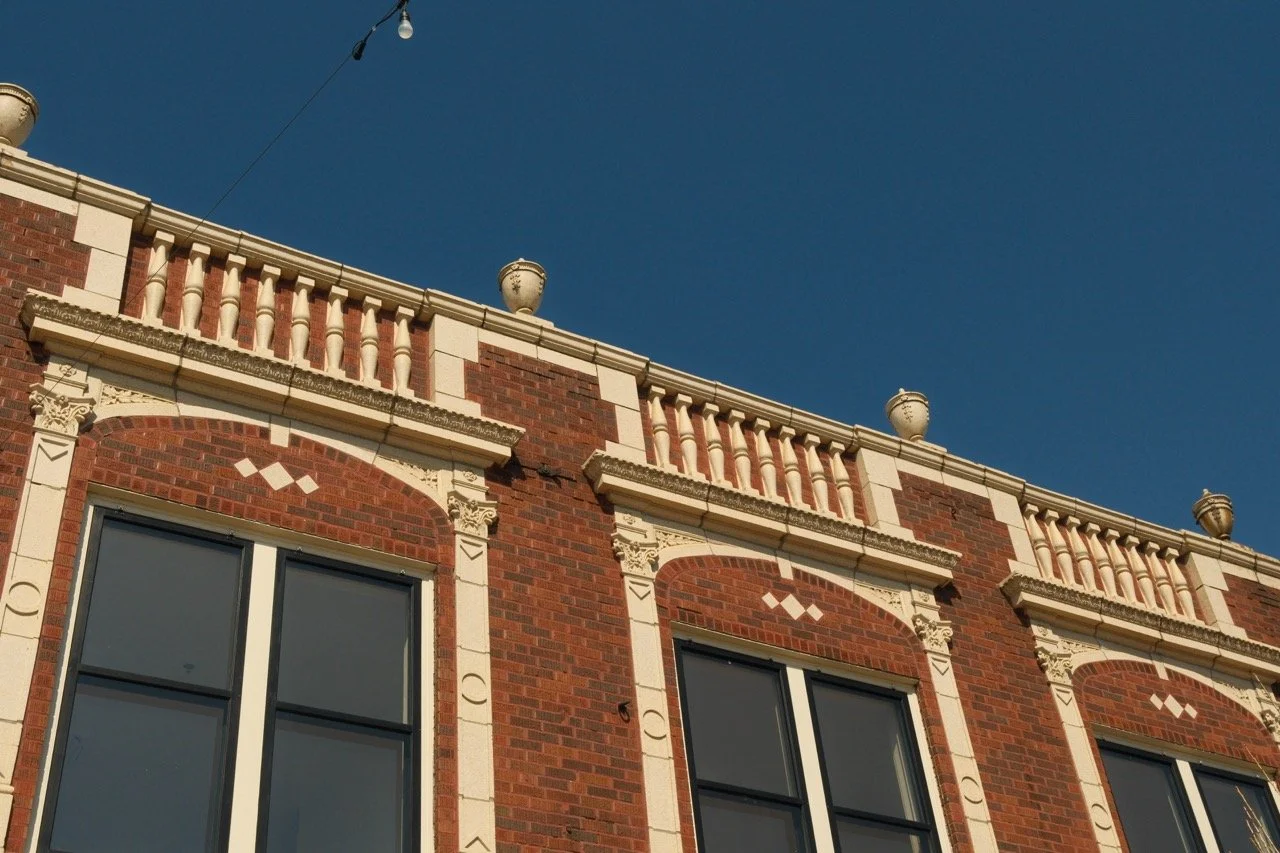
A two-story brown brick commercial building presents elements of the Italian Renaissance Revival Style: Terra cotta quoins, arched window surrounds, balustrades and urns decorate the second floor of the building’s primary facade, while the ground floor’s granite, terra cotta and glass storefront is clearly a no-nonsense commercial design.
122 East Broadway, 1924
Locally known as the Hoffman Heart Building
History of 122 East Broadway
1894 - Lewis Roemer groceries/provisions; Richie Bros. Photography Gallery, upstairs (1894 City Directory)
1894, June - T.B. Andrews purchased the Occidental Restaurant at 122 E. Broadway from J.L. Thomas and will make it a confectionery, ice cream parlor.
1500-02 - O.B. Kurth hardware. (1900-02 City Directory)
1904 - C.B. Kurth hardware. (1904 City Directory)
1906-07 - O.B. Kurth Hardware, farm implements, granite ware, stoves (1906-07 City Directory)
1909 - Kurth Hardware
1920 - Oscar B. Kurth haroware store
City Cleaners & Tailors, basement
1922 - William H.Jones shoes & repairing; residence at 839 E. Broadway
Oscar B. Kurth hardware
122 ½ Earl L. Glassco, wife Etta, restaurant at 117 WBroadway
122 ½ Frances E. Malcolm, works F.G. Wright, rooms here (Source: 1922 Centralia City Directory)
1924, Dec - Three-story Hoffman building completed--history of business since 1898 told by Sentinel. Hoffman Building was constructed at = cost of about 590,000, At one time Brown's Business College occupied the upper floor end there was a rathskeller in the basement. A shaft for an elevator was installed but they ran out of money before the elevator could be installed.
1935 - Brown's Centralia Business College, Inc.
1938 - (Hoffman Building, Ray & Norman Hoffman owners
Hoffman Clothiers, Norman & Ray Hoffman owners
Brown's Centralia Business College
122 ½ , Subway Cafe, owner L.D. Hails (Source: 1938 Centralia City Directory)
1944, Dec - was reported that the Moose Lodge Quarters were moved to the Hoffman building.
1958 - Hoffman Clothiers closed its doors after being in business for 60 years. Norman and Ray Hoffman had managed the store since 1932, when their father, Mose, passed away.
1963 - Biederman’s was in the Hoffman Building until they built a new stone at Вroadway & Brookside. This buiding later housed True Value Hardware and Ace Hardware Store.
Architecture
This yellow brick three-story commercial structure presents elements of the Renaissance Revival Style in a buff terra cotta. The storefronts are framed with terra cotta surrounds and surmounted by green marble panels. A string course of terra cotta decorated with classical egg-and-dart motifs and stylized waves separates the first floor from the upper floors. A narrow bay on the east side of the main facade provides access to the upper floors.
On the second floor, a terra cotta surround with a swans neck pediments encloses the central two-window bay on the main facade. Decorations on the spandrels include sea creatures, garlands, tridents and a bearded man, likely representing Poseidon or some other water deity. Windows in the remaining two bays have terra cotta sills and lintels, with each bay surmounted by a terra cotta rosette.
103 East Broadway, ca 1920, 1950
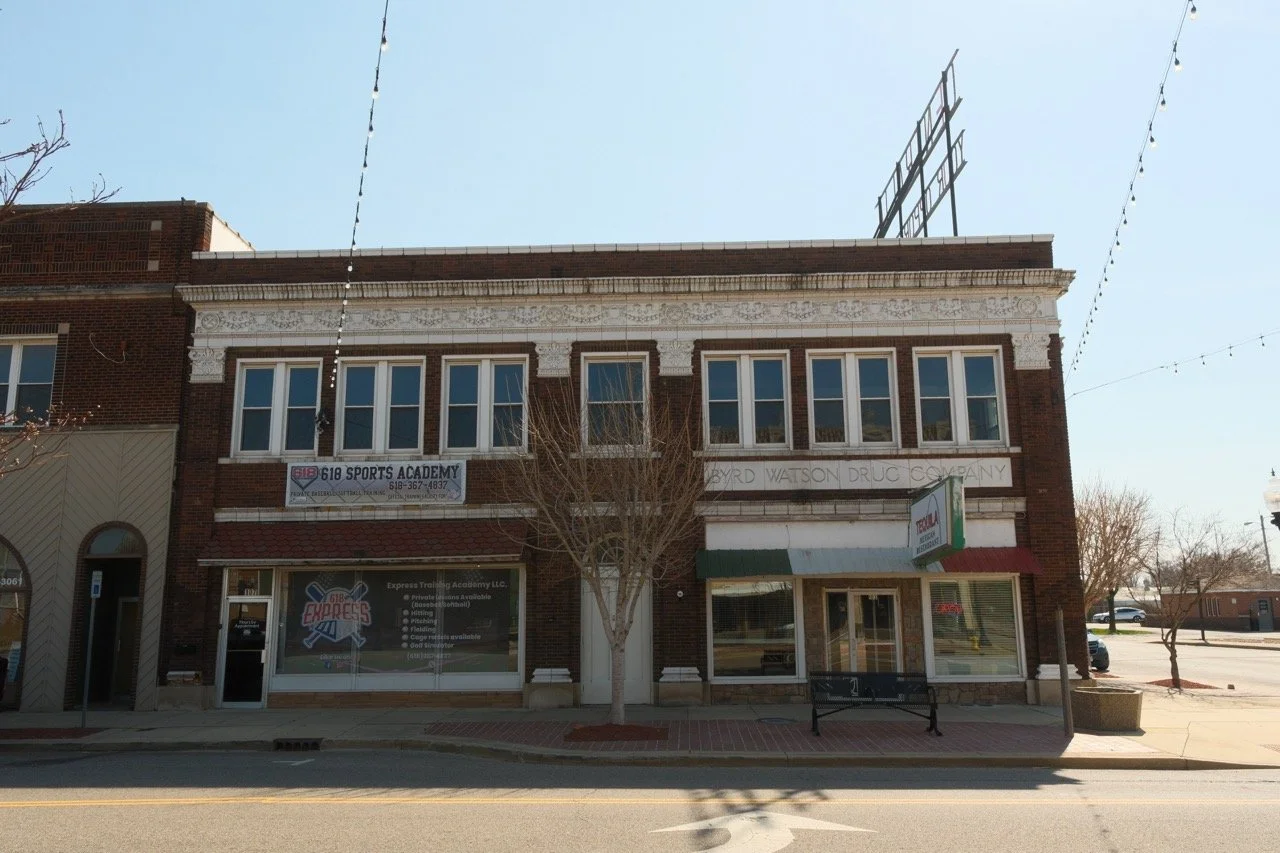
Tequila Mexican Restaurant | “Byrd-Watson Drug Company” Building
HARGIS No. 105130
History of 103 East Broadway
1922 - 103 ½ Union Dental Parlors, Dr. C.E. Fisher, manager
1938 - Byrd-Watson Drug Co.
1941 - Byrd-Watson Drug Co. No. 2, owner L.H. Byrd
103 ½ Dorsey Hager, wife Canolyn
103 ½ W.H. McCain, physician 8 surgeon office
103 ½ W.F. Plassman, eye nose & throat doctor office
103 ½ Harold E, Snow, physician & surgeon office
103 ½ W.B. Stewart, oil leaser office (Source: 1941 Centralia City Directory)
Architecture
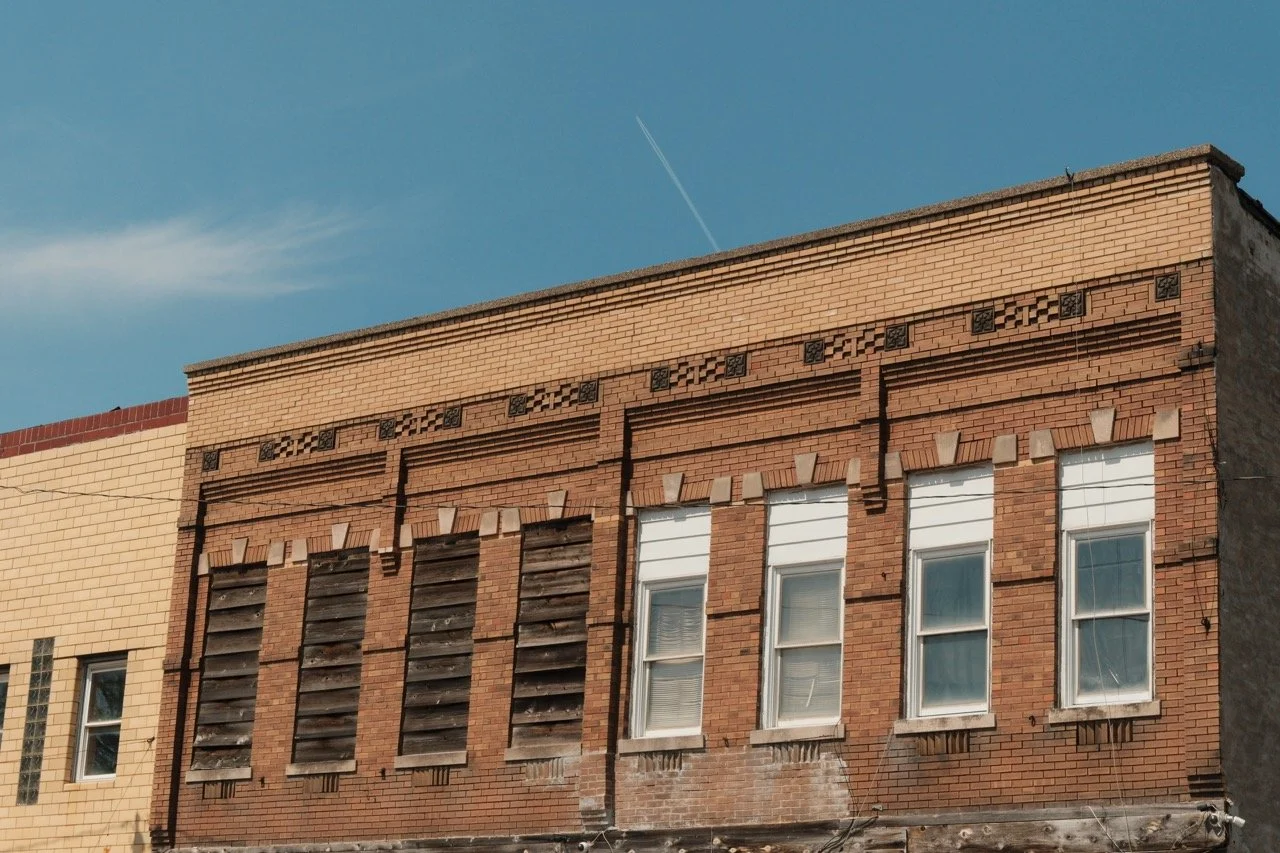
The massing of this brown brick two-story commercial structure and the regular arrangement of the first and second story window and door penetrations, grouped between simple brick pilasters, is typical of the Commercial Style. This building uses white terra cotta with foliate motifs common on buildings in the Italian Renaissance Revival Style. Departures from the building’s original design include enclosing window openings with wood and adding individual awnings on the first floor.
Vicinity 103 East Broadway, ca 1920, 2009
Centralia your Opportunity sign
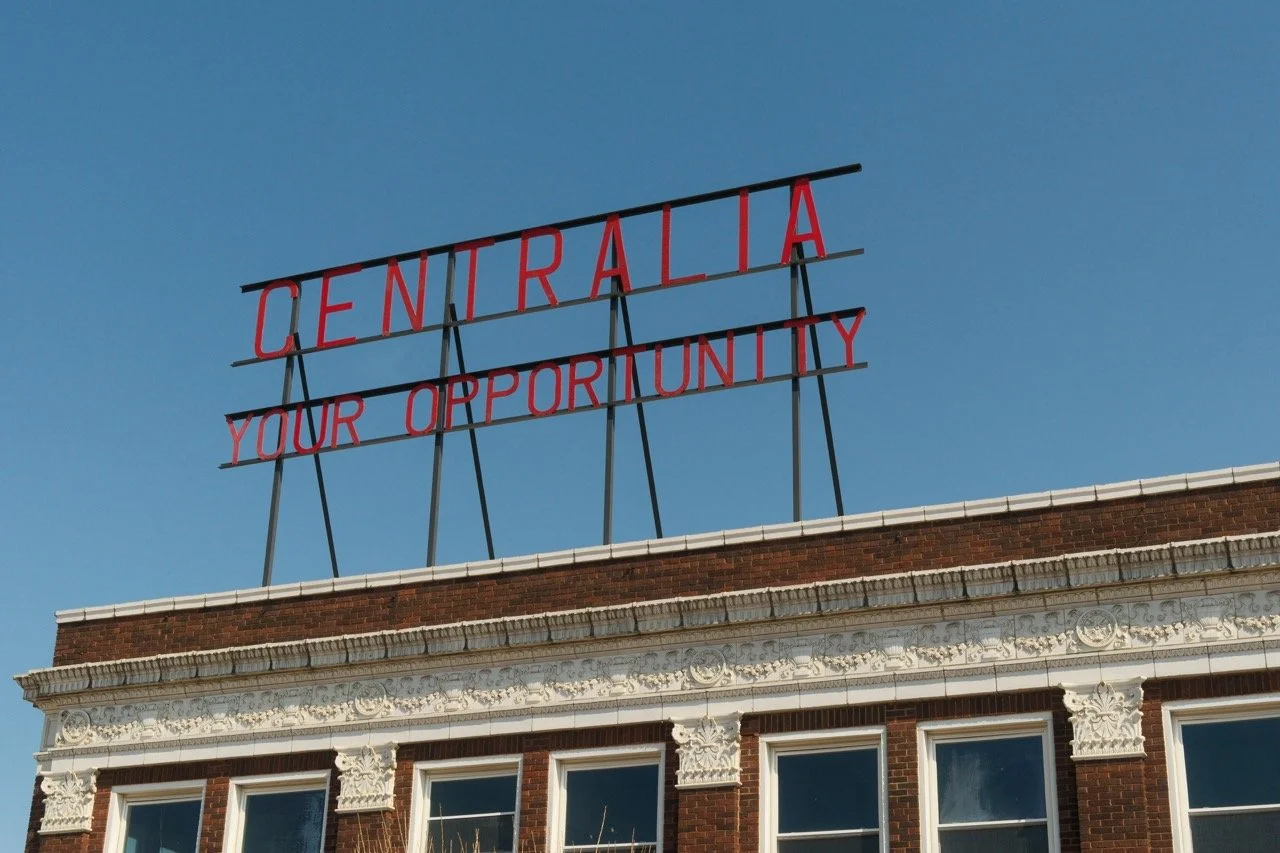
In 2009, the sign was rehabilitated by removing the original, deteriorating letters and replacing them with painted exterior-grade wooden letters created by students in the carpentry training program at Kaskaskia College’s Crips Technology Center in Centralia. Although the replacement letters clearly present a different profile from the original, the basic structure has been retained and the overall effect is sufficient to warrant treating the sign as a contributing element.
109-111 East Broadway, ca 1910
“Hecht Building”
History of 103 East Broadway
1887 - J.A. Robinson, grocery,
1927, Nov - Union House Furniture
1933 - Illinois Power & Light Corp. (Source: 1933 Centralia City Directory)
1938 - Illinois lowa Power Co. Inc., W.T. Tharp dist. supt. (Source: 1938 Centralia City Directory)
Architecture
This two-story brick commercial structure’s first floor storefronts have been replaced with a. series of arched openings heated in diagonal wood siding. Although the building was not constructed until the 1920s, elements of what appears to be an older cast iron storefront have been used in the entrance to 111 and the panels beneath the plate glass windows. The second story presents three bays, each with a group of three double-hung windows. The center group is flanked by two narrow windows; the other groups each present a narrow window on the side nearest the center of the building.
At the top of the building, the parapet rises, flanked by two decorative stone scrolls and presenting the building’s name on a plaque in the center of the facade.
119 East Broadway, ca 1920
HARGIS No. 105133
History of 119 East Broadway
1930 - Schifferdecker Jeweler, Schiffendecker Building
Architecture
The two-story brick building with a white terra cotta facade presents a first floor storefront that includes panels of green marble under the storefront windows. Above the windows that have maintained it’s original penetrations, is a narrow cornice with an egg-and-dart motif. The second-floor hosts a single bay with a group of three windows flanked by two narrow windows and is framed by a relief that includes a wide range of Renaissance decorative elements: Pedestals supports urns surrounded by foliate and fruit designs. Above the second-story windows stretched a series of cartouches connected with foliate garlands and ribbons. A simple cornice with exaggerated dentils serves as the base of a plain parapet.
123-127 East Broadway, ca 1924"
“Winkler Building”
History of 123-127 East Broadway
1925, Sep — New pants factory to locate on 2nd floor of Winkler Building,
1933 - (123-25) Prices Cafe; W.O. Clowes (Source: 1933 Centralia City Directory)
1943, Mar - Benson Drugs, 125 E. Broadway.
Architecture
This two-story brick building with a white terra cotta facade has a first floor storefront that has been significantly changed, using wood, stone veneer, and other contemporary materials. Above the storefront the building is divided into three sections. A central bay of red brick presents six eight-over-eight windows, which appear to be original, each with a four-light transom window. The spandrels beneath the windows are of plain white terra cotta, with the center panel bearing the building’s name. On each side of this wide central bay, a narrow bay of white terra cotta is flanked by pilasters with stylized Corinthian capitols. Centered above the windows in each of these bays is an oval relief with a. Bright blue background depicting a female figure. The spandrels beneath these windows include a relief depicting urns surrounded by foliate and fruit designs.
Above the second floor windows stretches a series of panels depicting foliate garlands and ribbons.
129 East Broadway, ca 1930
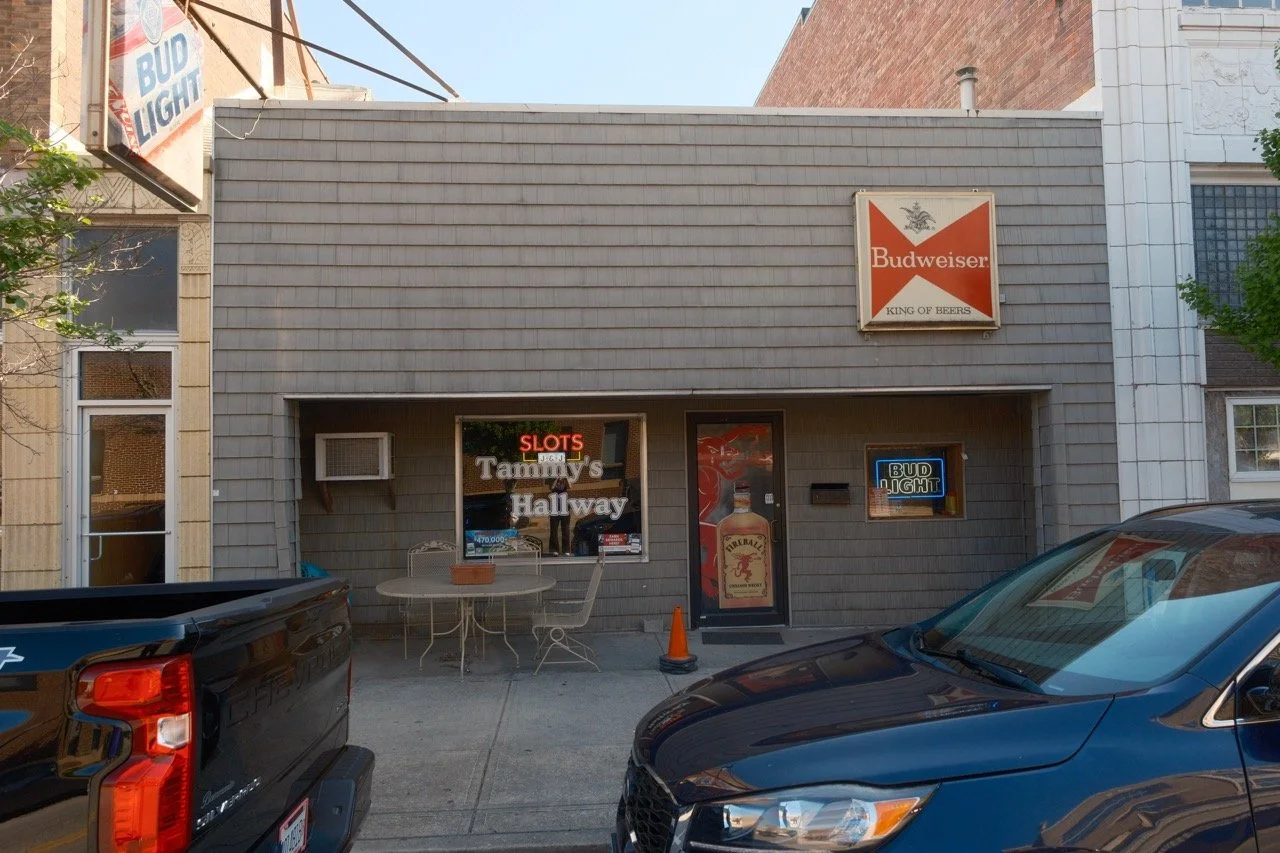
Tammy’s Hallway
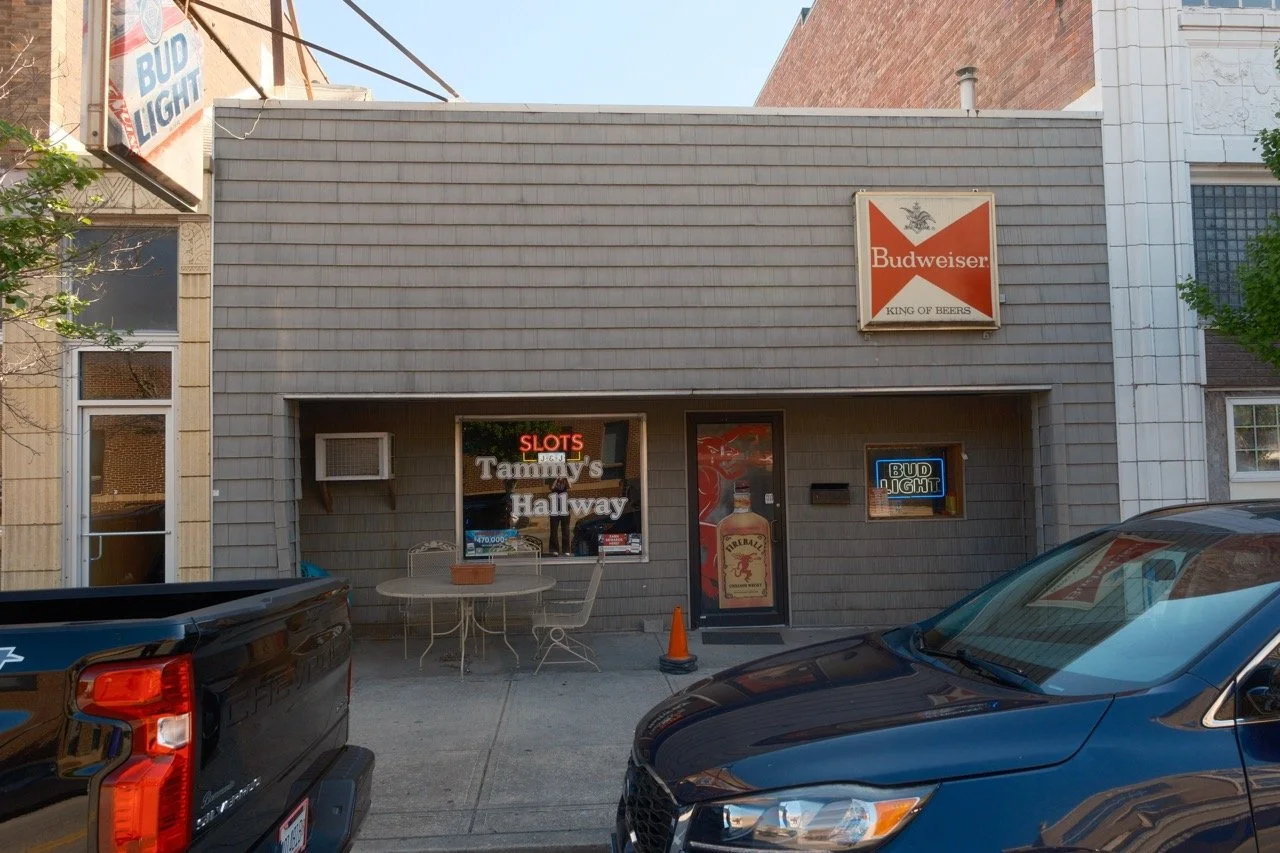
History of 129 East Broadway
1924, Sep - Gately's Clothing Store
1929 - Centralia Radio Sales
1938 - Home Beverage Co.
Architecture
Both the recessed entry and the rest of the facade of this single-story brick structure are faced in black architectural glass. One door appears to be original—black painted wood with stainless steel push bars and kick plate. This doorway, a plate glass window and a second doorway to the left are trimmed in aluminum-colored metal. A similar piece of trim runs above the recessed storefront Three panels of glass above this trim are missing, and signs advertising two brands of beer are mounted to the building: one flush above the right-hand door, and one perpendicular to the facade above the left hand door.
135 East Broadway, ca 1900, ca 1930
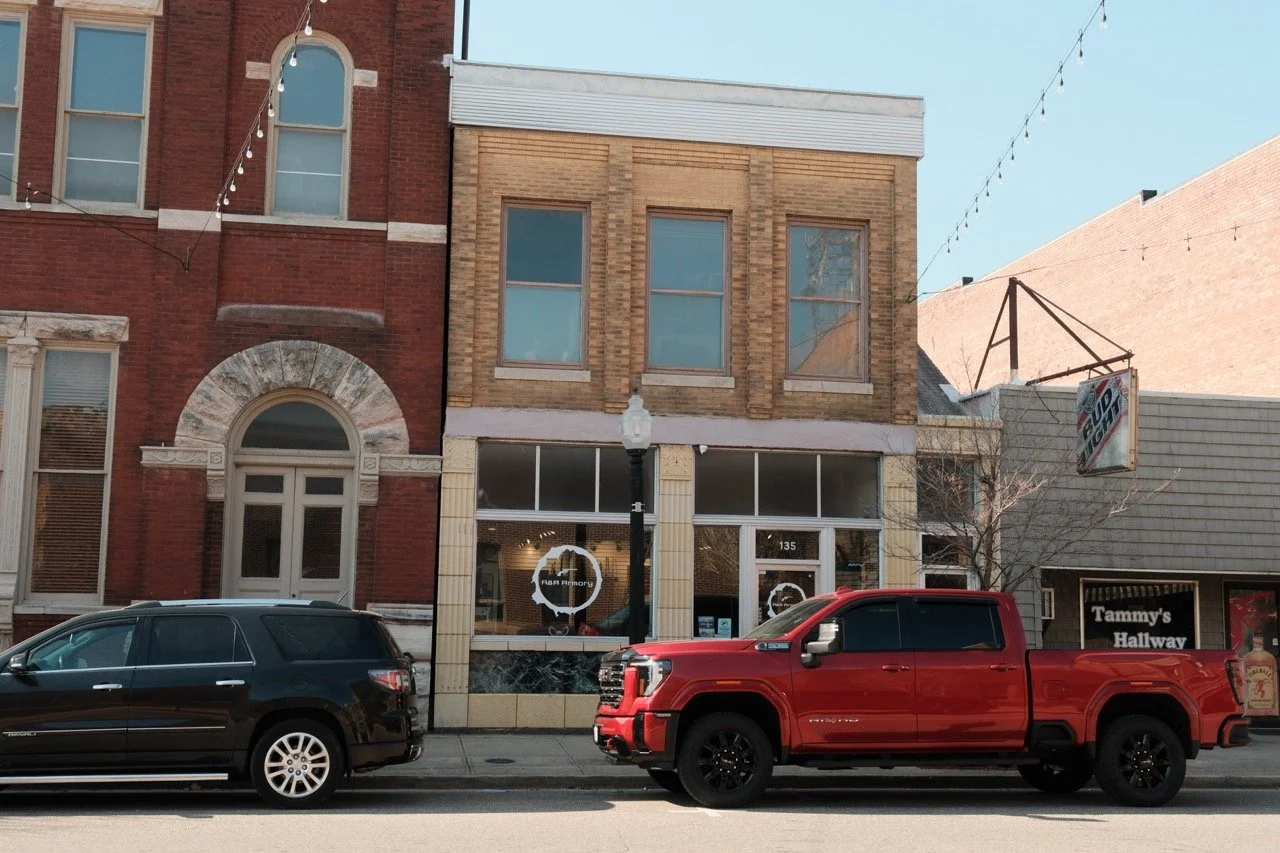
A&A Armory
History of 135 East Broadway
1894 - F.A. Schultz harness shop (1894 City Directory)
1938 - Huddle Inn Café, owner Albert Rule (Source: 1938 Centralia City Directory)
1954-1958 - Edna's Grill
Architecture
A two-story building of yellow brick presents a storefront of plain, buff-colored terra cotta. Four pilasters of terra cotta define the two main bays of the first floor of the building, and a third bay which is the width of a single door that provides access to the second floor. Between the pilasters are plate glass windows on the left and the entrance to the first floor commercial space on the right. Windows on both sides have spandrel panels of green marble and light-colored metal frames. The materials used in the storefront were common in construction during the 1930s. Above the storefront are three evenly spaced bays defined by brick pilasters which project from the plane of the main facade. These elements begin as machicolations just above the storefront and extend above the window openings. Above each window another series of machicolations bring the plane of the wall to the same level as the pilasters. Above that point, the building's parapet has been covered with metal or synthetic siding, ending in a band of metal attached to the cornice.