Locust Street
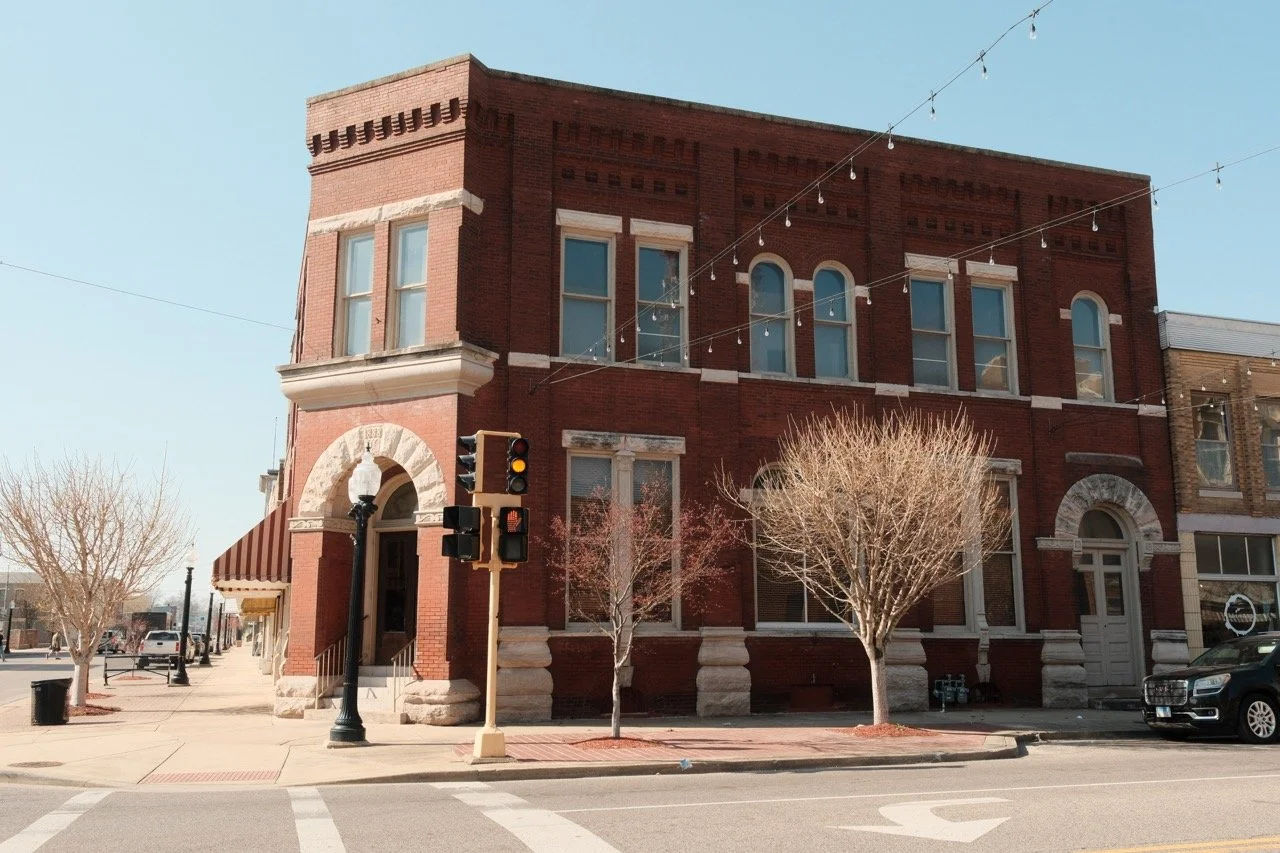
100 South Locust Street, 1880
History of 100 South Locust
1888 - Old National Bank
1907 - Old National Bank purchased the Dimick property to the south and built the two-story addition complete with two huge arched windows to mirror the original buildings. Originally, the teller's cages were or ornate, carved black walnut and the floors of fancy linoleum. Sparked by the construction of the new Merchants State Bank, much was replaced by the Kohls in 1907 with the very latest in white marble and tile laid in fine patterns. The tops of these cages have since been removed to give an apen appearance to the room. (Information from Sentinel Archives December 1966)
1926 - Old National Bank moves out of 100 South Locust, to 101 South Locust, across the street.
1928, Jan - Building is remodeled and became home of Centralia Building & Loan.
1950 - The Centralia Building & Loan Association at Broadway and Locust is undergoing repairs. Old cornice work and the cupola are being replaced with brick and the walls are being tuck-pointed.
Architecture
From the rusticated stone plinths on which the brick pilasters seem to rest, to the Roman arches surrounded by brick or more rusticated stone, this 1880s building carries the hallmarks of the Romanesque Revival Style common in the late 19th century. Each bay is framed by pilasters with rusticated stone at the base, middle and top. However, the features within each bay vary.
The central bay, facing the corner of Broadway and Locust, presents an entry framed by a Roman arch of rusticated stone. At the second floor, the bay presents two double-hung windows with a single lintel of rusticated stone that stretches across the bay. Above this, a simple parapet with corbeling and machicolations ends in a flat parapet, a design that simplifies the original complex brickwork that decorated the cornice of the building. A single bay along Broadway Street retains the original simple Roman arch and second floor window arrangement.
The original arrangement of windows and doors in the bays along Broadway has been maintained. Two pairs of windows alternate with a plate glass window with a segmental arch and a narrower doorway with a Roman arch of rusticated stone. The second floor on this side alternates pairs of windows identical to those on the second floor Locust Street façade with pairs of windows with Roman arches. The design of the cornice above the main entrance is repeated across all bays of the building.
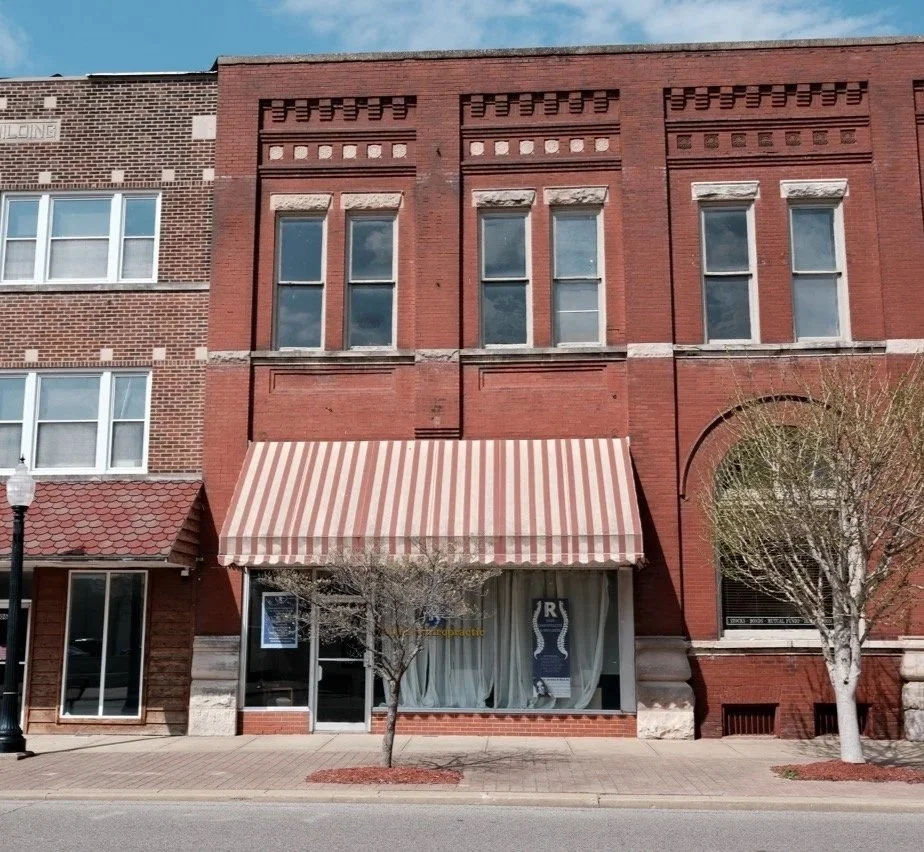
104 South Locust Street, 1880
Reflexology | HARGIS No. 124334
History of 104 S Locust
1894 - A. Harding wholesale & retail fruits; Home Building & Loan, upstairs; J.N. Kerr real estate, upstairs. (1854 City Directory)
1900-02 -Merchants State Bank; 1.J. Bundy, atty, upstairs. (1900-02 City Directory)
1904 - F. Wilson confectionery. (1904 City Directory)
1906-07 - W.R. Smith real estate (1906-07 City Directory)
1932 - Hart’s Cut-Rate Drug Store
Ed’s Sweet Shop
Architecture
Originally a two-bay segment of the neighboring Old National Bank, this building has been changed significantly since its construction in 1880. On the first floor, the Roman arches and central pilaster have been removed and replaced with a steel and glass storefront. Above the storefront, the central pilaster rises to the top of the parapet. With the exception of the simplified cornice of brick, the façade at the second floor level is essentially unchanged from the time of construction. A pair of double-hung windows is centered in each bay, with a heavy rusticated stone lintel above each. A string course of stone serves as sills for the windows, and exaggerated machicolations begin above the windows, leading up to a flat parapet wall.
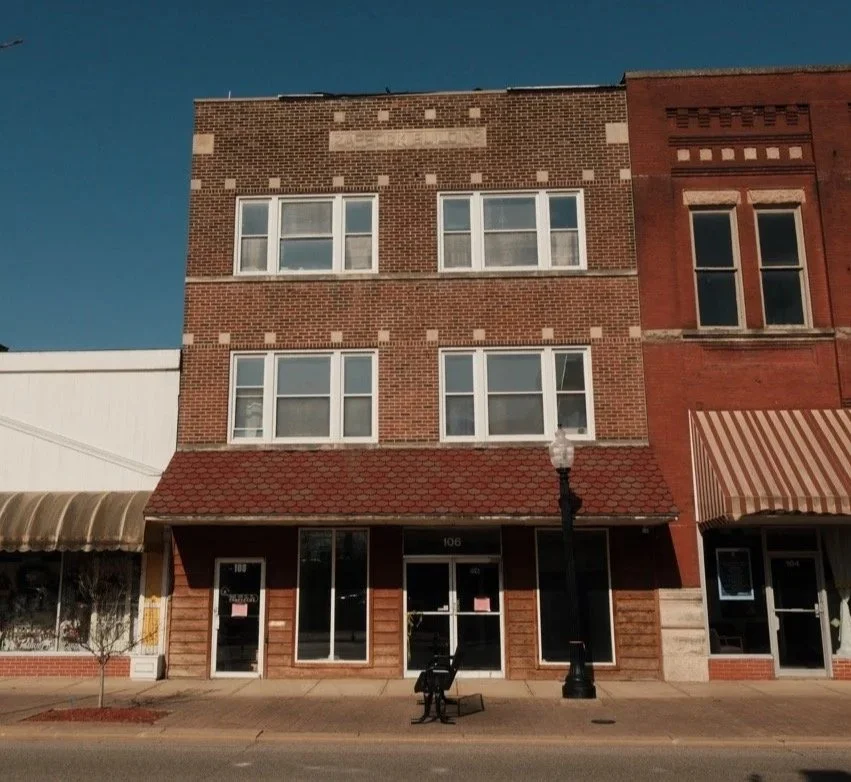
106 South Locust Street, ca 1890, ca 1930
Zarbock Building
History of 106 S Locust
1891 - A.L. Reinhardt's Jewelry
1894 - E.F. Zarbock hardware (1894 City Directory)
1933 - The Zarbock building as we know it today was built following a fire in 1930
1933 - Zarbock Hardware Co.
1937 - Zahner Furniture Company (Source: 1937 CTHS Sphinx Yearbook)
1941 - Fredman Bros. Furniture Ca., owners Philip Fredman 8. Sam Anderman (Source: 1941 Centralia City Directory,
1977, Mar - Ceremonies were held to officially mark the opening of Adventure Travel Service.
Architecture
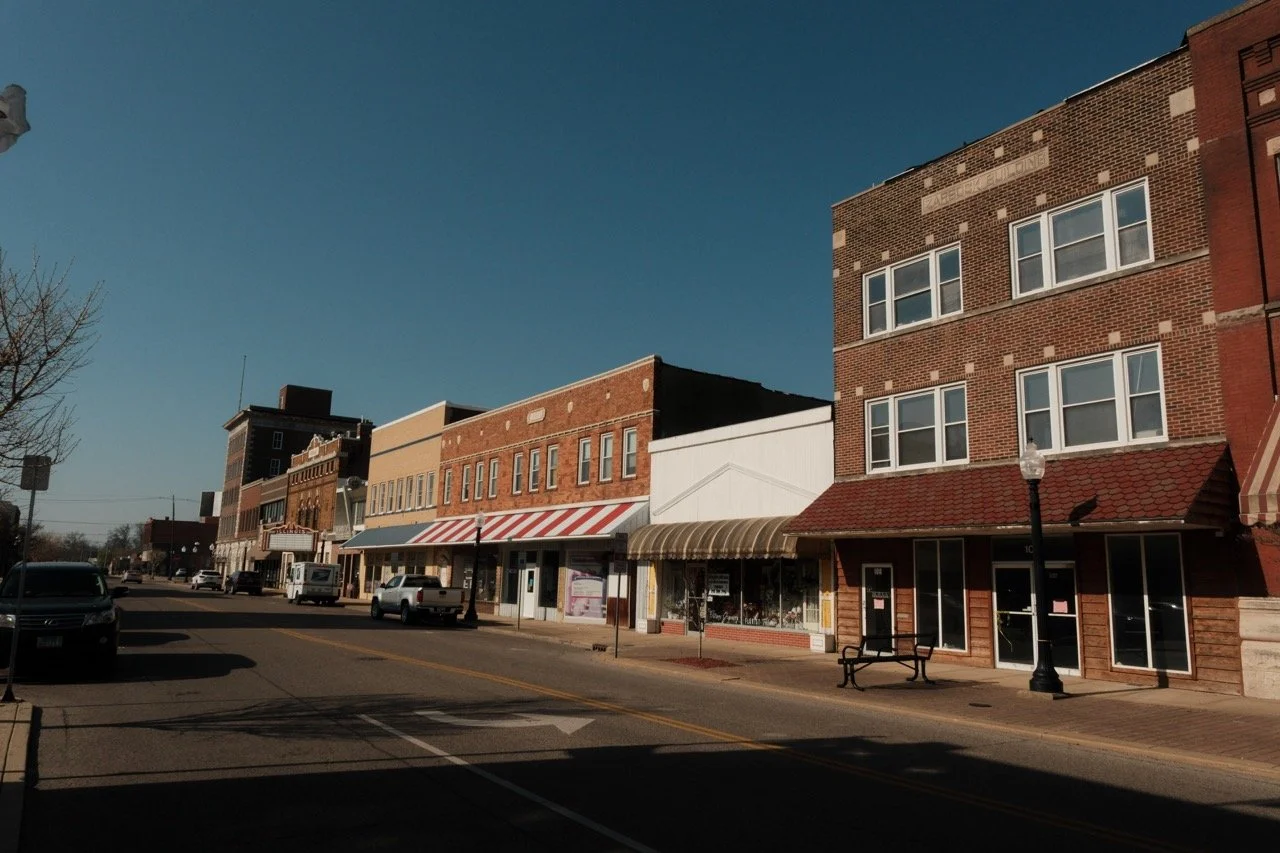
A three-story commercial building of red brick with office or living space above presents two bays of equal size. On the first floor, an asymmetrical arrangement of two windows and two entries provides access to the first floor commercial space and the stairs to the upper floors. A fixed awning of red shingles fills the space between the storefront and the second-floor windows.
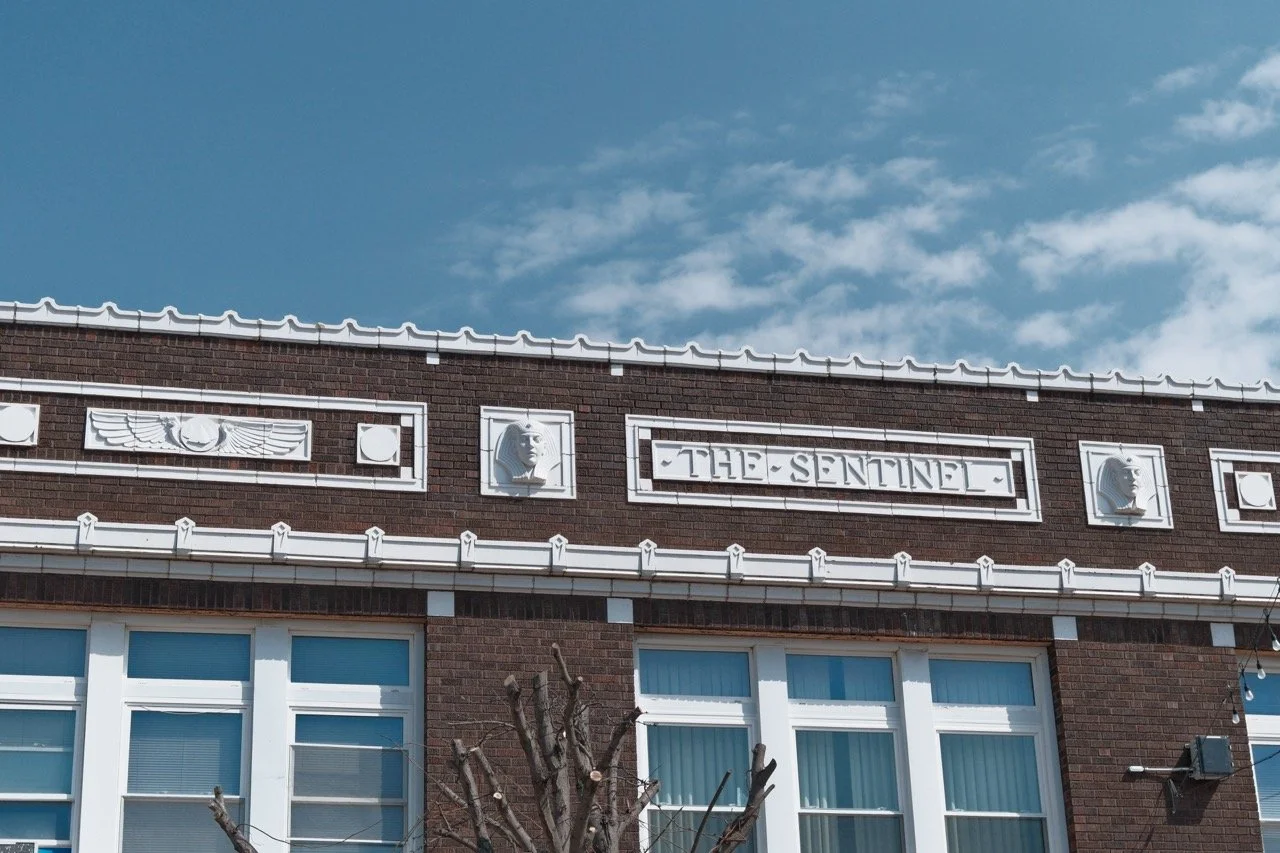
Each bay on the upper floors presents a group of three windows: a wide double-hung window flanked by two narrower windows. Although these appear to be contemporary replacements, they conform to the size of the original windows, as indicated by the square stone rosettes that appear above the corner of each window. The building’s parapet is plain, except for the plaque presenting the building's name which, like the window openings below, has four square stone rosettes above it.
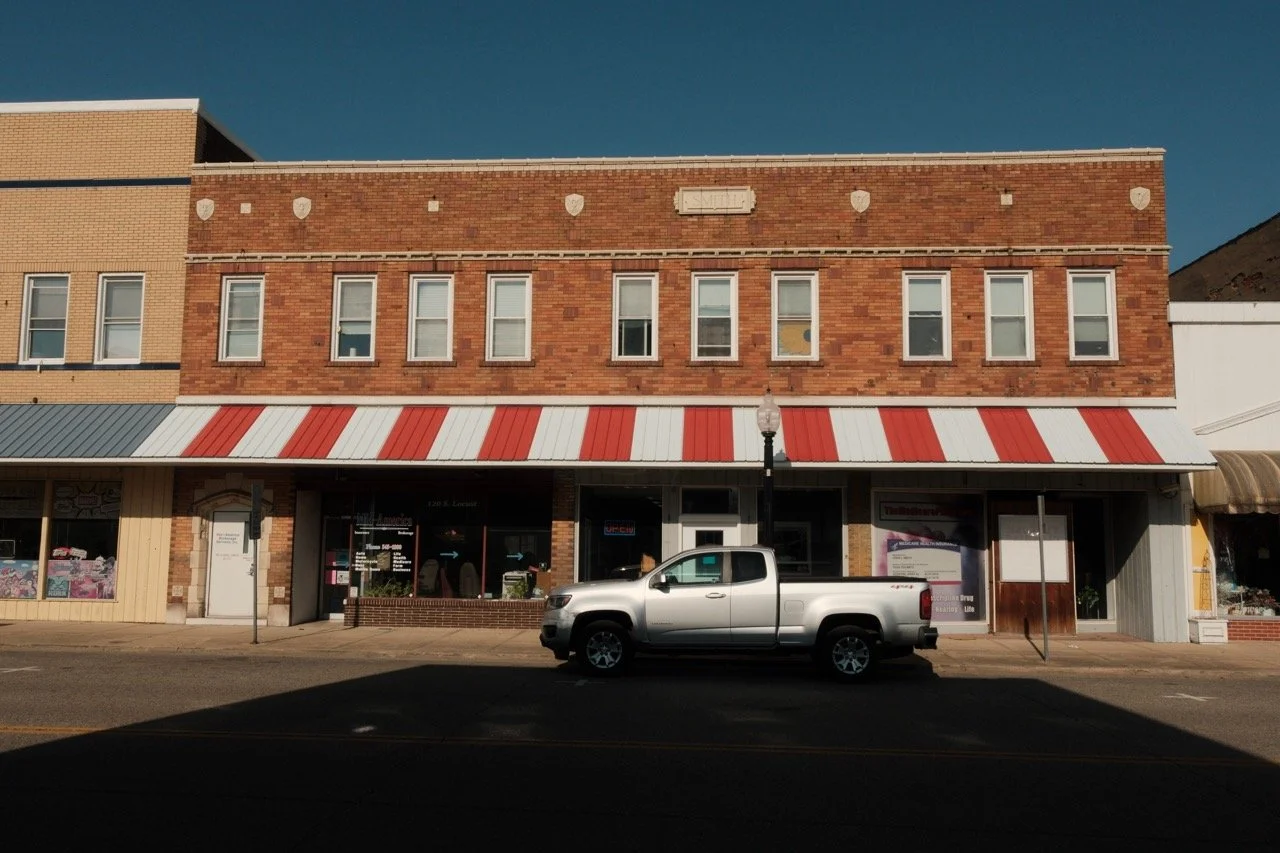
112, 118, 120 South Locust Street, ca 1890, 1905
Smith Building | Mid-America Insurance
History of 112 S Locust
1879 - Centralia Building & Loan, Stoker Building
1894 - G.L. Pittenger wholesale & retail grocery (1894 City Directory)
1900-02 - Ed Ryan's News Stand, first door north of Post Office, cigars. (1900-02 City Directory)
1906-07 - Speirs & Williams Millinery (1906-07 City Directory)
1910 - William T. Burge Insurance. (Archives: 1910 Centralia City Directory)
1923, June - Centralia businesses welcoming Hustlers included Stead's Dept. Store.
1930 - Keyrdouxelis Bros. Dry Cleaners, 110-112 N. Locust. (Source: 1930 CTHS Sphinx Yearbook)
1930, Oct - Fire sweeps half of the first block of South Locust for $570,000 damage losses suffered by June C. Smith, Coffee Shop, Kendall & Tyler, Livesay Music, Gem Theater, Mrs. Elsie Segler, Zarbock Hardware, Ben H. Pitts, and City Hall.
1932 - Centralia Paint & Wallpaper (Source: Sentinel Ad)
History of 118 S Locust
1900-02 - G.L. Pittenger groceries, crockery, glassware, etc. (118-120 S. Locust)
1904 - The Bazaar (118-120 S. Locust); Miss Taylor millinery. (1904 Centralia City Directory)
1906-07 - E.D. Davis notions, toys (1906-07 Centralia City Directory)
1910 - S. Andrews Insurance. (1910 Centralia City Directory)
1922 - L.H. Reed, the A.D.S. Store.
1923, June - Centralia businesses welcoming Hustlers included Hart Pharmacy.
1931, Mar - Kehanes open ladies wear store in June Smith Building.
1932 - Sentinel ad: The Lucille Shop, women's wear.
1933 - K.W. Webster Plumbing & Heating, (116-118 S Locust)
Lucille Shoppe (118 S Locust)
Smith Building (116-120 S Locust)
1939 - Darling Dress Shop (118 S Locust)
History of 120 S Locust
1900-02 - W.R. Smith (upstairs in Pittenger Bldg.) real estate, loans, notary public, insurance.
1900-02 - Charles F. Dew, atty, City Atty.; L.B. Skipper, atty, Justice; Seymour Andrews insurance, real estate, police magistrate; W.F. White, Justice; W. Rollin Smith real estate. (1900-02 City Directory)
1904 - Pittenger Block: Milt Duncan, contractor & builder; Seymour Andrews, police magistrate, notary public, real estate & insurance; June Smith, attorney; Smith &. Sarver real estate. (1904 City Directory)
1906-07 - J.L. Jones Furniture; Seymour Andrews insurance & real estate; R.H. Ditzier, physician & surgeon; Fred Kist, tailor ; Frank J. Zick insurance (Connecticut Fire Ins. Co., German Ins. Co., Milwaukee Mechanics ins., Northern Ins. Co.); A.J. Sliger concrete work (1906-07 Centralia City Directory)
1910 - E.D. Davis Dime Store, 120S. Locust. (1910 Centralia City Directory)
1920 - Joseph W. Ross, florist and seedsman, greenhouse here.
1921, August - Piggly Wiggly store in Centralia opens at 120 S. Locust.
1933 - Smith Building, 116-120 S. Locust
Edmiston-Nichols Shoe 8. Hosiery Co. (Source: 1933 Centralia City Directory)
1938 - Discel Service Station, owner A.E. Dodillet
120 ½ Dolly Hat Shoppe
120 ½ Musicians Local No. 568 (Source: 1938 Centralia City Directory)
1941 - Dolly’s Hat Shop, Helen Joan Brady, manager
120 ½ Fred L Wham in. attorney office
120 ½ L.C. Danver adjuster office
120 ½ Western Adjustment & Inspection Co. (Source: 1941 Centralia City Directory)
Architecture
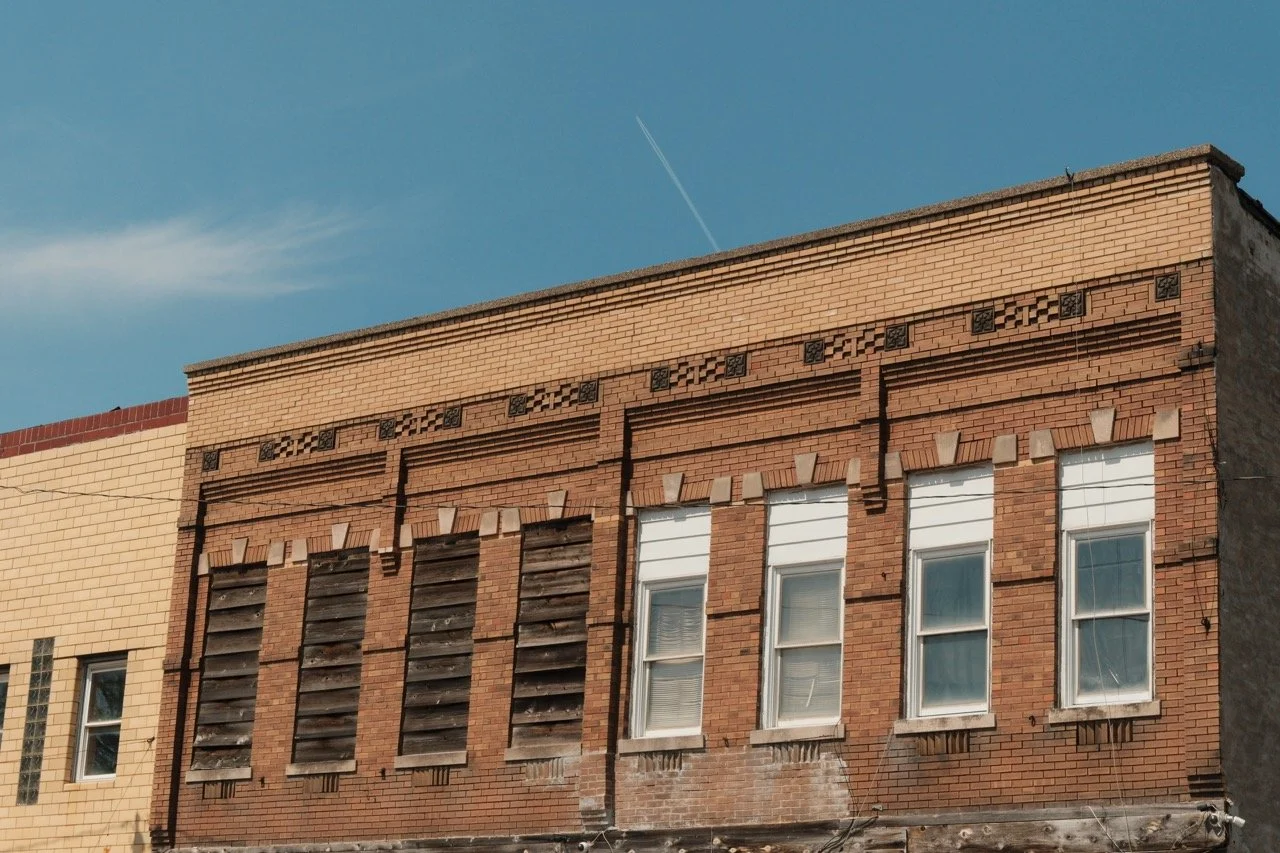
The 1905 façade replacement included variegated orange brick and buff terra cotta accents. The façade can be described as having four bays. The first of these, from the left, is a narrow bay for the entrance to the stairs for access to the second floor. That doorway is of slightly lighter brick than the rest of the building, and the doorway has a terra cotta surround presenting a Tudor arch complete with a hood and rosettes, common features of the style.
The remaining first floor storefronts are divided into three sections, each marked by a brick pilaster with a large terra cotta rosette at its base. Although the storefronts have been substantially replaced by contemporary materials, the division into three parts carries over to the treatment of elements on the second floor. Above the storefronts is a thin string course of terra cotta embossed with a foliate design, five courses of brick, and another course of simple dripstone in terra cotta. Rosettes mark the divisions between the first and second bay. The second floor windows are arranged in four groups: first a single window above the stairway entry, then a group of three centered in each of the remaining three bays. Above the windows is another string course of terra cotta, then an expanse of brick to the top of the parapet. This section of the fagade presents terra cotta shields between each bay. The center of the three larger bays presents a plaque with the building's name; centered in each of the remaining bays is a small rosette. Coping is of terra cotta.
122-124 Locust Street, ca 1955
Silver Age Collectables
History of 124 S Locust
1933 - Illinois Sweet Shop (Source: 1933 Centralia City Directory)
1938 - (123-24) Arrasmith Cafe, M.J. Arrasmith
Yellow Cab Co., owner Ed Westman (Source: 1938 Centralia City Directory)
1974, Mar - Mary-Fay Shop, 124 S. Locust. Apparel for ladies
Architecture
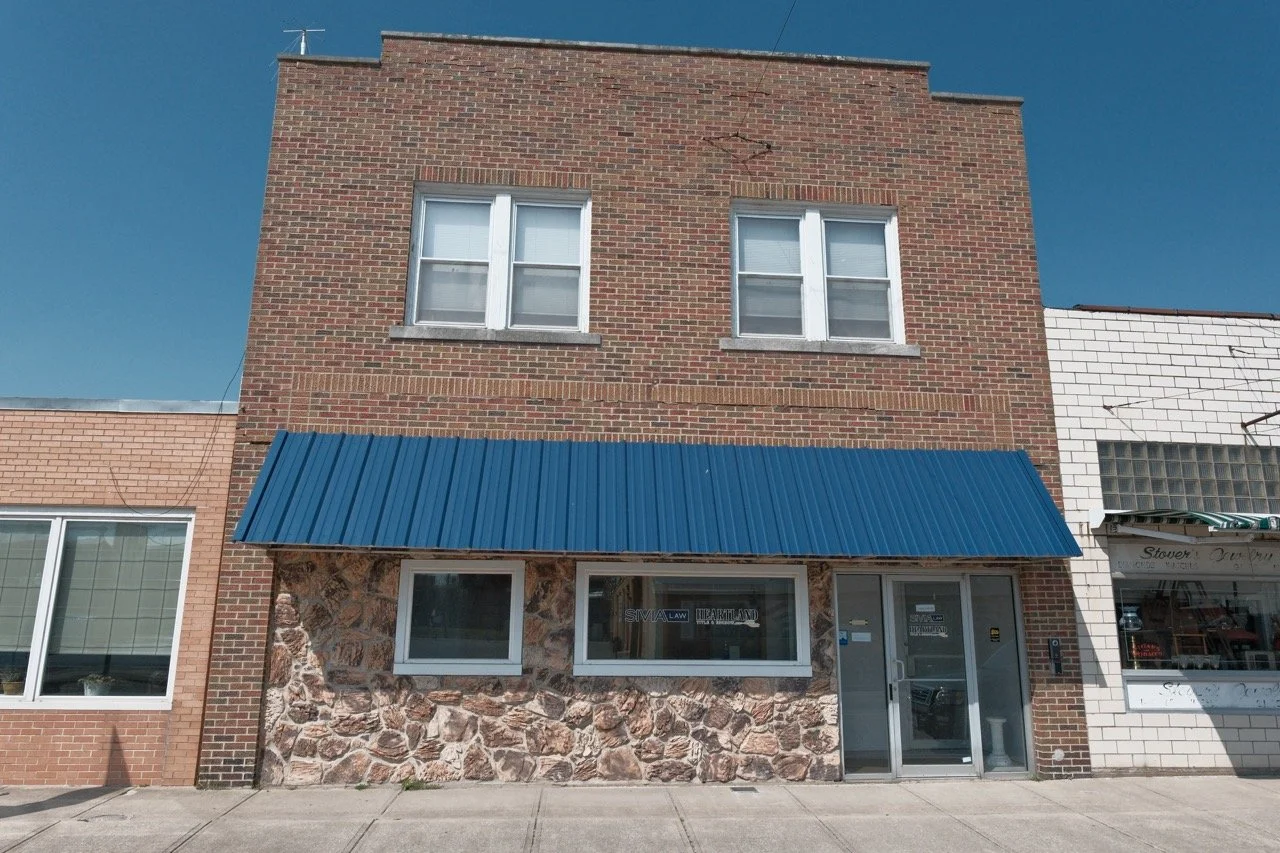
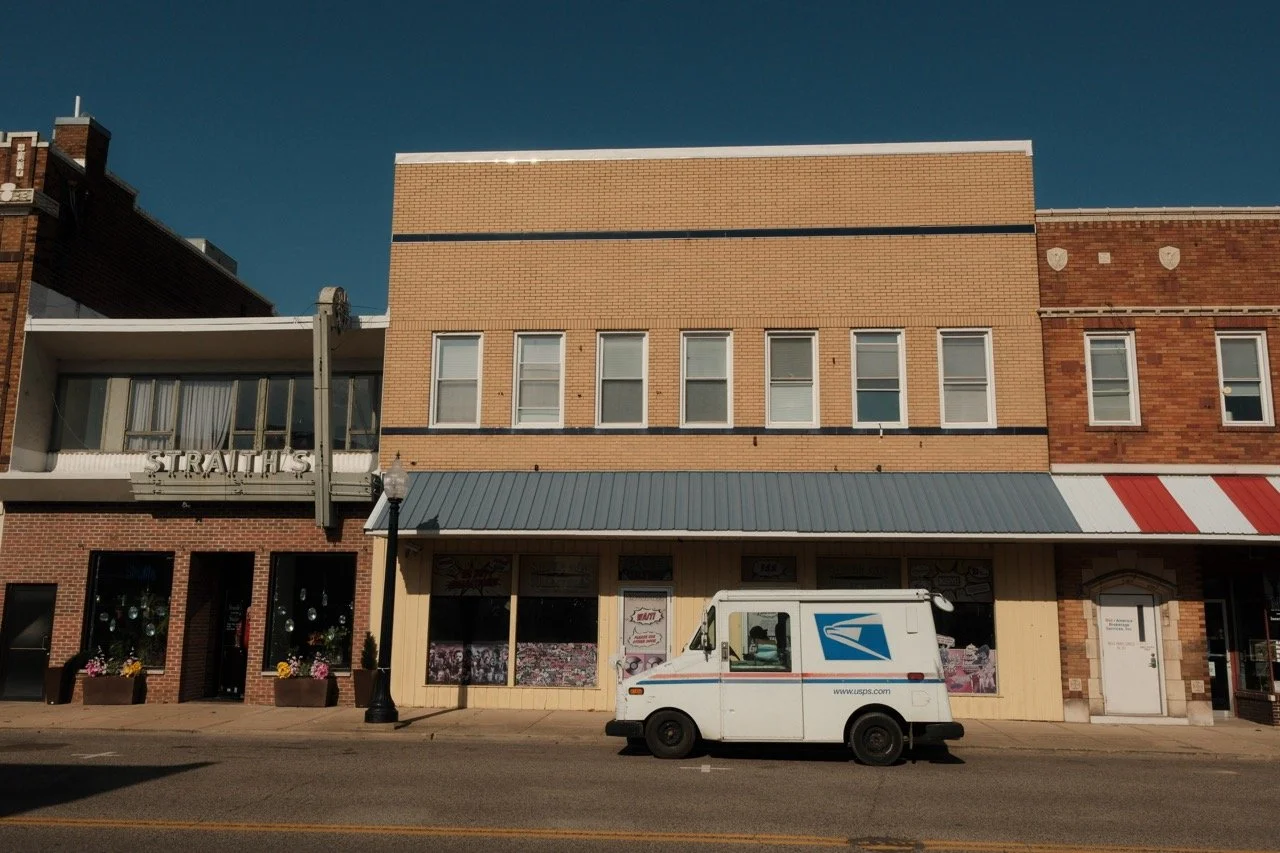
A plain yellow brick two-story commercial structure with blue architectural glass accents and a metal awning. The storefront has been replaced with wooden vertical siding, plate glass and metal and glass doors. The doors to both stores are in the center of the building, with plate glass windows on either side.
Above the metal awning a section of blue architectural glass stretches across the building. A number of panels are missing. The same material is applied in a thin strip beneath the second floor windows, suggesting the traditional use of a string course of stone to serve as sills for the windows. A row of soldiers stretches across the building above the windows, mimicking the architectural glass sill and serving as lintels for the windows. A second band of blue glass is positioned half-way between the tops of the windows and the top of the parapet. The façade is otherwise unadorned.
126 South Locust Street, 1945
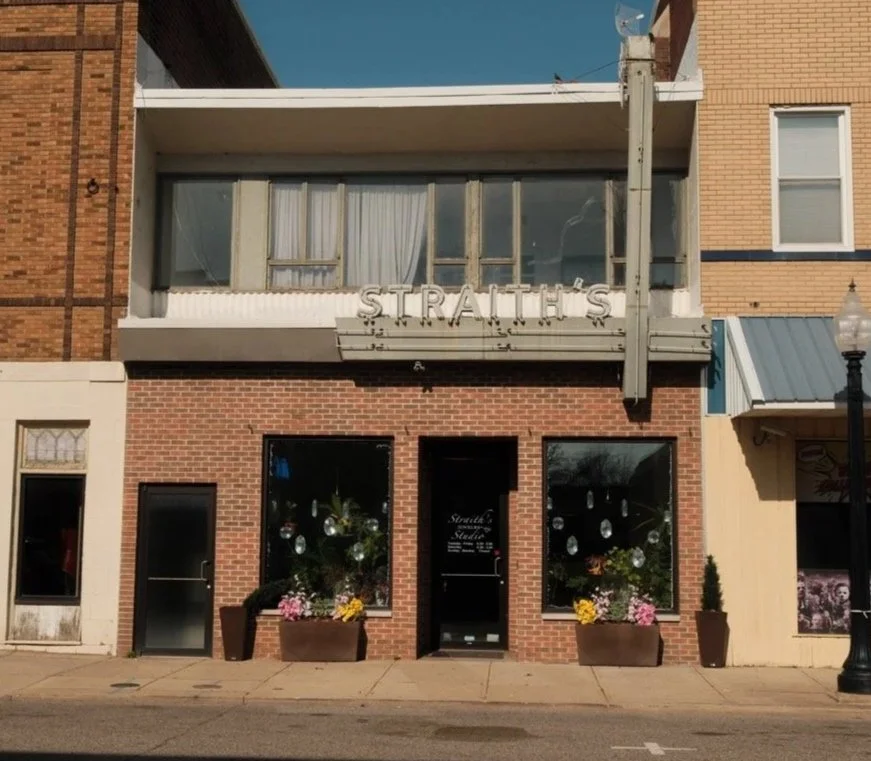
Straith’s Jewelry Studio
History of 126 S Locust
1946 - Straith’s Jewelry
Architecture
As a 1945 building in the International Style, Straith’s Jewelry maintains its distinctive aluminum and neon sign and line of windows with slender metal frames stretching across the second floor. The storefront, however, has been covered with contemporary brick, its expanse of windows replaced by an entry flanked by two plate glass windows.
128 South Locust Street, ca 1920
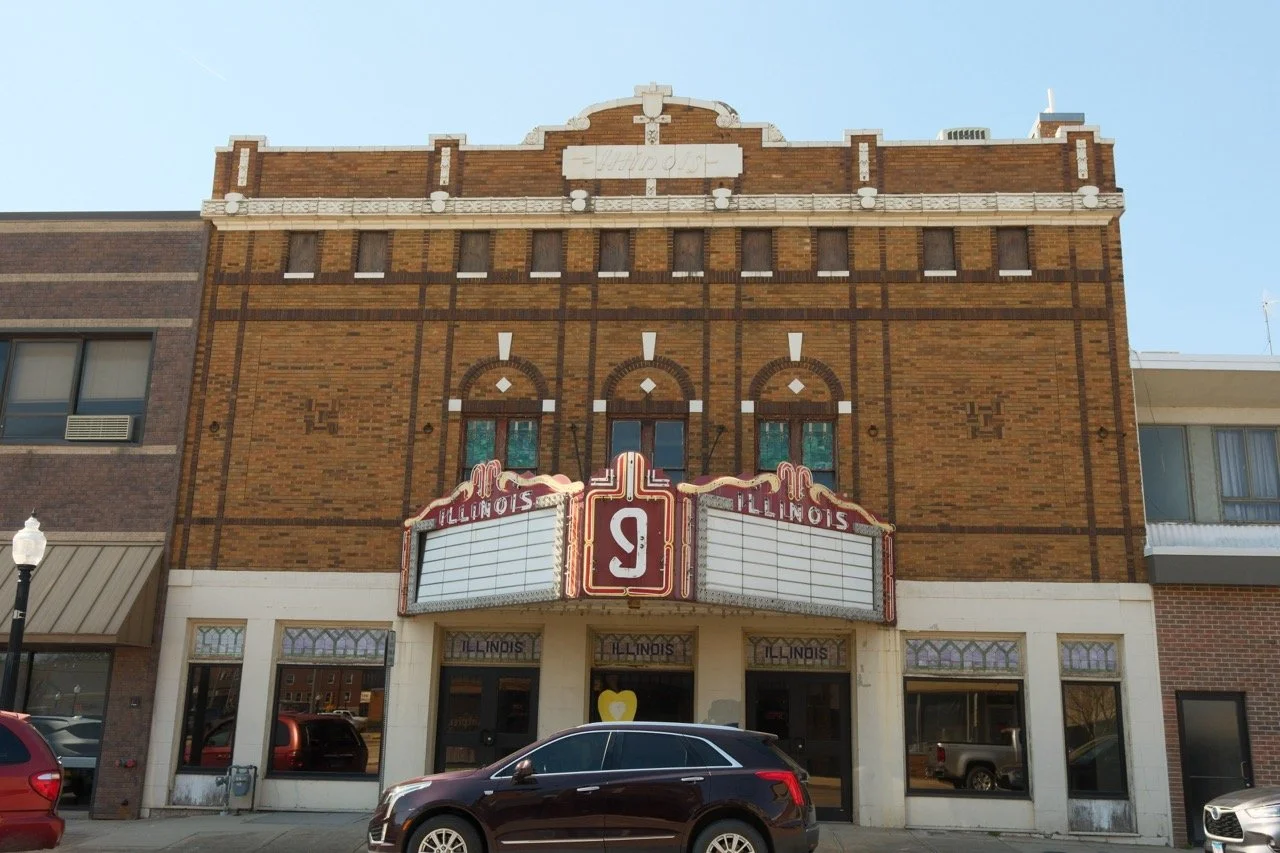
Illinois Theater
History of 128 S Locust
Note: Until about the mid 1940's, the Illinois Theater's address was 126 S. Locust
1922 - Illinois Theater
1933 - Illinois Barber Shop (Illinois Theater was listed at 126 S. Locust, (Source: 1933 Centralia City Directory)
1938 - Illinois Sweet Shop, C.E. Orrowner, confectionery (Source: 1938 Centralia City Directory)
1953, Jan - 1. Russell Nanney sold to Jerome Destreich on the 29 the business known as City Newsstand along with the fixtures and merchandise, located on the property of the Queen Oy Building Corp-, 128 S. Locust, Centralia, for the amount of $2500
Architecture
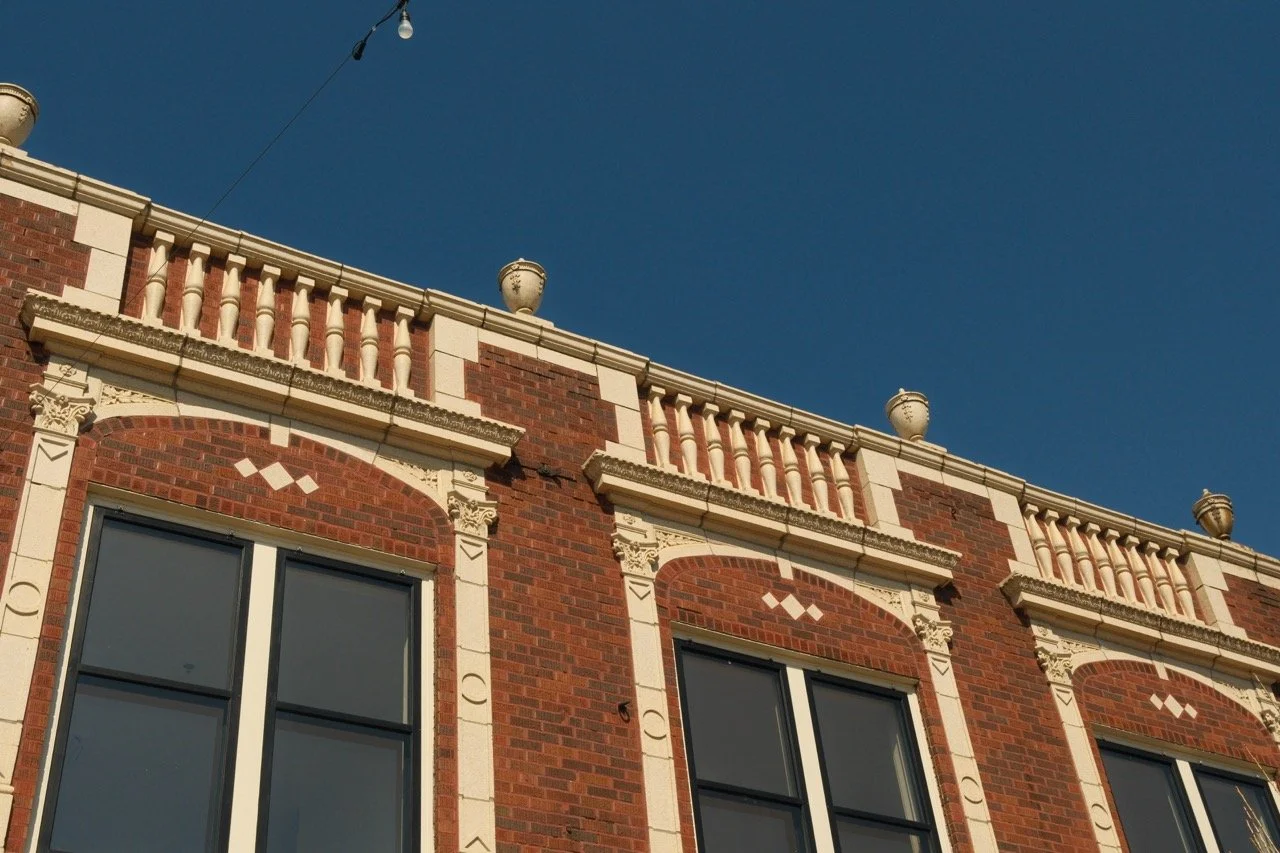
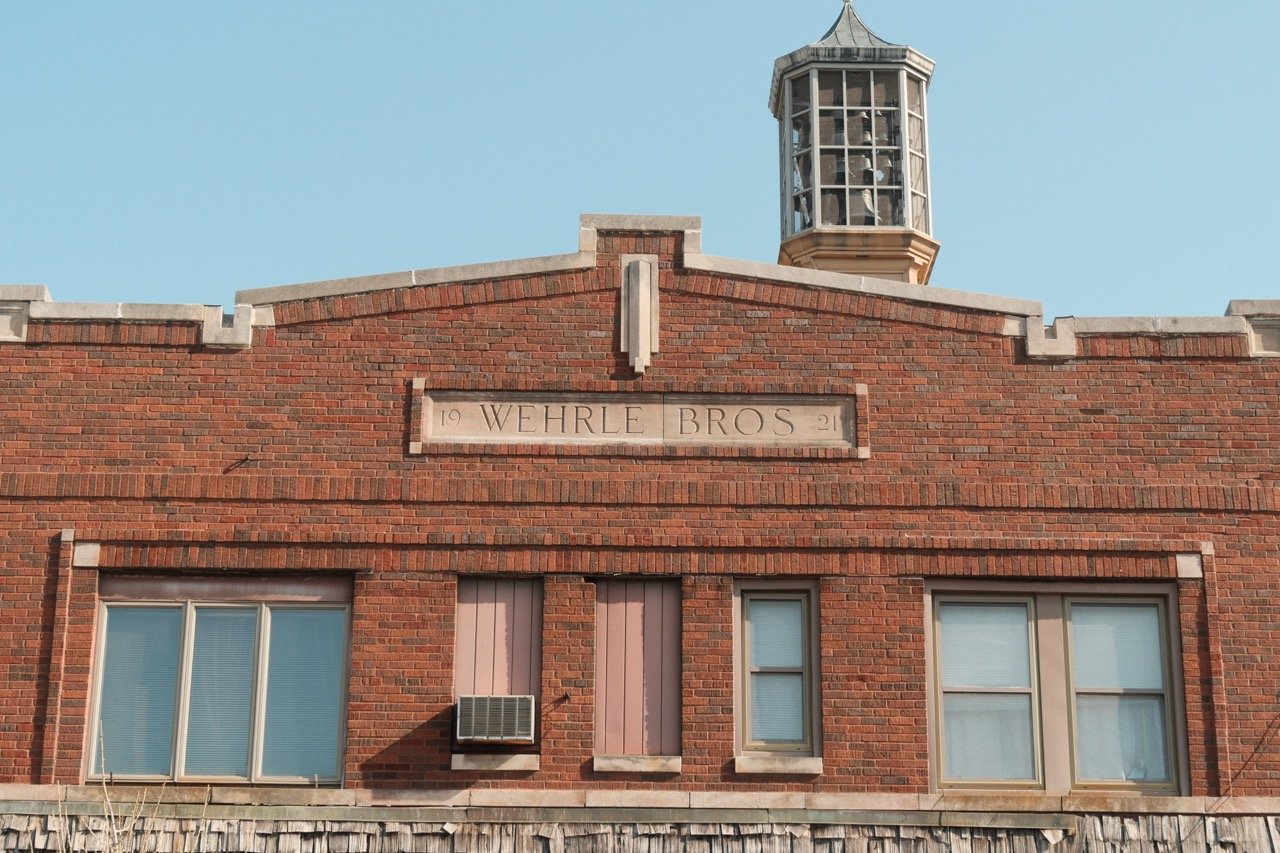
The Illinois Theater was built in the commercial style with terra cotta accents that recall Classical or Renaissance motifs. The terra cotta first floor storefronts have been painted over, and though the original box office and poster frames are gone, the stained glass in the transom windows is the same as seen in a 1944 photo. Brickwork and terra cotta trim about the first floor is intact, and includes the use of darker brown brick to delineate the building’s vertical divisions, provide decorative arches for the three pairs of windows above the marquee and provide a horizontal division between the center and uppermost part of the building. Terra cotta at the building's parapet includes a string course and ornaments at the building's vertical divisions with patterns featuring foliage, fruit and flowers, as well as a plaque with the building's name set beneath a segmental arch framed with rosettes.
130 South Locust Street, ca 1920
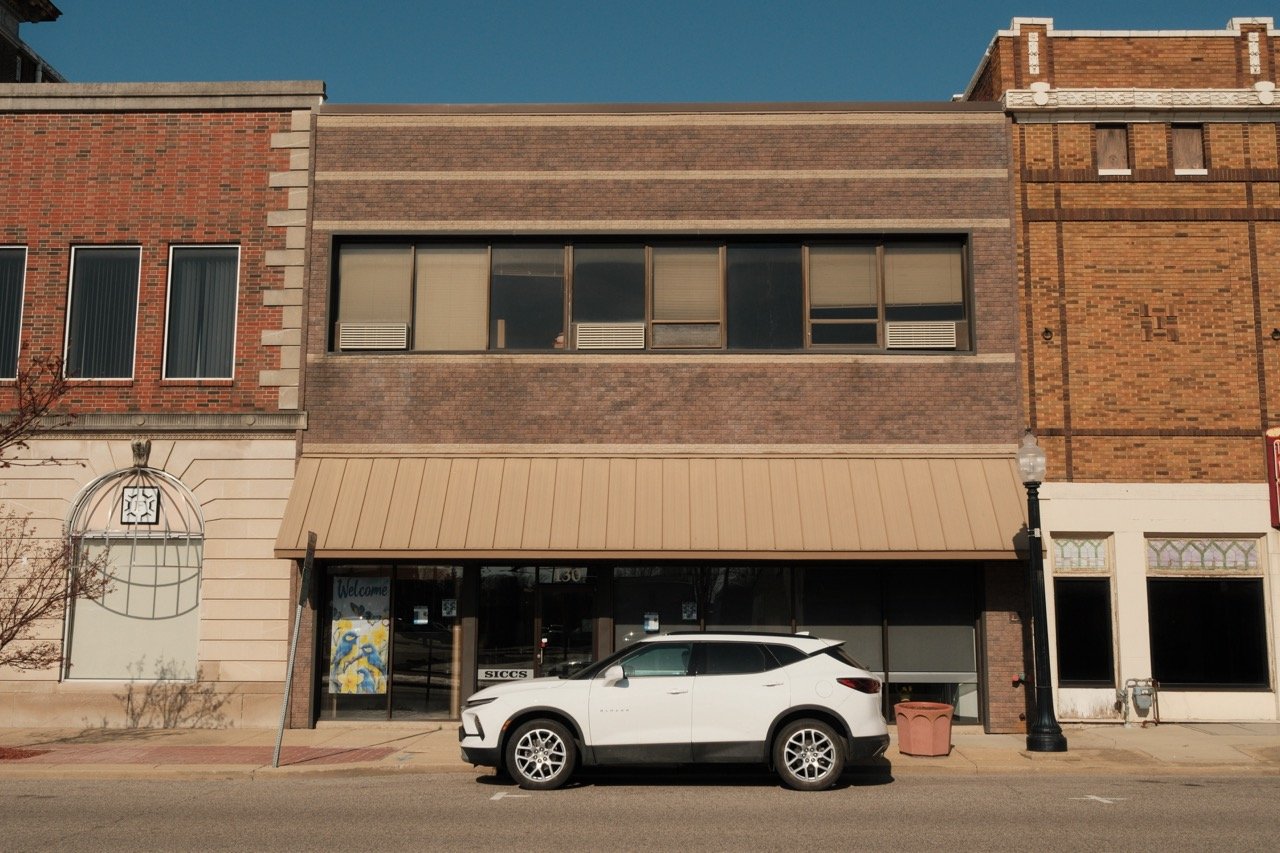
SICCS
History of 130 S Locust
1933 - Stead's Store (Source: 1933 Centralia City Directory)
1938 - Steads, owner Mrs. Fannie Peskind (Source: 1938 Centralia City Directory)
1941 - Steads, Mrs. Fannie Peskind owner (Source: 1941 Centralia City Directory)
Architecture
This two story building presents a contemporary storefront of wood and glass, featuring a number of six-over-six double-hung vinyl windows. A fixed awning of wood and wooden shingles separates the first and second stories, ending at a terra cotta cornice that has been painted green.
The five bays of the second story are defined by pilasters of brick resting on buff-colored plinths and rising up to stylized Corinthian capitols supporting an entablature and cornice, all of the same buff-colored terra cotta. A group of windows, all of which appear to be original, fills each of the five bays.
The brick parapet is adorned with a relief of an urn resting on the cornice above each pillar. The terra cotta coping rises towards the center of the parapet, where a cartouche with the letter H, likely for Hutter, the building's original owner, crowns the parapet
134 South Locust
History of134 S Locust
1923, June - Centralia businesses welcoming Hustlers included Union House Furniture.
1933 - City National Bank (Source: Sentinel business ad)
Personal Finance (Source: Sentinel business ad)
Agey Buildins (Source: 1933 Centralia City Directory)
Architecture
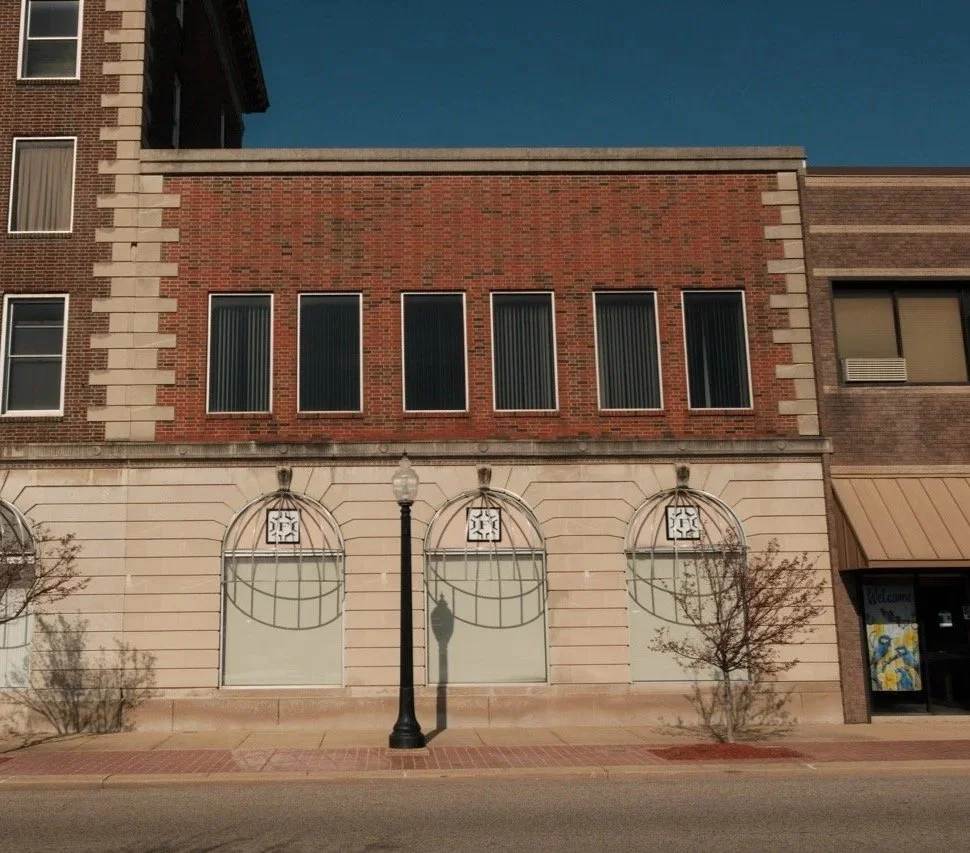
Previously presenting as a single building with its neighbor to the north, this building has had its façade redone recently to connect it visually to the five-story bank building to its south. The first floor presents courses of dressed stone with pronounced joints, capped by a string course of ribbed stone periodically punctuated with blank rosettes. This course separates the first from the second floor. At this level, the heavy stone of the first floor gives way to quoins at the building's corners, with red brick becoming the primary building material. The six evenly-spaced windows are contemporary fixed windows, and the parapet is finished with two courses of stone.
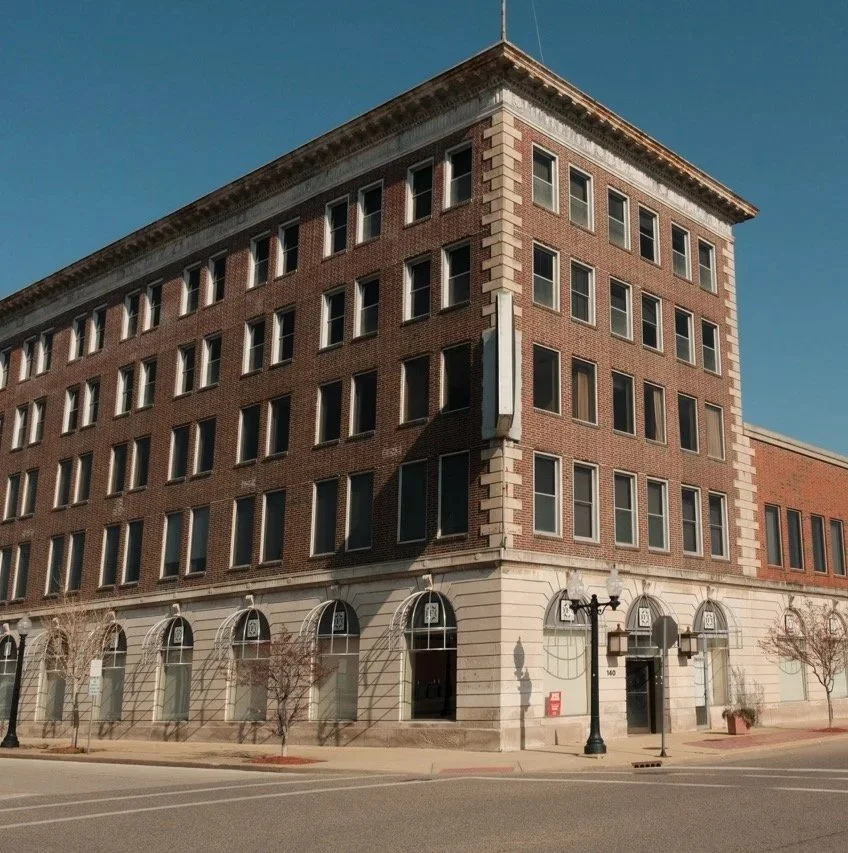
140 South Locust Street, 1920
City National Bank, First National Bank, Magna Bank
HARGIS No. 105140
History of 140 S Locust
1900-02 — Merchant's State Bank
1922 - Illinois Theater, C.W. Hall manager (Source: 1922 Centralia City Directory)
1933 - City National Bank Building
City National Bank
Rooms
Lobby: George W. James Newsstand
2- floor: Illinois Bell Telephone Co.
300: City National Bank Bidg. Barber Shop
301: W.L. Derleth
302: Dr. William H. Gambill
303: Dr. B.F. Keller
304: Artiste Beauty Shop
306: Dr. Elza E. Holloway
308-9: Personal Finance Co.
301: G.W. Robson Jr.
312-313-314-315: vacant
306-17: Dr. F.A. Phillips
400-401; Jonas & Branson
402: City Building & Loan Assn.
403-404-405: William G. Murphy
410: Cunningham Press
411: R.T. Gillette
416: J.C. McGaffigan
500: Dr. J.C. Heyduck
502-3: Guy C. Livesay
504-505-506-507-508-509-510-511: vacant
512-513: Prudential Insurance Co.
515: C.E. Stead
516-517: vacant (Source: 1933 Centralia City Directory)
1938 - City National Bank (Source: 1938 Centralia City Directory)
(138-240) City National Bank Building (Source: 1941 Centralia City Directory)
1967-1972 - Eleine's (Ritchie's)
Architecture
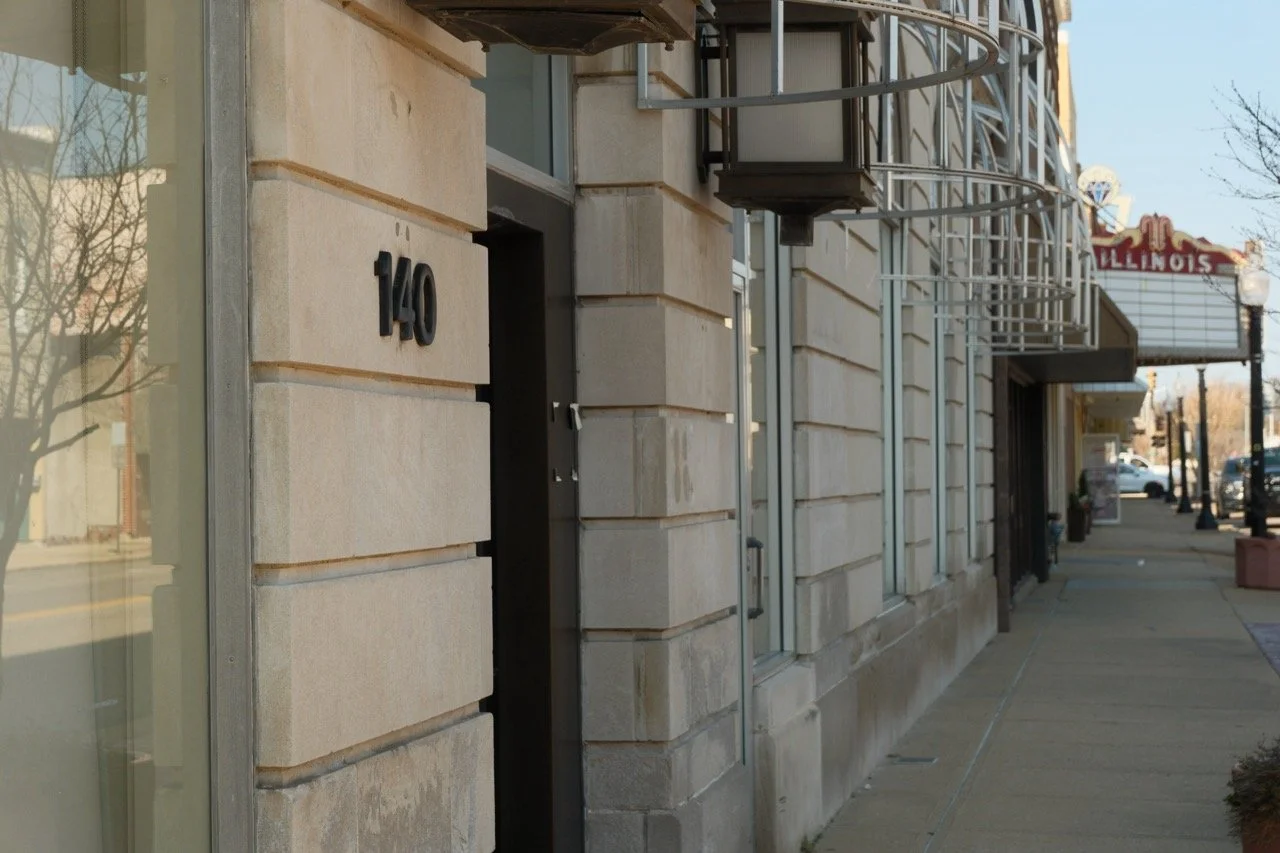
Typical of the Classical Revival Style, this five-story office building is designed in three horizontal sections. The first floor presents courses of dressed stone with pronounced joints. The evenly-spaced Roman arches at this level each have an oversized key shaped like a scroll that appears to support a string course of ribbed stone periodically punctuated with blank rosettes. This course marks the first division of the building.
In the second division, which includes the top four floors of the building, the primary building material is red brick, while stone is used for quoins at the corners of the building. Pairs of plain rectangular windows are evenly spaced across the upper floors, some of which have been replaced by contemporary fixed or double-hung windows. The last division of the building is the cornice, which repeats on a larger scale the course of ribbed stone with rosettes between the first and second floors. Here, the height of that course allows it to serve as an entablature to the classically-inspired projecting cornice featuring dentils and scrolled brackets.