200 East Broadway
200 East Broadway, 1928
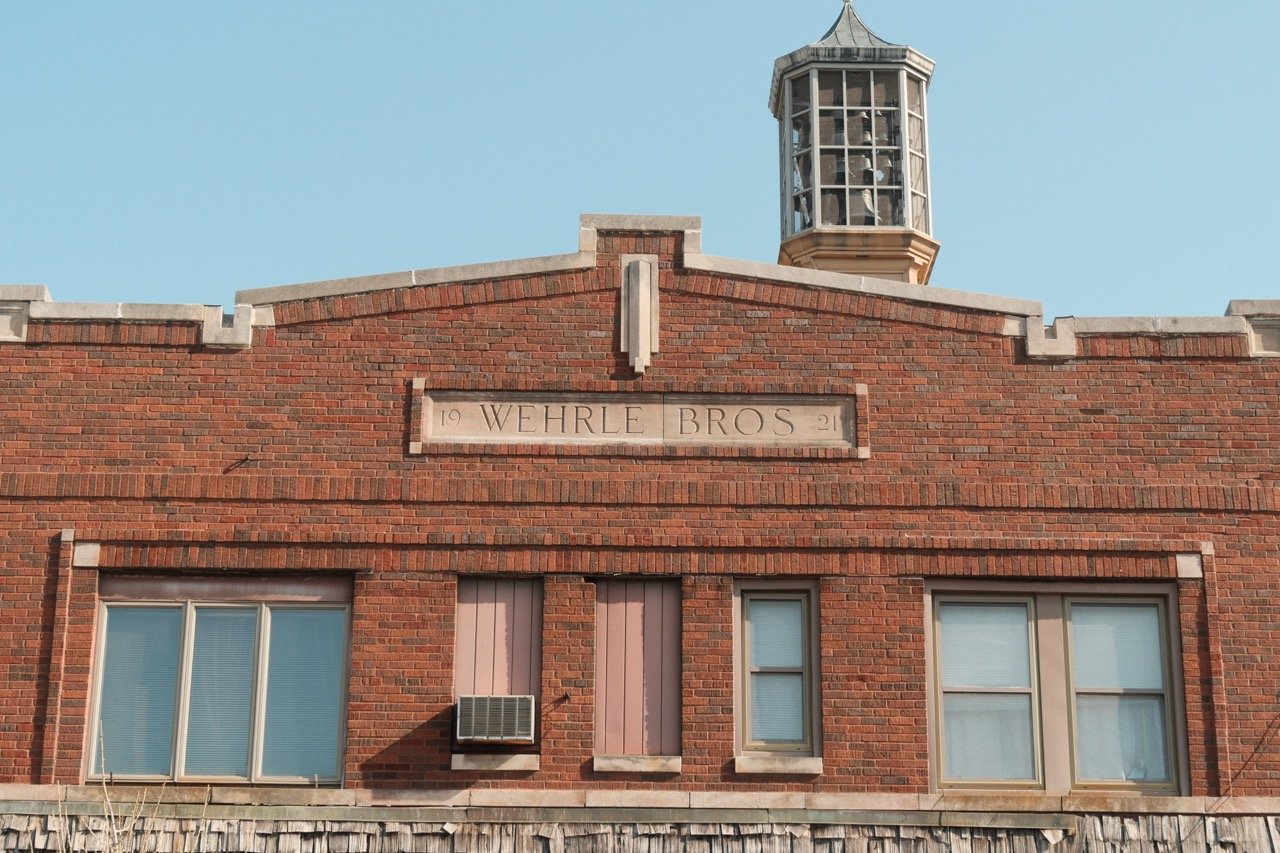
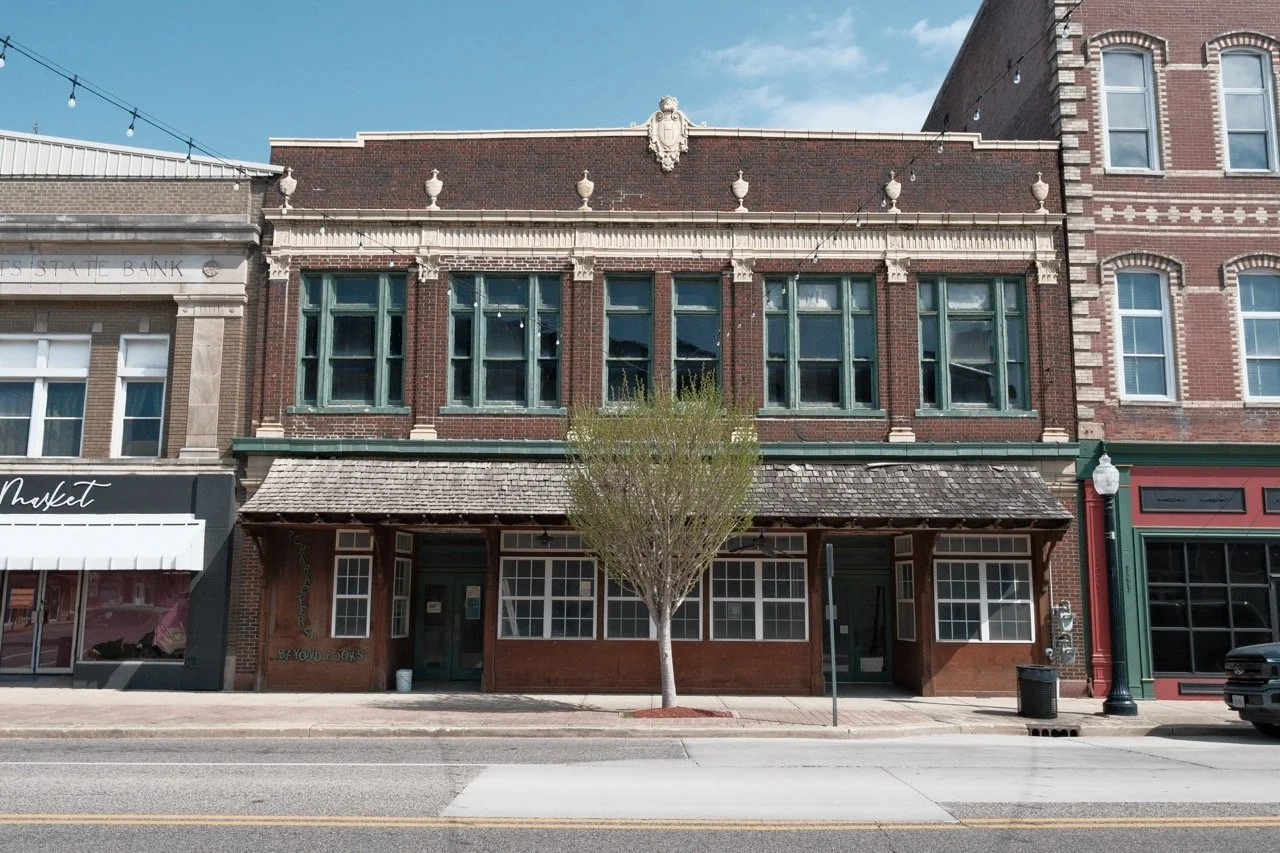
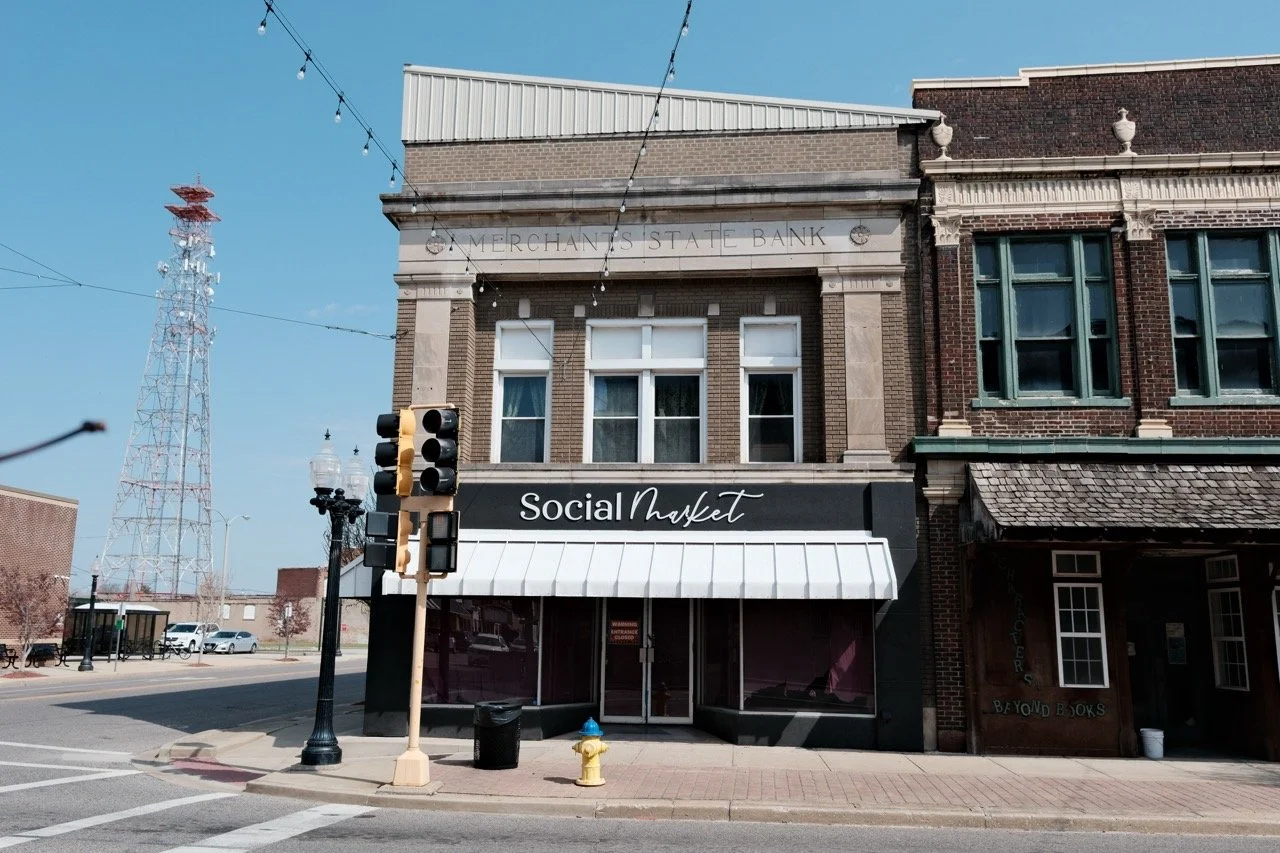
Merchants State Bank Building
History of 200 East Broadway
1900-02 – Mose Hoffman clothiers & furnishings (1900-02 City Directory)
1904 – Hoffman Mose clothing; F.F. Noleman, lawyer. (1904 City Directory)
1906-07 – M. Hoffman Clothiers (1906-07 City Directory)
1908 – Hoffman Clothiers
200 ½ - Centralia Sentinel
1910 – Mose Hoffman (1910 Centralia City Directory)
200 ½ - Miss Bella M. Janes Insurance (Archives: 1910 Centralia City Directory)
200 ½ - Samuel L. Dwight, Atty. (Archives: 1910 Centralia City Directory)
1920 – Centralia Trust & Savings Bank, J.F. Mackey president
200 ½ - Dr. Elza E. Holloway, physician & surgeon office
200 ½ - Benn F. Keller, dentist office
200 ½ - Logan B. Skipper law office (1920 Centralia City Directory)
1922 – Citizens National Bank Building, 200-202 E. Broadway (Source: 1922 Centralia City Directory)
1933 – Merchants State Bank (Source: 1933 Centralia City Directory)
1938 – Hutter Clothing Co., William Hutter President (Source: 1938 Centralia City Directory)
1941 – William Hutter Clothing Co., William Hutter president (Source: 1941 Centralia City Directory)
Architecture
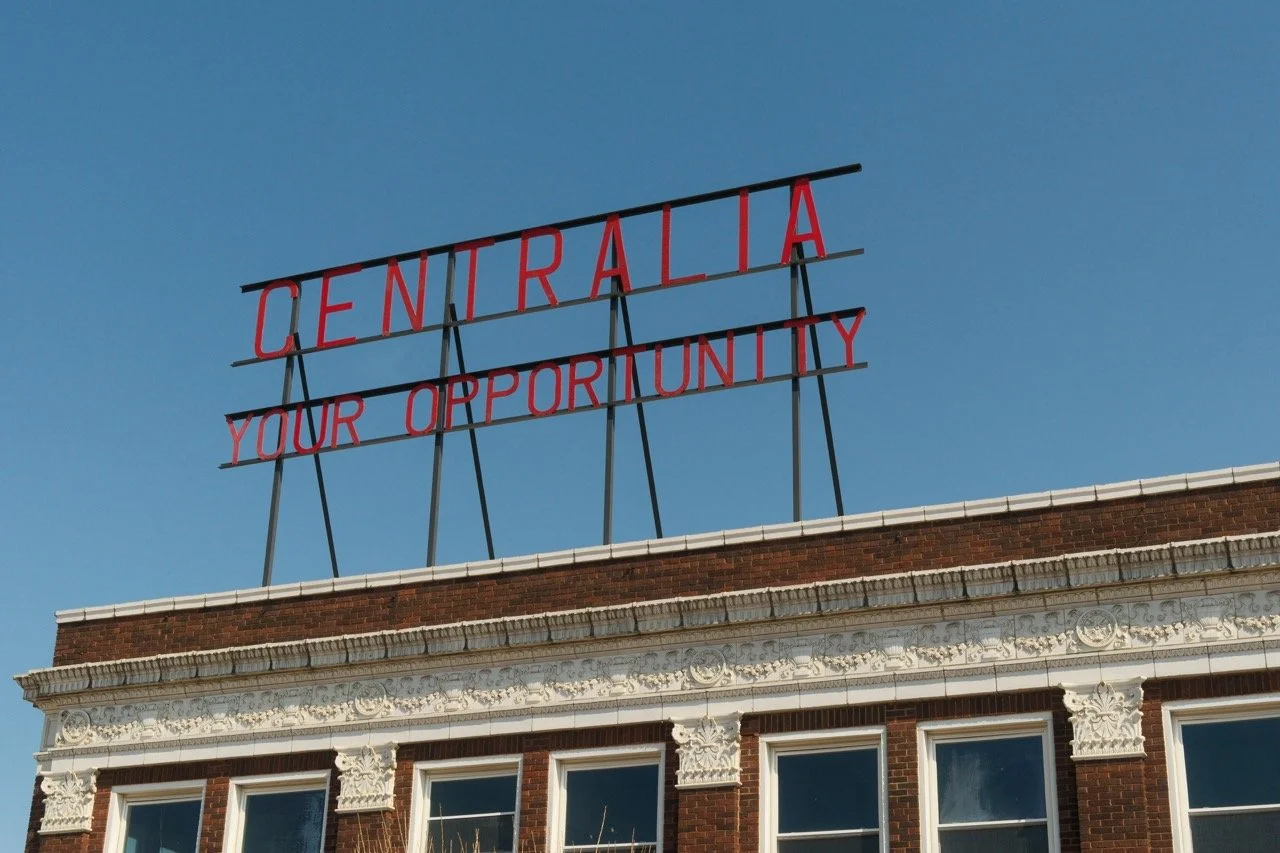
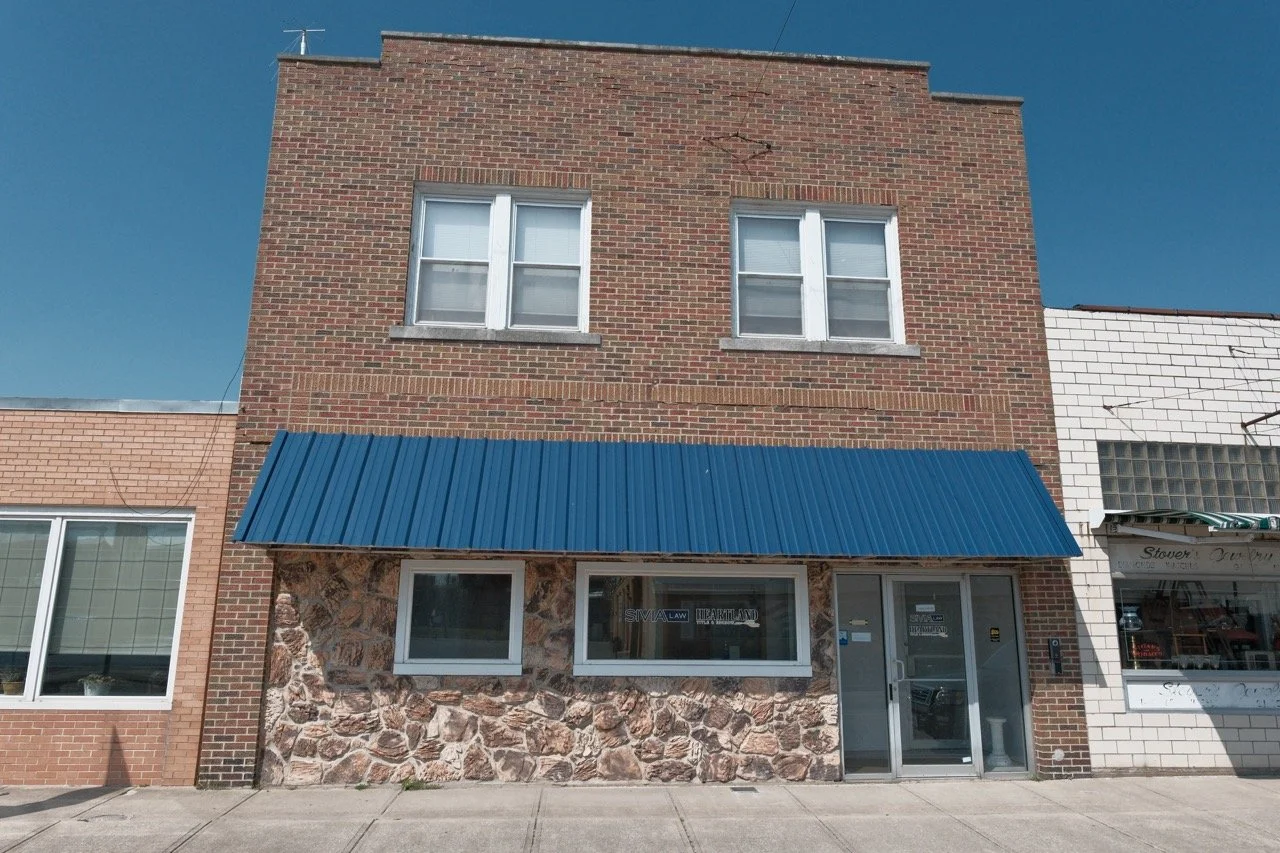
Two-story brown brick structure has a contemporary storefront of glass and textured panels. The primary façade on the second floor presents stone pilasters at each corner of the building. These seem to support an entablature of stone which carries the building's name and a simple rosette above each pilaster. A simple cornice and brick parapet with stone coping rise above the entablature. Recessed beneath it are four windows: a group of two in the center flanked by a single window on each side. The windows may be contemporary replacements, but they maintain the profiles (double-hung under transom) visible in photos dating from the 1940s. The first two bays on the secondary façade are treated similarly to the main façade, with a pair of windows centered on each bay. The six remaining bays on this side of the building each present a single window penetration stretching across both floors of the building. These have been filled with painted opaque material.
204 East Broadway, 1923
History of 204 East Broadway
1894 – H.B. Brewster Dry Goods; City Library upstairs. White Front Clothing Store (Previous entry shows this at 104 E. Bdwy. in same year) (1894 City Directory)
1900-02 – The Leader, J.H. Tucker, dry goods; Parkinson Mercantile Co., dry goods (1900-02 City Directory)
1904 – Hartman Dry Goods Co. (1904 City Directory)
1906-07 – Hartman’s Dry Goods Co., women’s clothing (1906-07 City Directory)
1910 – Red Cross Pharmacy. (Archives: 1910 Centralia City Directory)
1920 – (204-206) Pfeiffer Building
Byrd-Watson Drug Co.
204 ½ - Housh Studio, Lillian S. Housh proprietor (1920 Centralia City Directory)
1922 – Sub-station No. 2 Post Office, Louis H. Boyd clerk
204 ½ - Francis A. Phillips, physician, office
204 ½ - Spieth Studio, William S. Spieth, prop. Photographers (Source: 1922 Centralia City Directory)
1923, June - Centralia businesses welcoming Hustlers included Wm. Hillers Men's Store, 204-206 E Broadway. (Archives: 1923CS13236)
1933 – (204-206) William Hutter Clothing Co.
204 ½ - Dr. Roy R. Baldridge
204 ½ - Arthur E. Densmore Barber Shop, Densmore Beauty Shop
204 ½ - Dr. C.O. Jaynes (Source: 1933 Centralia City Directory)
1941 – F.W. Woolworth Co., Z.F. Rankin mgr. (Source: 1941 Centralia City Directory)
Architecture
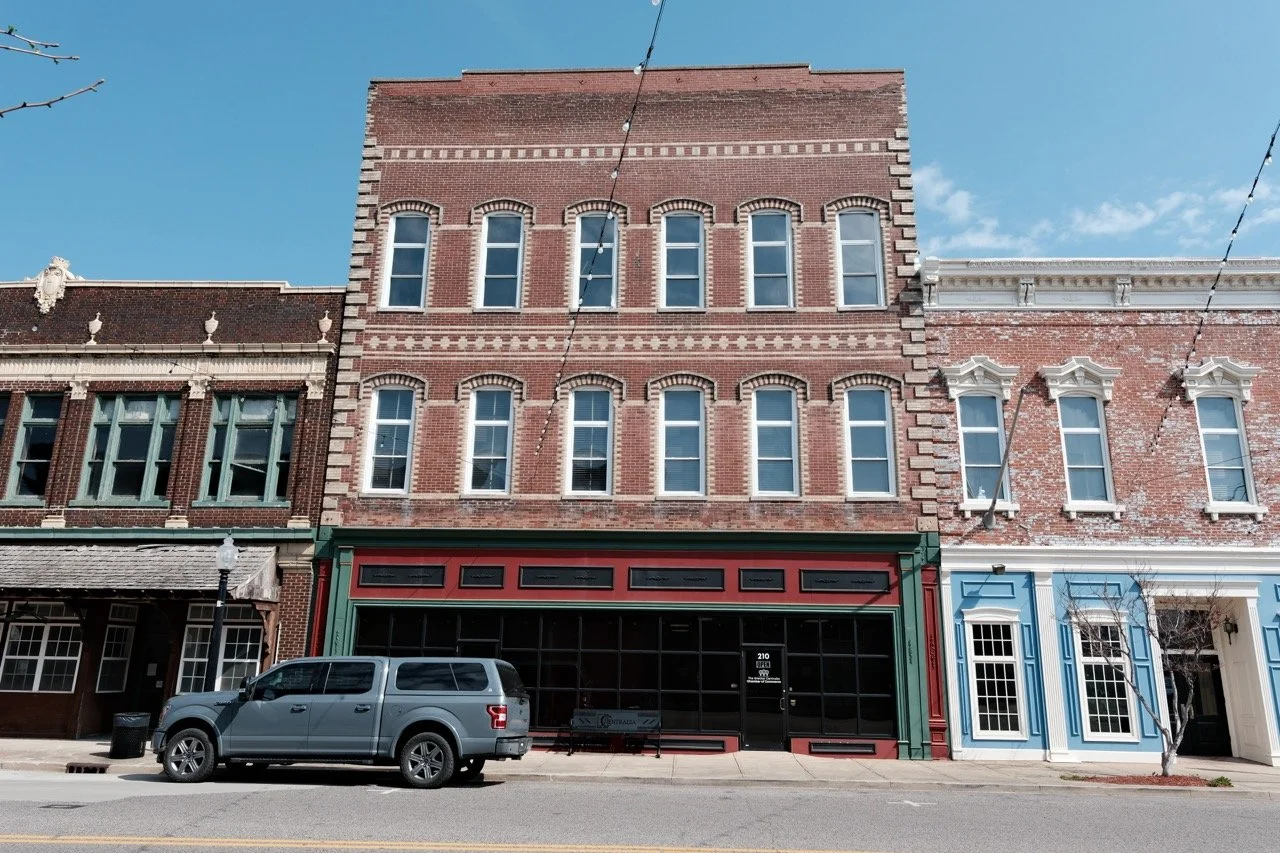
This two story building presents a contemporary storefront of wood and glass, featuring a number of six-over-six double-hung vinyl windows. A fixed awning of wood and wooden shingles separates the first and second stories, ending at a terra cotta cornice that has been painted green.
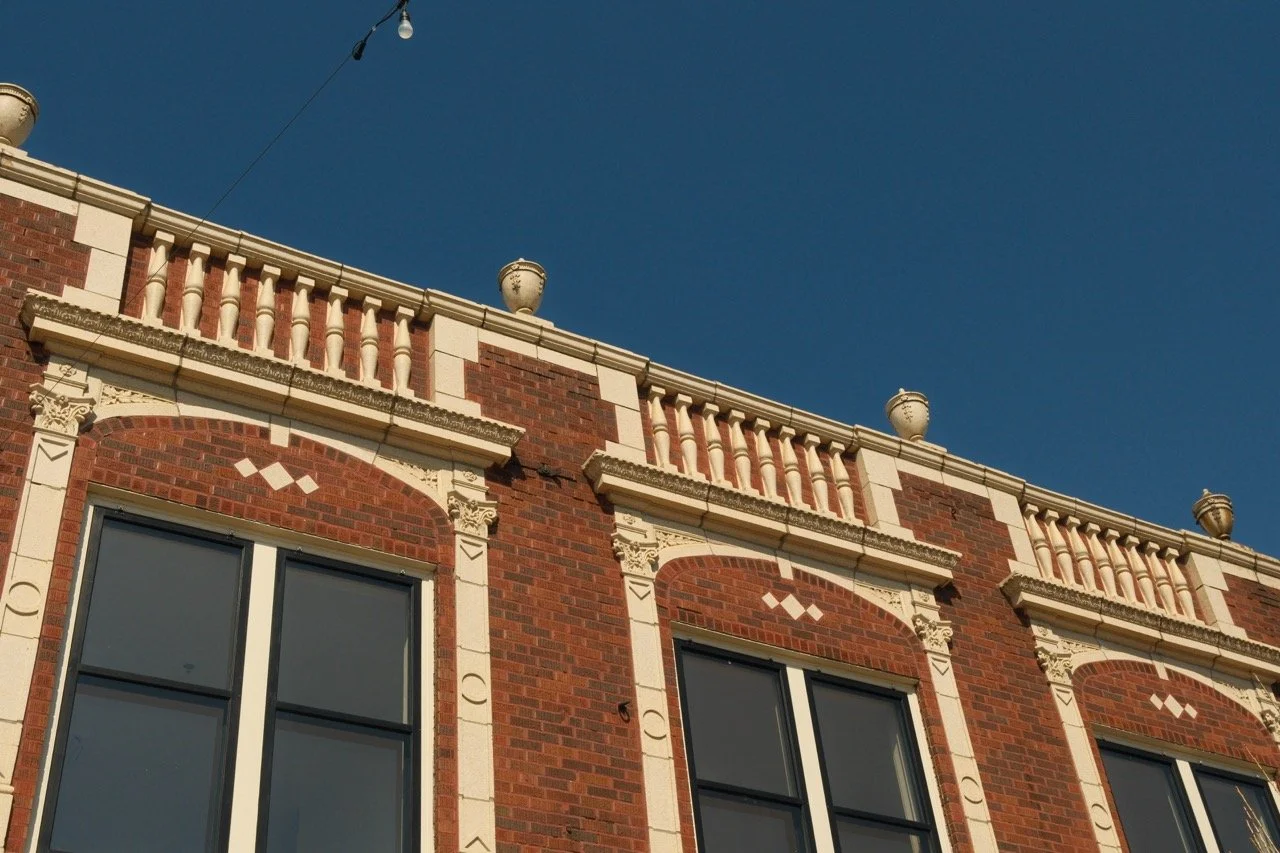
The five bays of the second story are defined by pilasters of brick resting on buff-colored plinths and rising up to stylized Corinthian capitols supporting an entablature and cornice, all of the same buff-colored terra cotta. A group of windows, all of which appear to be original, fills each of the five bays.
The brick parapet is adorned with a relief of an urn resting on the cornice above each pillar. The terra cotta coping rises towards the center of the parapet, where a cartouche with the letter H, likely for Hutter, the building's original owner, crowns the parapet
210 East Broadway, ca 1880
The Greater Centralia Chamber of Commerce
History of 210 East Broadway
1900-02 - A.H. Meyer & Co. dry goods; Clara Elrod, clerk (1900-02 Centralia City Directory)
1904 - A.H. Meyer & Co. dry goods; National Pool & Billiard Hall; Dr. D.D. Dixon, dentist. (1904 City Directory)
1906 - The Bazaar hardware (1906-07 City Directory)
1910 - Hartman's Dry Goods Co. 208-210 E. Broadway. (Archives: 1910 Centralia City Directory)
1922 - (208-10) Hartman's Dry Goods Co., Herbert W. Dover president & treasurer, Thomas H. Bean vice-president and secretary (Source: 1922 Centralia City Directory)
1938 - (208-10) 5.5. Kresge Co., M.E. Neumann, manager (Source: 1938 Centralia City Directory)
Architecture
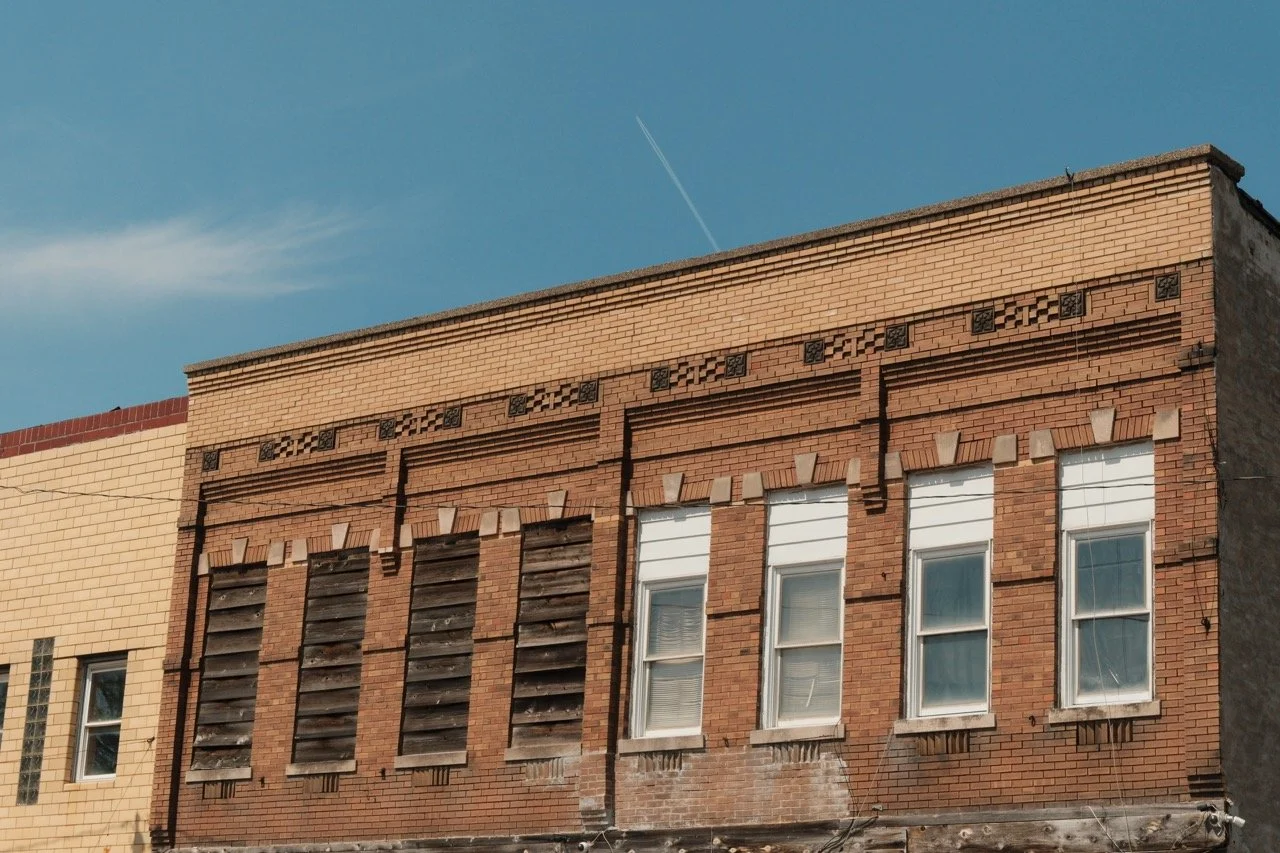
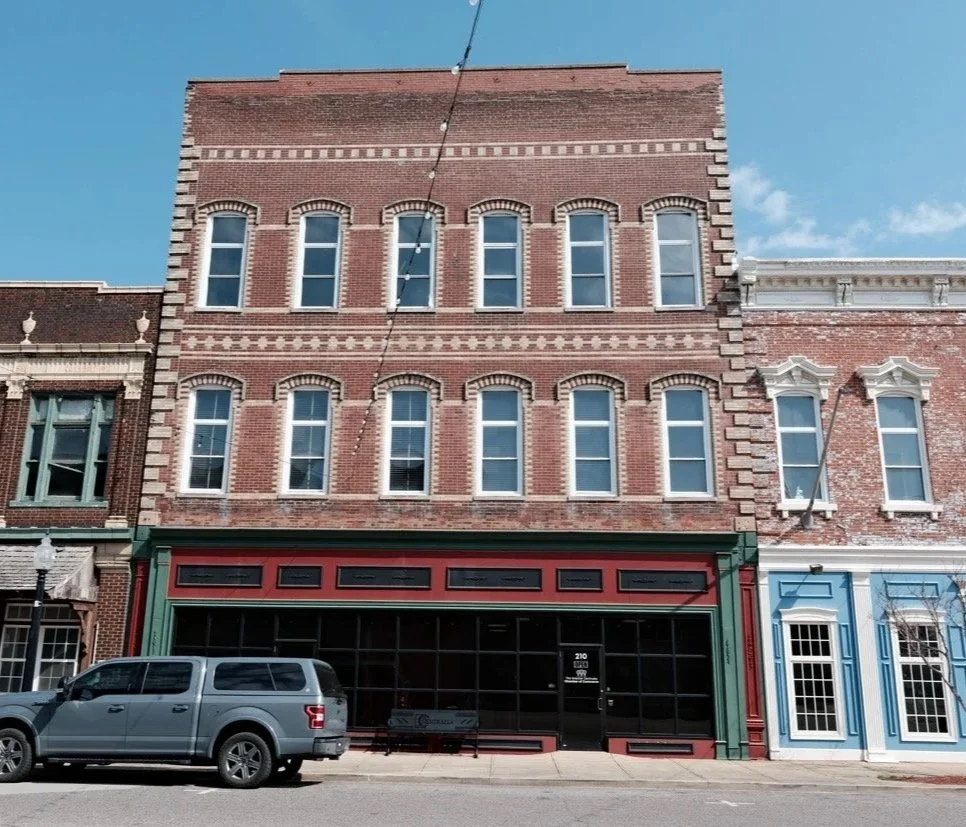
This three-story brick building of polychrome brick presents a first-floor storefront of wooden sheathing and plate glass that extends to the sills of the second floor windows. Those stone sills are set in a double course of buff-colored brick, which is used as an accent throughout the primary façade. The six evenly-spaced windows on each floor are surrounded by the pale brick, and the hoods on the segmental arch windows alternate the dark and light brick.
Between the second and third floor, a decorative band is created by the use of two courses of buff brick, separated by a course of red, above which is a seven-course secfion in which the lighter brick is used to create a diamond pattern, above which the decorative band from below is repeated. Above the third floor windows, a decorative band is formed by a single course of light-colored brick, above which is a series of squares in the lighted color, finished by another single course of light colored brick, which is also used at the corners of the façade to suggest quoins. A plain brick parapet which has recently been repaired, is finished with stone coping.
212 East Broadway, ca 1880
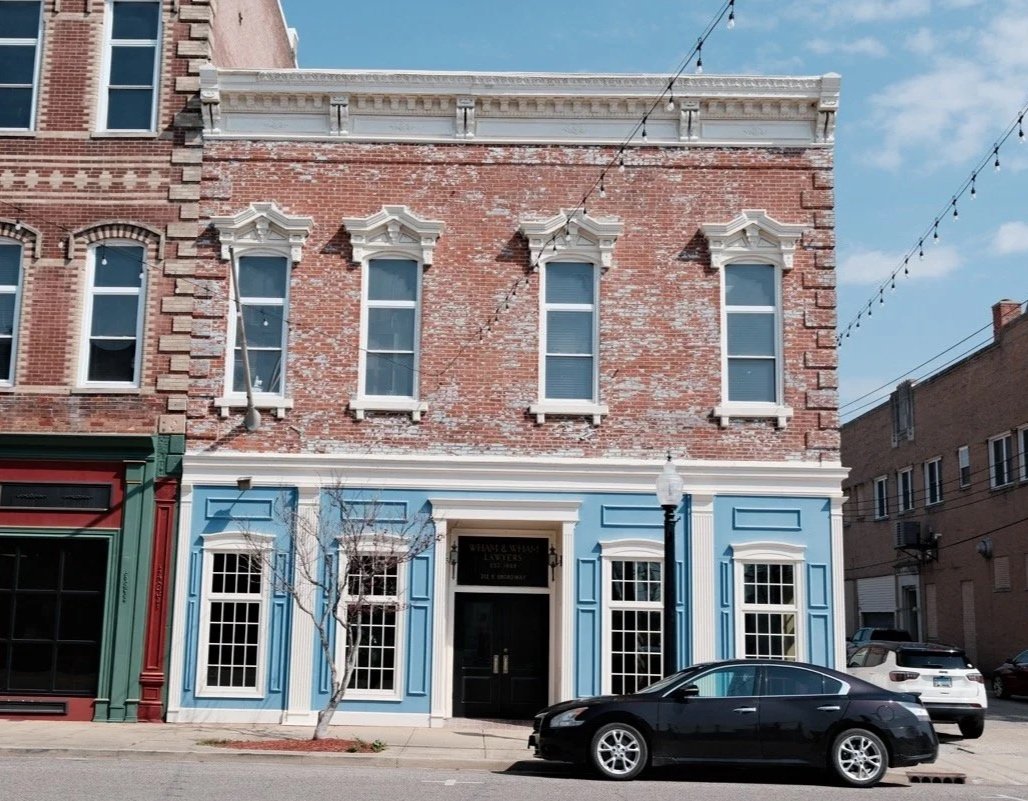
Wham & Wham Lawyers
History of 212 East Broadway
1894 — Blythe Drug Store; Willar F. Bundy & John J. Bundy, Law Offices, upstairs; Bell Telephone, upstairs (1894 City Directory)
1900-02 - Hammer Building: T.L Joy & Co. printers & publishers; W.F. Bundy, atty.; Brown's Business College; Dr. D.D. Dixon, dentist; Prof. E. Lederman Music Studio; Henry D. Buck, optician; Dr. A.W. Gause, office. (2900-02 city Directory)
1904 - W.F. Bundy, lawyer, notary public, office Hammer Block; Prof. Lederman, teacher of piano, violin & voice, Hammer Bullding: Dr. A.W. Gause, physician. (1904 City Directory)
1906-07 - Dr. D.D. Dixon, dentist; A.W. Gause, physician & surgeon; W.F. Bundy Law Office, E.R. Lederman Music Studio; Odd Fellows Hall (1906-07 City Directory)
1909 - H.E. Wilson
1910 - IOOF Hall. 212 1/2 E. Broadway. (1910 Centralia City Directory)
1911 - W.F. Bundy, attorney at law, Practice in 212 E. Broadway, upstairs.
1920
212 ½ - Centralia Building & Loan Assn. D.B. Robertson, secretary
212 ½ - Wham & Wham (Charles & Fred L), lawyers (1920 Centra a City Directory)
1922 -
212 ½ The old reliable, The Centralia Building and Loan Association, Incorporated August 25, 1879.
1933 - Wham & Wham, Fox Hardwood Lumber Co.
1938 - Edmiston-Nichols Shoe Store, owners F.B. Edmiston & C.L. Nichols
212 ½ - W.c. McBride ins. (Source: 1938 Centralia City Directory)
1941 - Edmiston-Nichols shoes & hosiery
212 ½ - Spaulding F. Glass attorney & certified public soct.
212 ½ - Donald Grover, atty. assoc. Wham & Wham.
212 ½ - Independent Oil Producers Asso., Elmer M. Ellsworn executive secretary
212 ½ - John F. Shallenberger attorney office
212 ½ - Wham & Wham attorneys, Charles John Page Wham (Source, 1941 Centralia City Directory)
Architecture
A two-story commercial structure of brick presents a contemporary storefront of wood and plate glass and an older storefront of metal, thin marble sheathing and plate glass. Adjacent to this storefront is a single pilaster from a cast iron storefront which may date to the building's construction.
The original window penetrations have been maintained on the second floor, along with ornate window hoods of wood or cast iron on the main façade, and simpler hoods of brick on the secondary façade. Other ornament at this level includes the use of brick to suggest quoins at the building's corners. The parapet is topped by an ornate cornice of wood or cast iron, painted white.
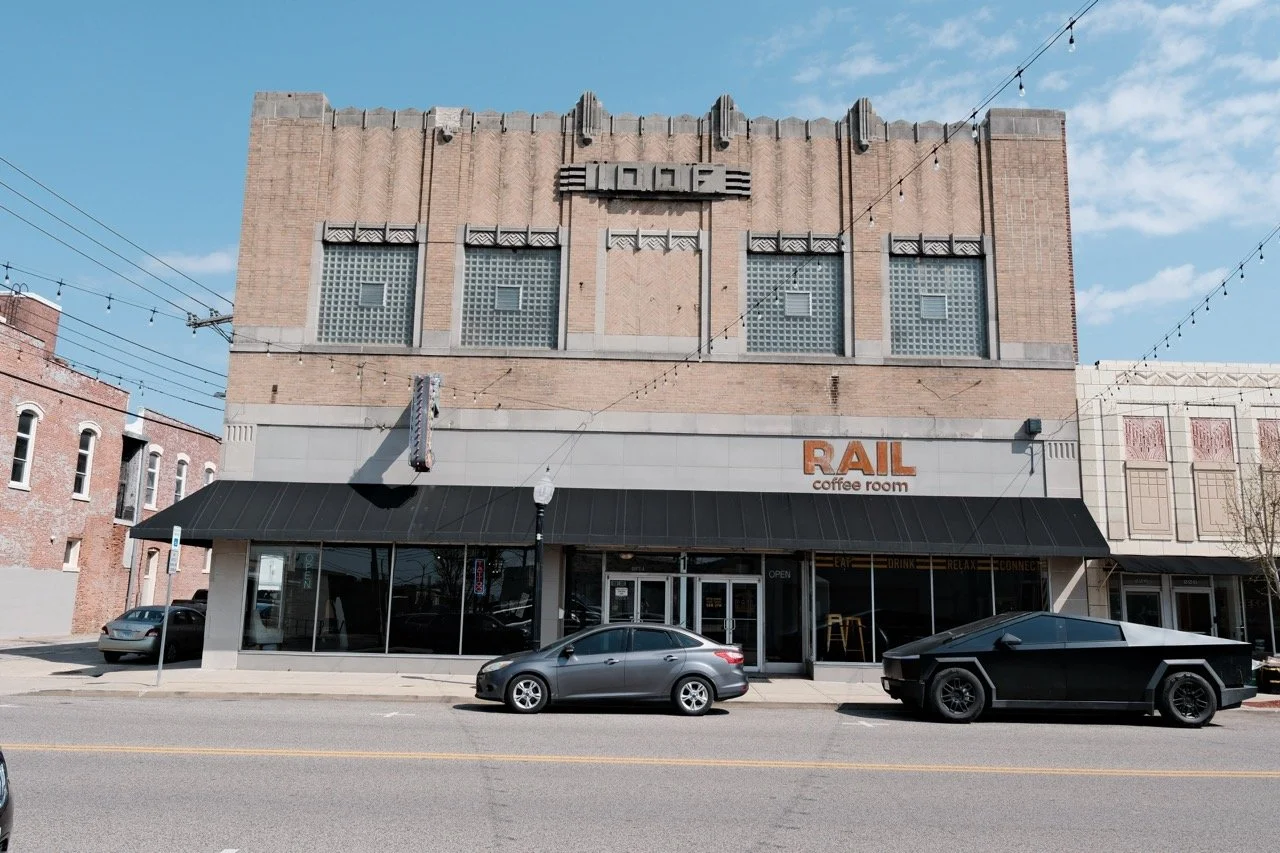
216 East Broadway, 1931
Independent Order of Odd Fellows | Daddyo’s | Boiler Room Speakeasy
History of 216 East Broadway
1894 - Miss Lois Casey Millinery: Thomas Mckleil, blacksmith, 216 E. Broadway alley. (1894 City Directory)
1900-02 - Will J. Blythe, druggist; Odd Fellows' Hail (1900-02 City Directory)
1904 - W.J. Blythe, druggist (1904 City Directory)
1900-1909 - Blythes' Drug Store - The Rexall Store
1906-07 - Blythe's Drug Store, paint; Lois Casey Millinery; John McNeil Blacksmith (in rear)(1906-07 City Directory)
1909 - John Wilmot General Repair Shop
1910
216 ½ - Metropolitan Hall (IOOF) (Archives: 1910 Centralia City Directory)
1922 - Rexall Store, C.F. Greer prop. (Source; 1902 Centralia City Directory)
1930 - Vasel & Vass
1933 - Kroger Grocery 8. Baking Co., No. 145
216 ½ - Centralia Lodge No. 17 Independent Order of Odd Fellows
Architecture
This two-story brick building with Art Deco details presents a contemporary storefront of plate glass and aluminum. A composite material is used below the plate glass windows and to fill the window area above the fabric awning. Plain limestone frames the storefront on the sides and top.
Five window penetrations are evenly spaced across the second floor façade. Each roughly-square window opening rests on a string course of stone and is framed by a stone surround. The sides of these frames are quite plain, but above each window is a stone lintel featuring a chevron motif that is repeated three times above each window. The chevron, a prominent motif of the style, is repeated in the use of a herringbone pattern of the bricks above each window, in the brick fill of the central window penetration (which appears to be original or completed very soon after the building's construction), and in the angled stone forming the decorative top of the parapet.
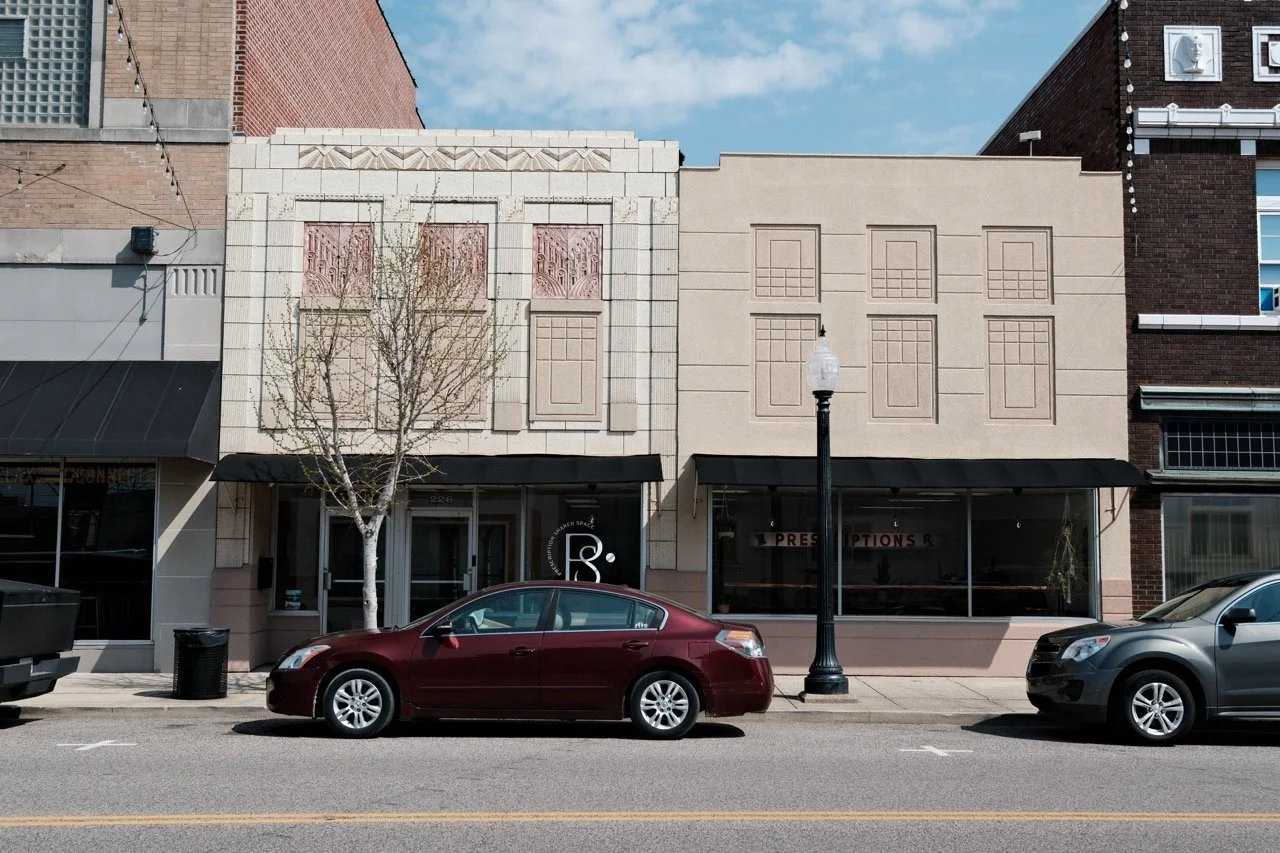
226 East Broadway, ca 1930
Prescription Shared Space
History of 226 East Broadway
1884 - J.W. Danhour groceries/ provisions (1834 City Directory)
1904 - Ru. Birge grocery (1904 City Directory)
1932 - Edmiston-Nichols Shoe & Hosiery Co., Inc. 225 E. Broadway. (Source: 1932 CTHS Sphink Yearbook)
1933 - Walgreens Cut Rate Drugs (Sentinel Ad)
Architecture
This one-story building combines two storefronts, one which substantially maintains its original terra cotta façade dating from around the 1930s, and an adjacent storefront which has recently been renovated using shapes materials and colors which are sympathetic to the historic structure.
The older façade's buff-colored terra cotta includes a polychrome band of chevrons and rosettes that stretches across the storefront just above the windows. Although the building is noted as one story, the Sanborn Maps show a balcony at the front of the building. It appears that three window penetrations once were positioned above the storefront These have been filled with an opaque material presenting a geometric design. Above each of these is a panel of rose-colored terra cotta with stylized organic designs suggesting ferns and flowers. The parapet rises above these panels, with polychrome terra cotta trim that repeats some of the angular and foliate designs used on the lower portions of the building. The newer façade on the adjacent building mimics the shapes and colors of the older building while making clear that it is a contemporary design.
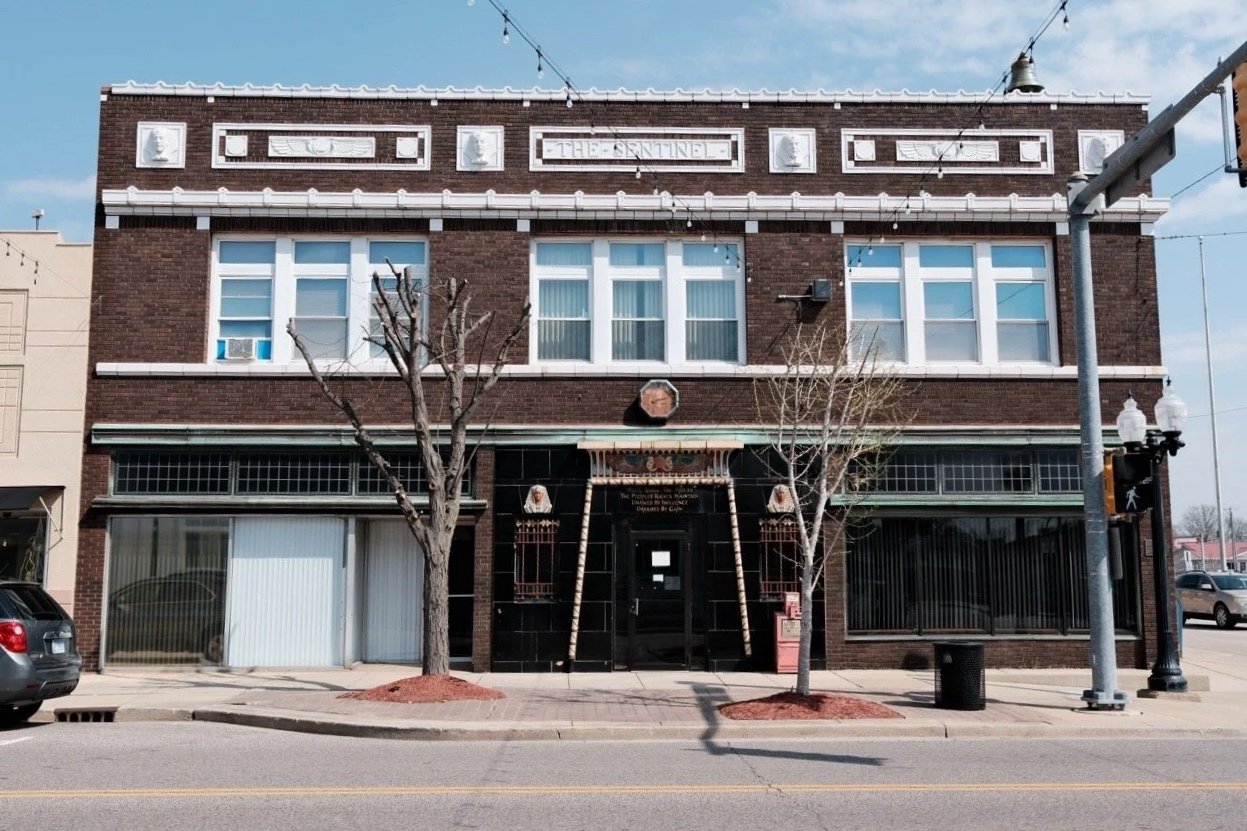
232 East Broadway, ca 1880, 1930
The Sentinel Building | HARGIS No. 200222
History of 232 East Broadway
1898, Aug - Boarding Hall for Brown's business College
1900-02 - Robert J. Birge grocery. (1900-02 City Directory)
1904 - C.L. Fluhrer bakery. (1904 City Directory)
1906-07 - Frank Wilson Confectionery (1906-07 City Directory)
1909 - The College Inn (Beacham's new Place)
1920 - College Inn, Deley Bros. propr. (1920 Centralia City Directory)
1922 - College Inn, Deley Bros. owners, confectionery (Source: 1922 Centralia City Directory)
1923, June - Centralia Businesses welcome Hustlers included College Inn Confectionery
1933
232 ½ - Knights of Columbus Hall
232 ½ - Johnson General Insurance Agency
232 ½ - The Sentinel Library & Club
Architecture
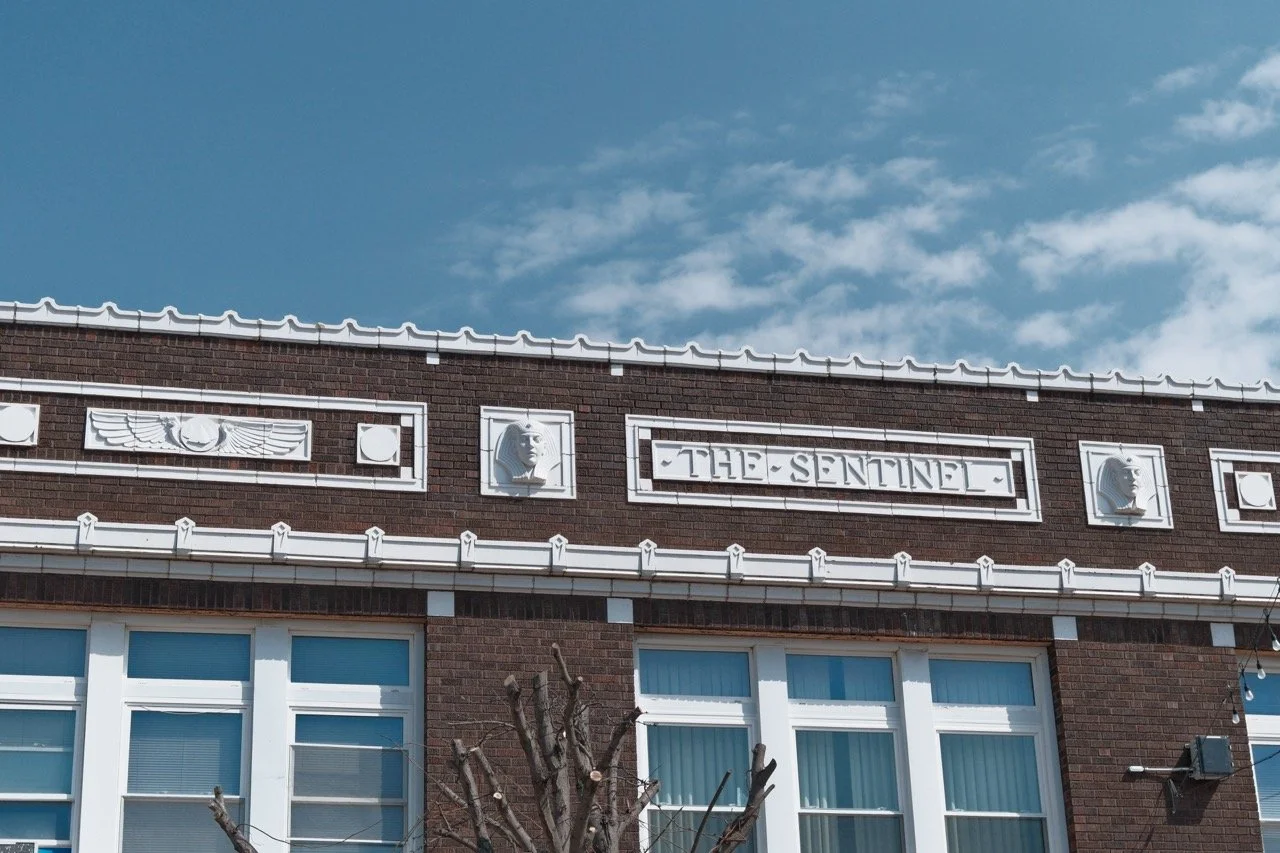
This brown brick commercial structure underwent a transformation in 1930 in preparation for the Centralia Sentinel’s move. The completely new façade was in the Egyptian Revival Style, having white and polychrome terra cotta with Egyptian motifs.
The central entrance is surrounded by black glazed terra cotta with polychrome decorations that suggest the entrance to an ancient Egyptian tomb. Stylized bamboo provides a frame for the doorway, above which is an inscription in gold surmounted by an Egyptian cornice. A representation of the winged sun flanked by two cobras completes the entry. A copper cornice stretches across the building just above the entryway. The remaining terra cotta trim on the building, which includes string courses marking the sills and lintels of the second floor windows and a number of plaques and cartouches on the primary façade, is all in white, but presents Egyptian-inspired reliefs.
The Poplar Street façade carries over the basic design of the main faced, though with fewer terra cotta details. Five bays maintain the two-story plan of the Broadway façade, but the remaining six bays suggest a division into three floors, including a shallow basement.