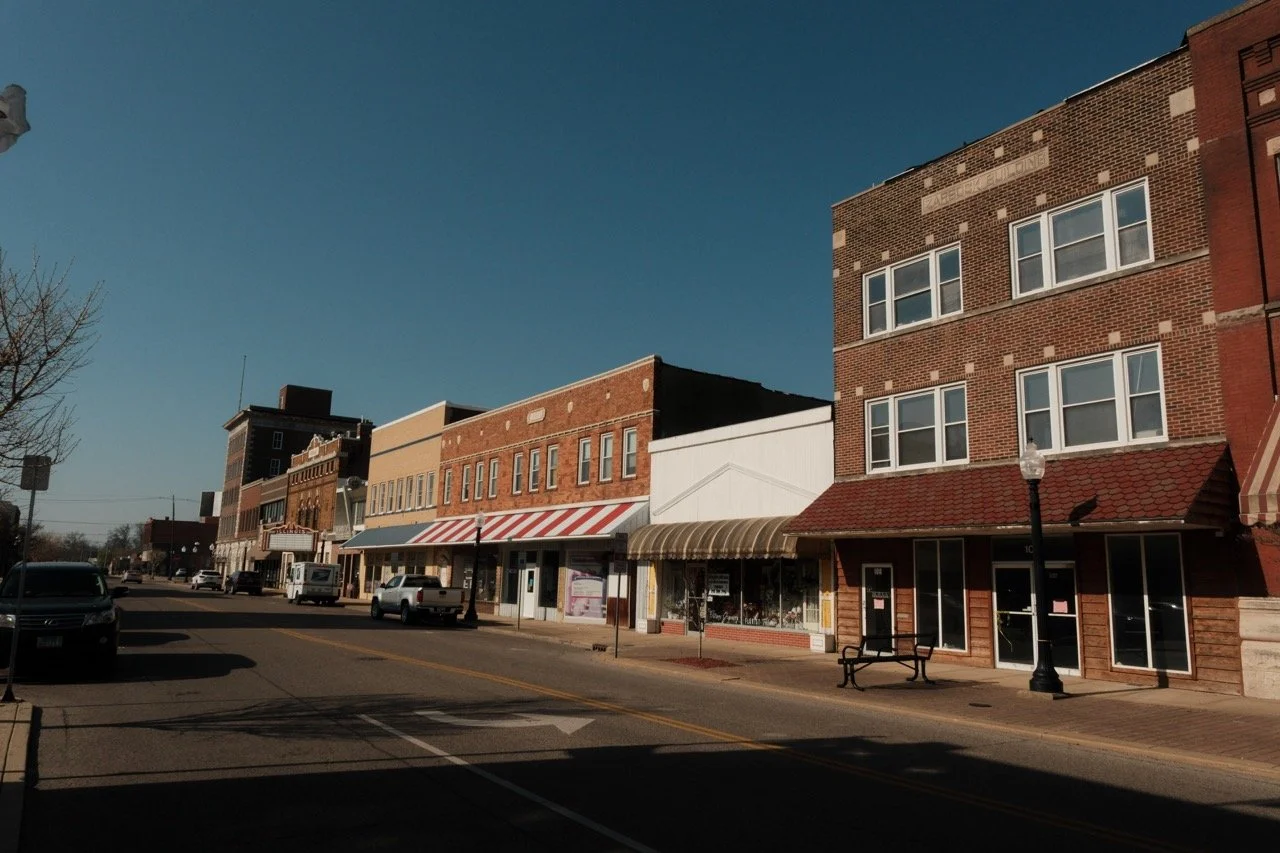
Locust Street
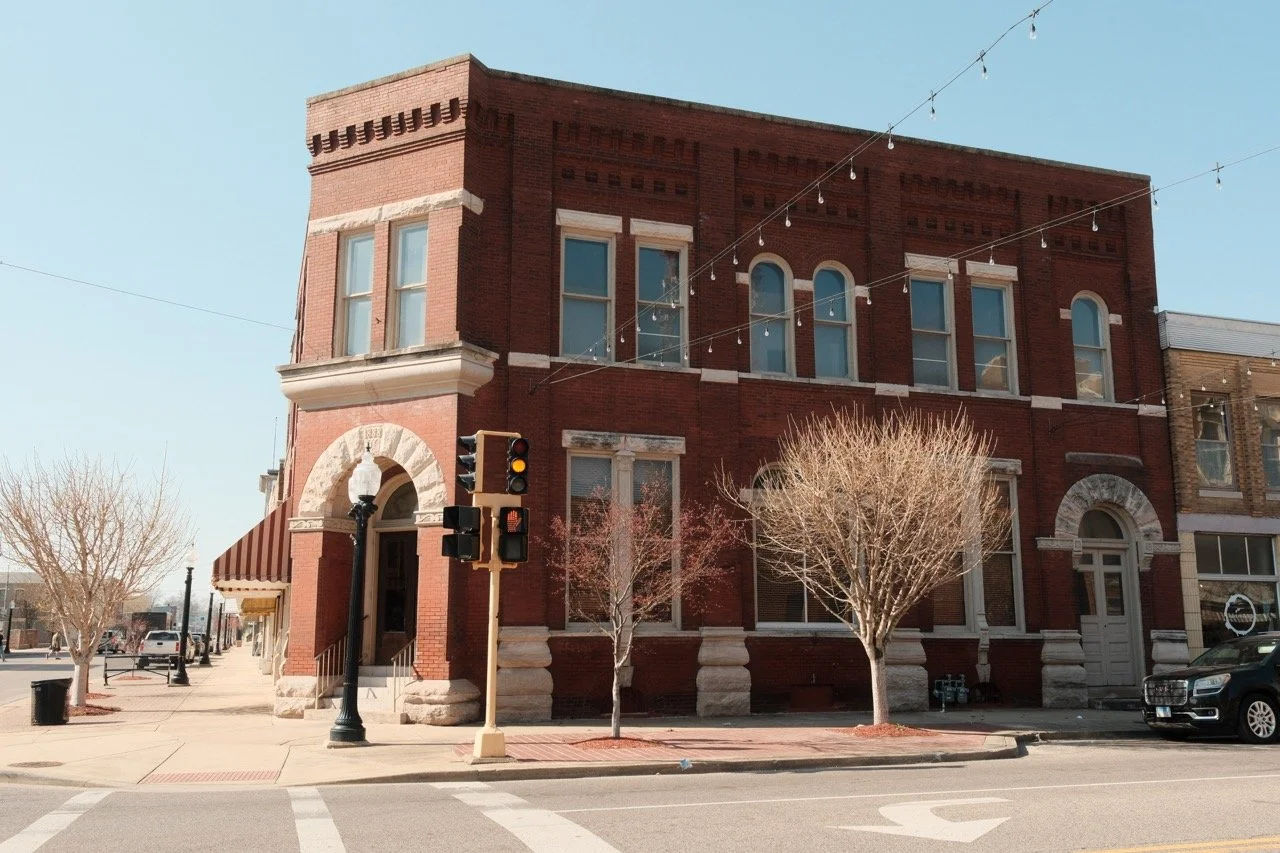
100 South Locust Street, 1880
Old National Bank
From the rusticated stone plinths on which the brick pilasters seem to rest, to the Roman arches surrounded by brick or more rusticated stone, this 1880s building carries the hallmarks of the Romanesque Revival Style common in the late 19th century. Each bay is framed by pilasters with rusticated stone at the base, middle and top. However, the features within each bay vary.
The central bay, facing the corner of Broadway and Locust, presents an entry framed by a Roman arch of rusticated stone. At the second floor, the bay presents two double-hung windows with a single lintel of rusticated stone that stretches across the bay. Above this, a simple parapet with corbeling and machicolations ends in a flat parapet, a design that simplifies the original complex brickwork that decorated the cornice of the building. A single bay along Broadway Street retains the original simple Roman arch and second floor window arrangement.
The original arrangement of windows and doors in the bays along Broadway has been maintained. Two pairs of windows alternate with a plate glass window with a segmental arch and a narrower doorway with a Roman arch of rusticated stone. The second floor on this side alternates pairs of windows identical to those on the second floor Locust Street façade with pairs of windows with Roman arches. The design of the cornice above the main entrance is repeated across all bays of the building.
104 South Locust Street, 1880
HARGIS No. 124334

Originally a two-bay segment of the neighboring Old National Bank, this building has been changed significantly since its construction in 1880. On the first floor, the Roman arches and central pilaster have been removed and replaced with a steel and glass storefront. Above the storefront, the central pilaster rises to the top of the parapet. With the exception of the simplified cornice of brick, the façade at the second floor level is essentially unchanged from the time of construction. A pair of double-hung windows is centered in each bay, with a heavy rusticated stone lintel above each. A string course of stone serves as sills for the windows, and exaggerated machicolations begin above the windows, leading up to a flat parapet wall.
106 South Locust Street, ca 1890, ca 1930
Zarbock Building
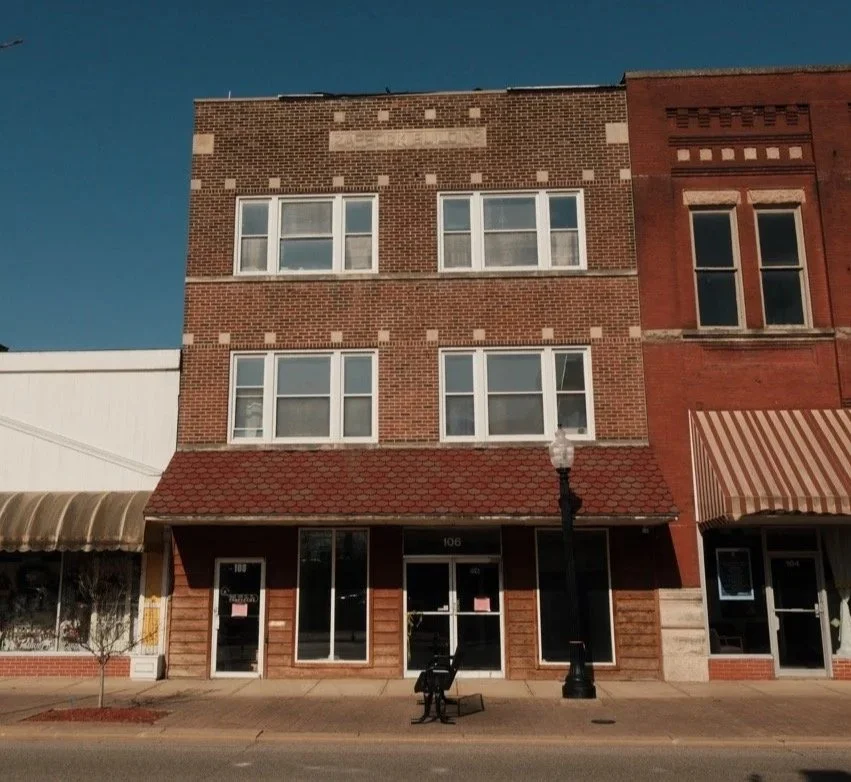
A three-story commercial building of red brick with office or living space above presents two bays of equal size. On the first floor, an asymmetrical arrangement of two windows and two entries provides access to the first floor commercial space and the stairs to the upper floors. A fixed awning of red shingles fills the space between the storefront and the second-floor windows.
Each bay on the upper floors presents a group of three windows: a wide double-hung window flanked by two narrower windows. Although these appear to be contemporary replacements, they conform to the size of the original windows, as indicated by the square stone rosettes that appear above the corner of each window. The building’s parapet is plain, except for the plaque presenting the building's name which, like the window openings below, has four square stone rosettes above it.
112, 118, 120 South Locust Street, ca 1890, 1905
Smith Building
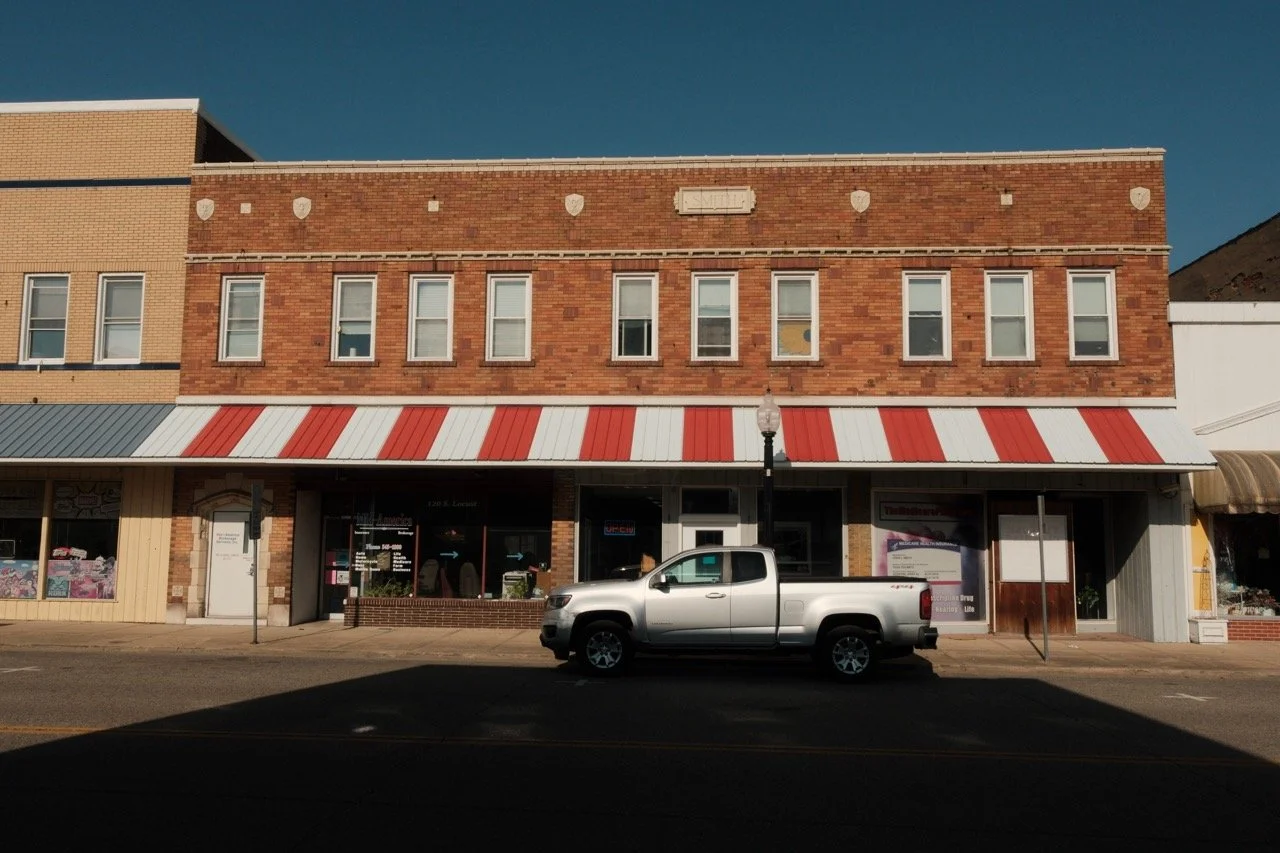
The 1905 façade replacement included variegated orange brick and buff terra cotta accents. The façade can be described as having four bays. The first of these, from the left, is a narrow bay for the entrance to the stairs for access to the second floor. That doorway is of slightly lighter brick than the rest of the building, and the doorway has a terra cotta surround presenting a Tudor arch complete with a hood and rosettes, common features of the style.
The remaining first floor storefronts are divided into three sections, each marked by a brick pilaster with a large terra cotta rosette at its base. Although the storefronts have been substantially replaced by contemporary materials, the division into three parts carries over to the treatment of elements on the second floor. Above the storefronts is a thin string course of terra cotta embossed with a foliate design, five courses of brick, and another course of simple dripstone in terra cotta. Rosettes mark the divisions between the first and second bay. The second floor windows are arranged in four groups: first a single window above the stairway entry, then a group of three centered in each of the remaining three bays. Above the windows is another string course of terra cotta, then an expanse of brick to the top of the parapet. This section of the fagade presents terra cotta shields between each
bay. The center of the three larger bays presents a plaque with the building's name; centered in each of the remaining bays is a small rosette. Coping is of terra cotta.
122-124 Locust Street, ca 1955
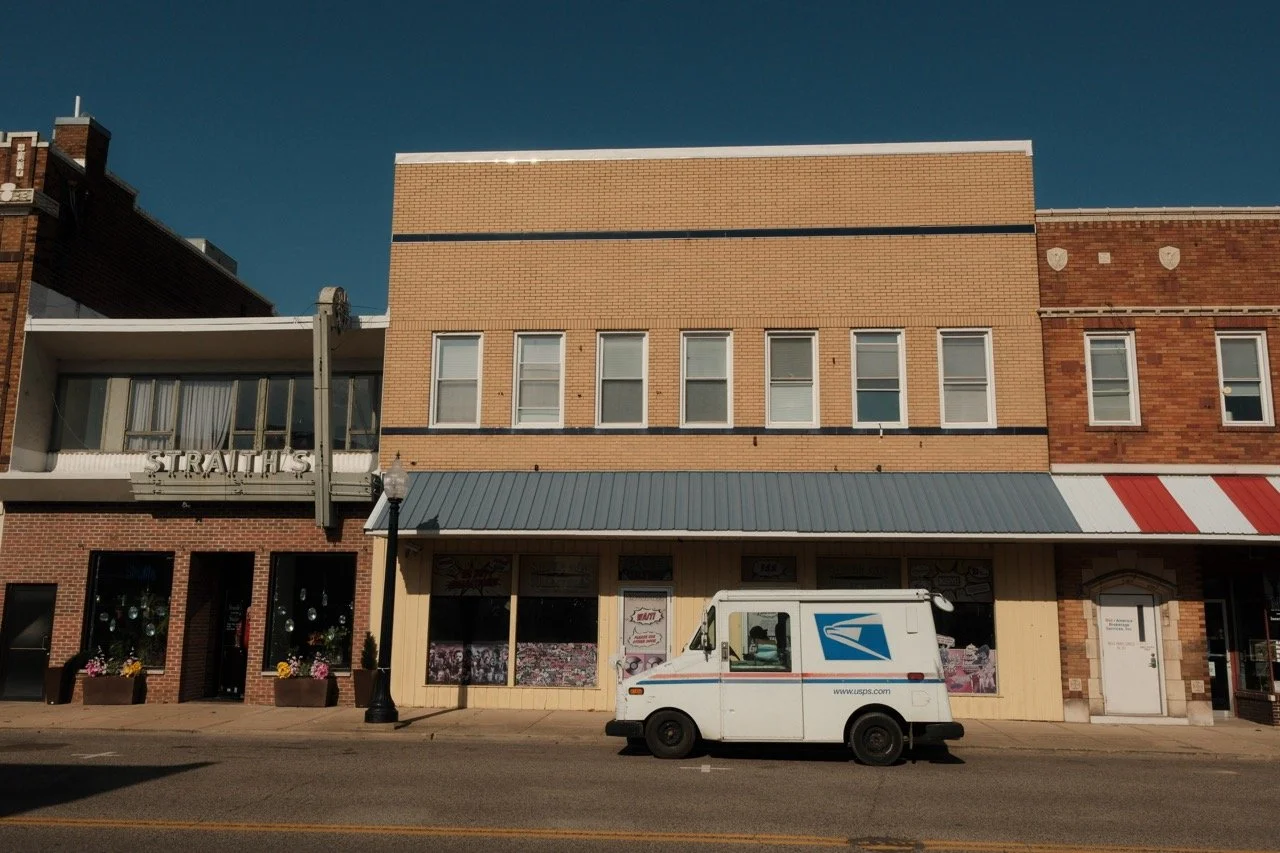
A plain yellow brick two-story commercial structure with blue architectural glass accents and a metal awning. The storefront has been replaced with wooden vertical siding, plate glass and metal and glass doors. The doors to both stores are in the center of the building, with plate glass windows on either side.
Above the metal awning a section of blue architectural glass stretches across the building. A number of panels are missing. The same material is applied in a thin strip beneath the second floor windows, suggesting the traditional use of a string course of stone to serve as sills for the windows. A row of soldiers stretches across the building above the windows, mimicking the architectural glass sill and serving as lintels for the windows. A second band of blue glass is positioned half-way between the tops of the windows and the top of the parapet. The façade is otherwise unadorned
128 South Locust Street, ca 1920
Illinois Theater
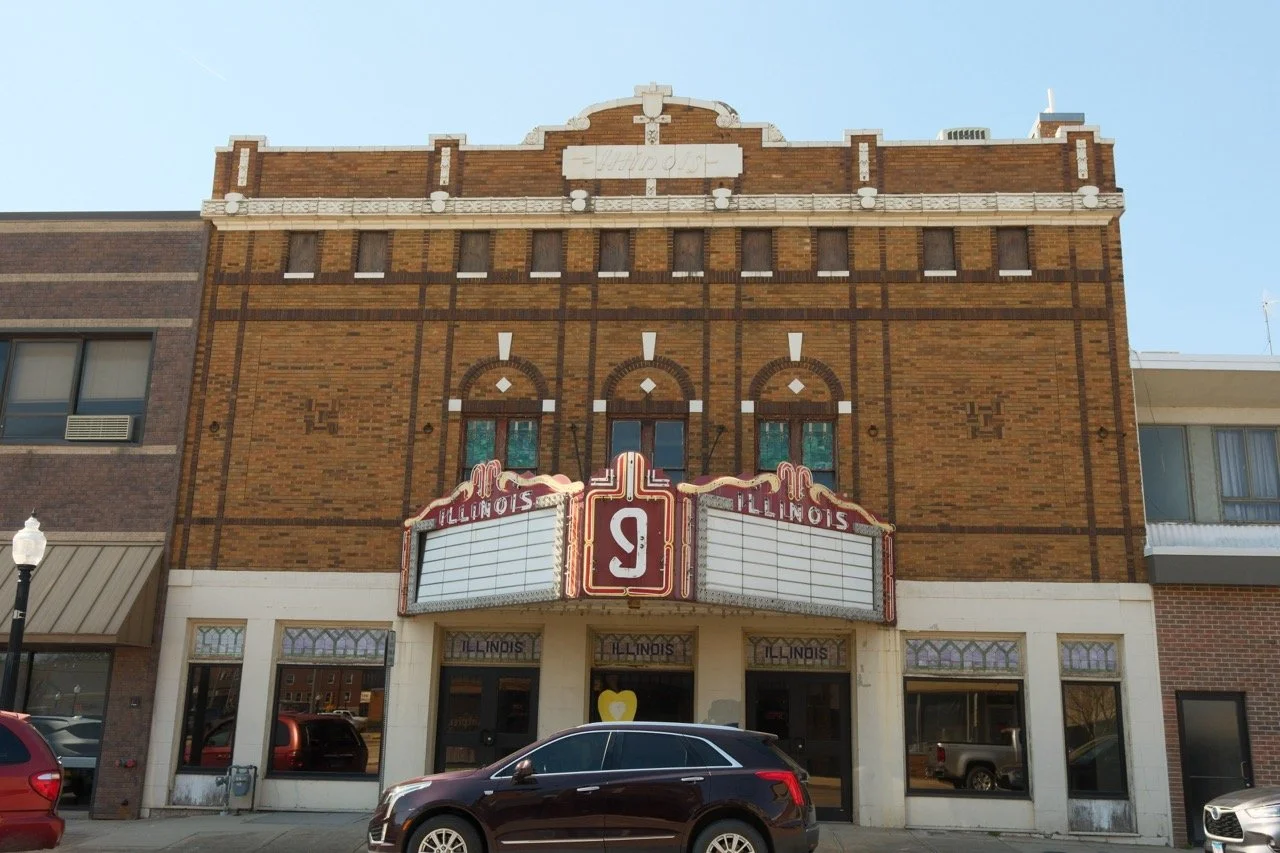
The Illinois Theater was built in the commercial style with terra cotta accents that recall Classical or Renaissance motifs. The terra cotta first floor storefronts have been painted over, and though the original box office and poster frames are gone, the stained glass in the transom windows is the same as seen in a 1944 photo. Brickwork and terra cotta trim about the first floor is intact, and includes the use of darker brown brick to delineate the building’s vertical divisions, provide decorative arches for the three pairs of windows above the marquee and provide a horizontal division between the center and uppermost part of the building. Terra cotta at the building's parapet includes a string course and ornaments at the building's vertical divisions with patterns featuring foliage, fruit and flowers, as well as a plaque with the building's name set beneath a segmental arch framed with rosettes.
130 South Locust Street, ca 1920
126 South Locust Street, 1945
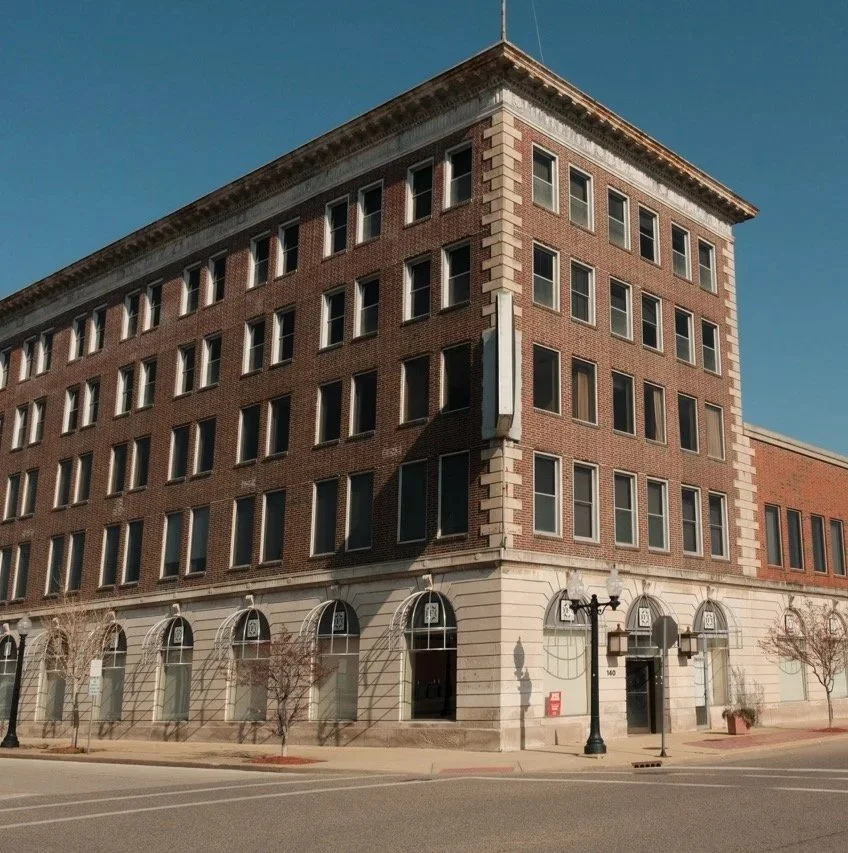
140 South Locust Street, 1920
City National Bank, First National Bank, Magna Bank
HARGIS No. 105140
134 South Locust Street, ca 1920
Typical of the Classical Revival Style, this five-story office building is designed in three horizontal sections. The first floor presents courses of dressed stone with pronounced joints. The evenly-spaced Roman arches at this level each have an oversized key shaped like a scroll that appears to support a string course of ribbed stone periodically punctuated with blank rosettes. This course marks the first division of the building.
In the second division, which includes the top four floors of the building, the primary building material is red brick, while stone is used for quoins at the corners of the building. Pairs of plain rectangular windows are evenly spaced across the upper floors, some of which have been replaced by contemporary fixed or double-hung windows. The last division of the building is the cornice, which repeats on a larger scale the course of ribbed stone with rosettes between the first and second floors. Here, the height of that course allows it to serve as an entablature to the classically-inspired projecting cornice featuring dentils and scrolled brackets.
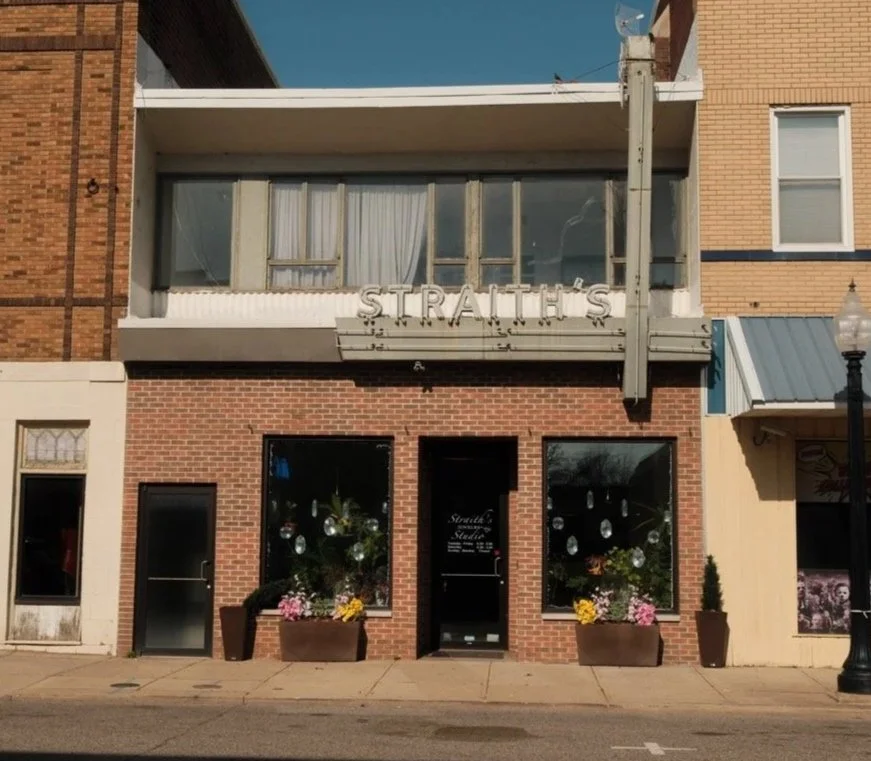
As a 1945 building in the International Style, Straith’s Jewelry maintains its distinctive aluminum and neon sign and line of windows with slender metal frames stretching across the second floor. The storefront, however, has been covered with contemporary brick, its expanse of windows replaced by an entry flanked by two plate glass windows.
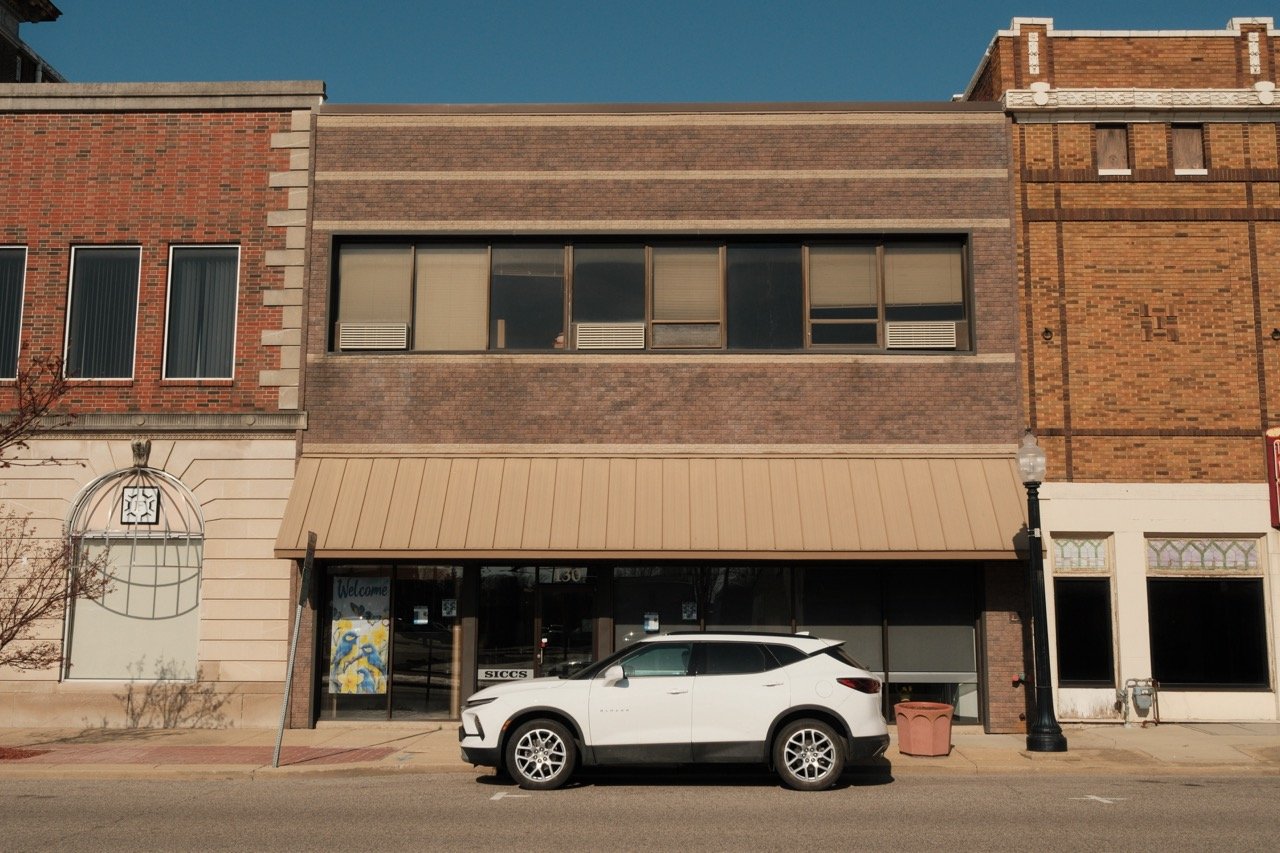
A simple contemporary façade of dark brick, the first floor storefront of glass with dark metal trim is capped by a metal awning which ends at a string course of stone at the level of the second floor. Additional stone courses run below and above a ribbon of second floor windows, and just below the coping on the parapet.
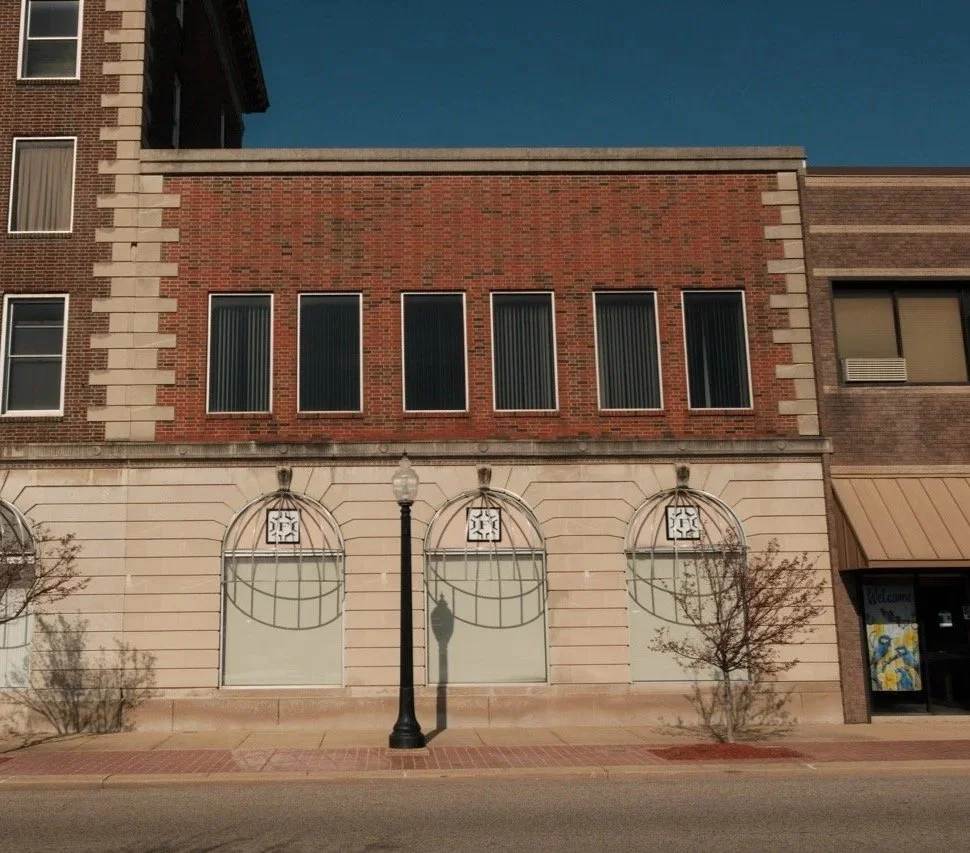
Previously presenting as a single building with its neighbor to the north, this building has had its fagade redone recently to connect it visually to the five-story bank building to its south. The first floor presents courses of dressed stone with pronounced joints, capped by a string course of ribbed stone periodically punctuated with blank rosettes. This course separates the first from the second floor. At this level, the heavy stone of the first floor gives way to quoins at the building's corners, with red brick becoming the primary building material. The six evenly-spaced windows are contemporary fixed windows, and the parapet is finished with two courses of stone.