
Abraham Lincoln in Centralia: September 16, 1858
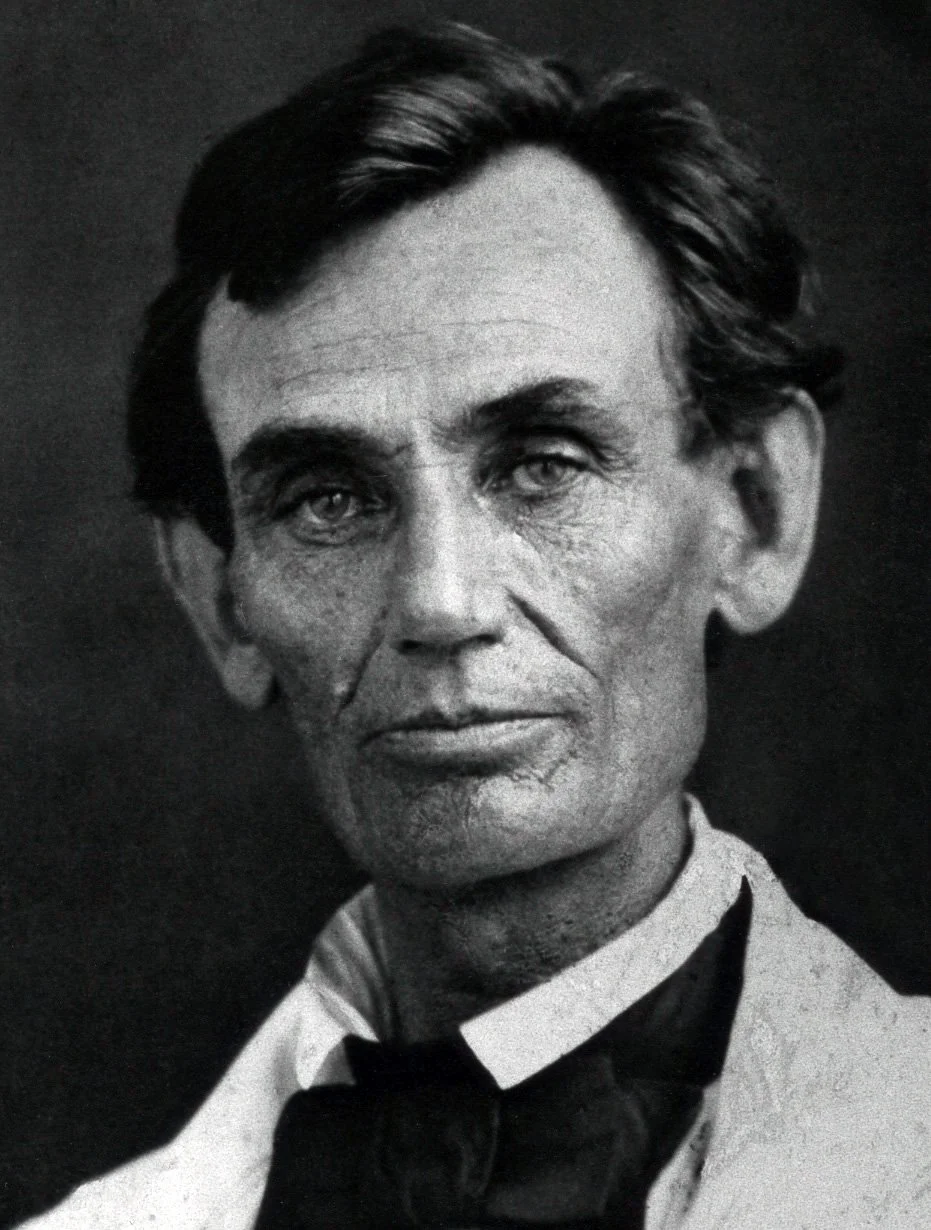
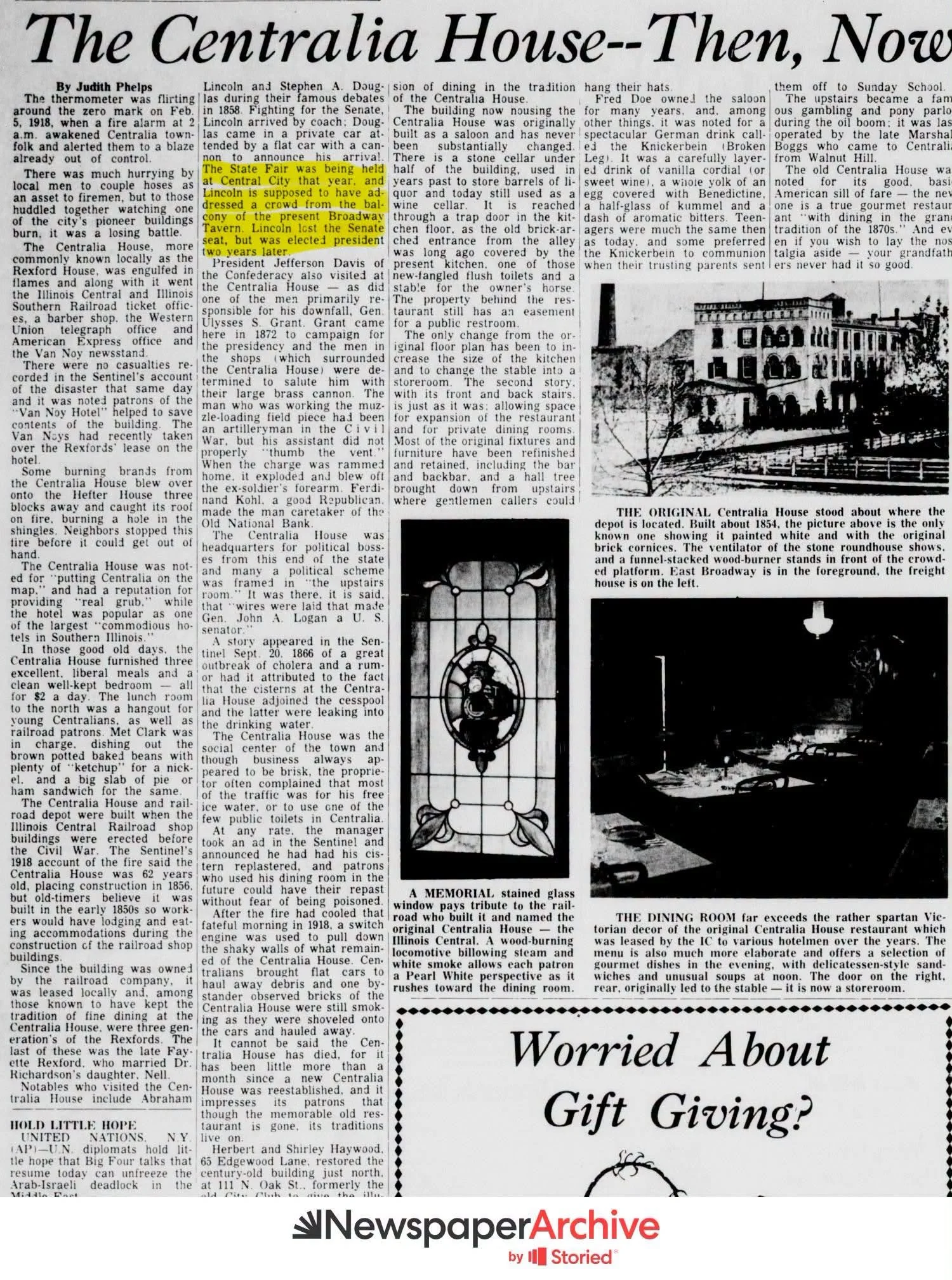
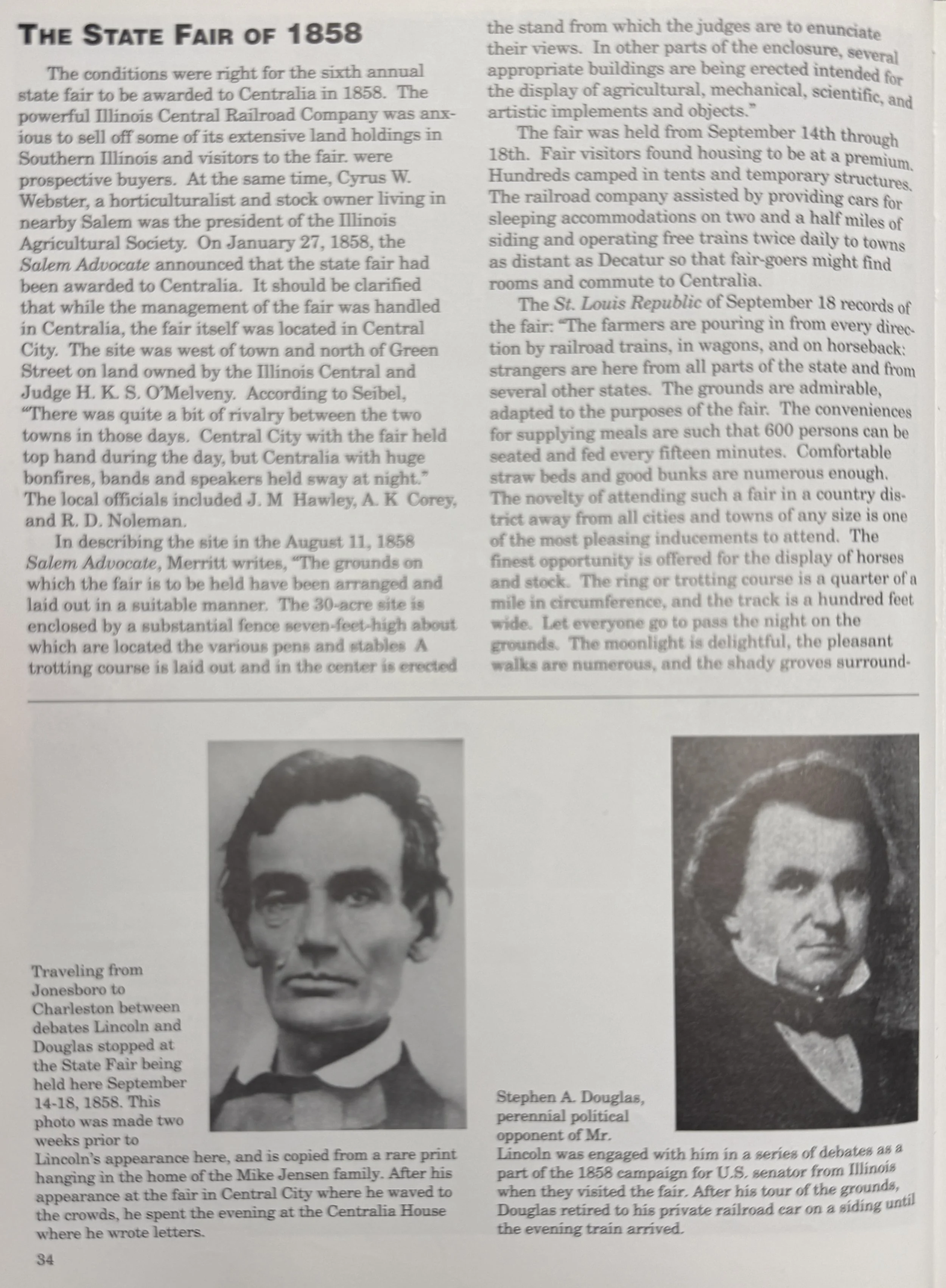
One-hundred and sixty-eight years ago, a 49-year-old Abraham Lincoln attended the Illinois State Fair, arriving in Centralia by passenger railcar at 12:00pm on Thursday, September 16, 1858, and stopped at Centralia House Restaurant.
The Illinois State Fair was held on 30 acres of land in Central City, next to the Illinois Central Railroad, and north of Green Street. This land is near the current municipal water treatment plant.
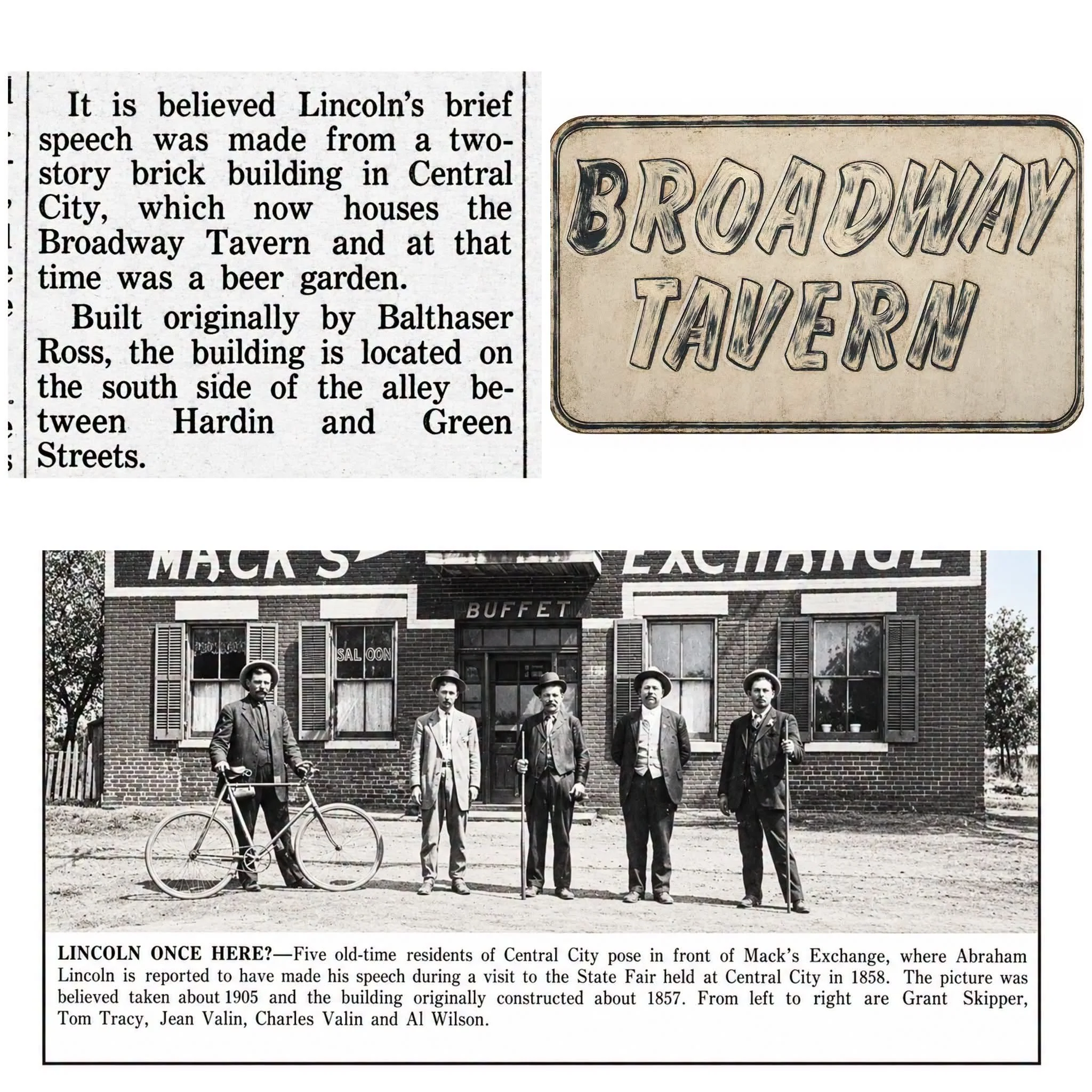
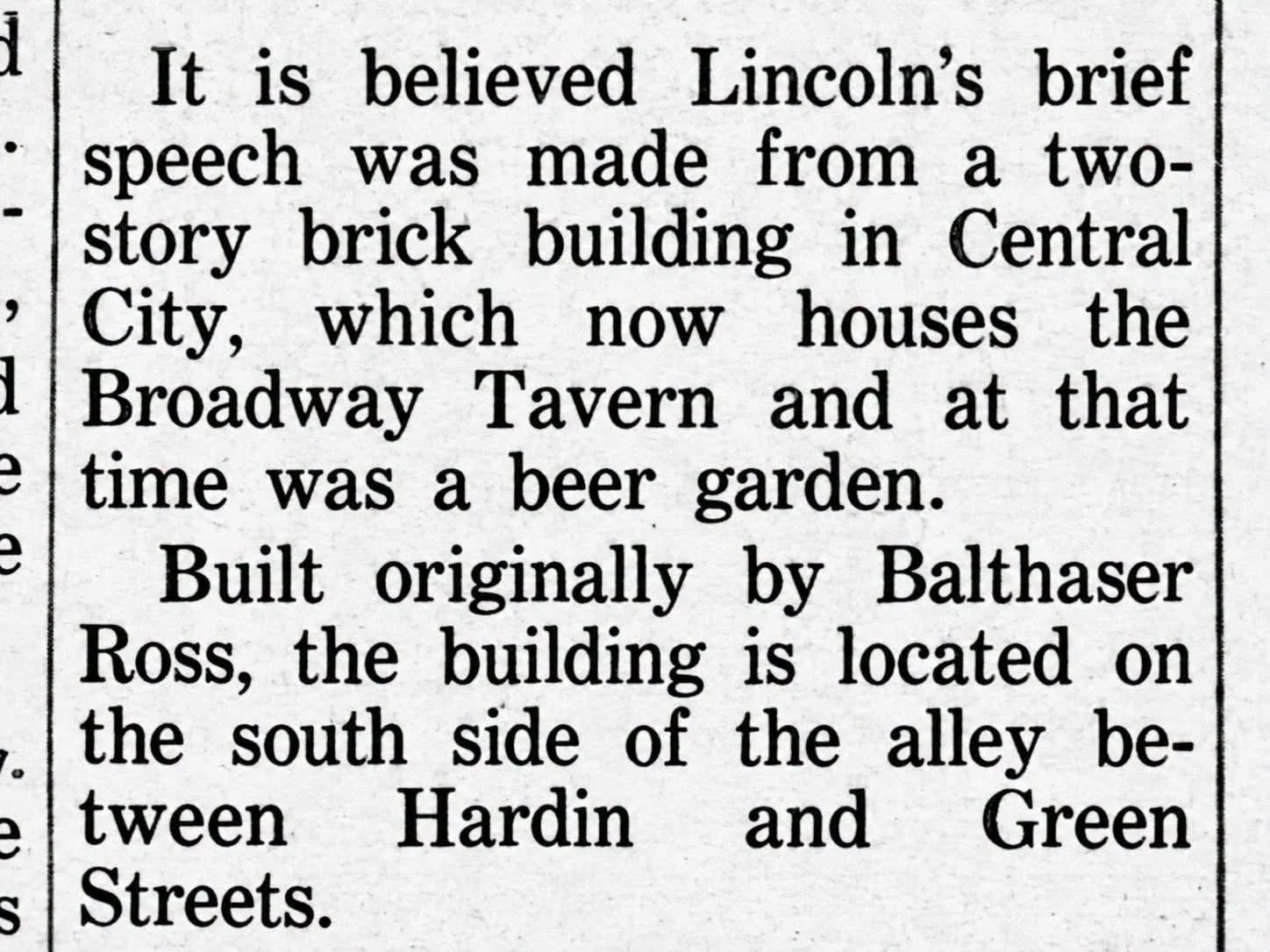
According to an article in the Sentinel newspaper, it is believed that Lincoln also made a brief speech from a two-story brick building in Central City located on the south side of an alley between Hardin and Green Streets - this is now the Broadway Tavern - and at that time was a beer garden.
Lincoln was invited to Centralia by Simeon Francis, editor of the Sangamo Journal, later the Illinois Journal, Springfield's leading Whig paper. Lincoln was a frequent contributor to the editorial pages in the 1830s. Fun fact, the Francis home in Springfield is where the Abraham Lincoln Presidential Library is located today. Also, Lincoln and Mary Todd renewed their courtship at the Francis home, as Mary was friends with Eliza, Simeon's wife.
https://papersofabrahamlincoln.org/documents/D210911
Political meetings were often scheduled with fairs and festivities to ensure a large audience. Event tents or circus tents also provided a public space for large crowds to congregate.
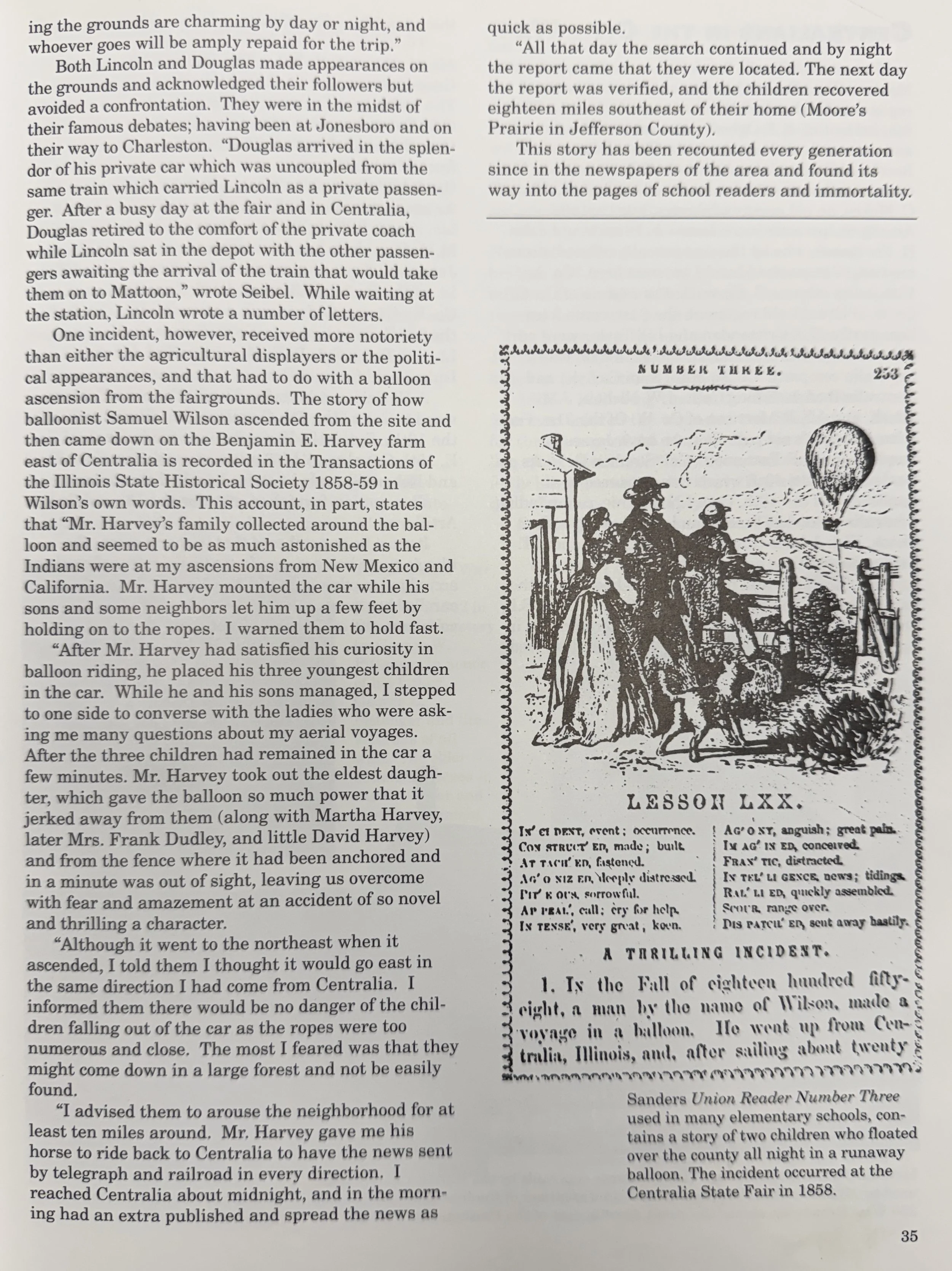
In 1858, Lincoln was the Illinois Republican candidate for US Senate and ran against Stephen Douglas, Democratic incumbent. They held seven official debates from August to October. The debates were designed to generate publicity—some of the first examples of what would be characterized as "media events".
“Never in American history had there been widespread newspaper coverage of political debates. New technology had become available in recent years: railroad networks, the electric telegraph using Morse code, and Pitman shorthand writing - now known as stenographers - to report complete texts of each debate; thanks to the new railroads, the debates were not hard to reach from Chicago.”
“Douglas, as the Democratic candidate, held that the decision should be made by the white residents of the new states rather than by the federal government. Lincoln argued against the expansion of slavery into new states, yet stressed that he was not advocating its abolition where it already existed.”
Lincoln lost - and Douglas was re-elected by the Illinois General Assembly in a very close vote 54–46
Lincoln's party had won the popular vote in what historian Allen Guelzo labels "an upset, not just in terms of those voting statistics", but in making Lincoln a national figure and laying the groundwork for his 1860 presidential campaign.
Along with newspapers, pamphlets of Lincoln’s speeches were printed, and Lincoln also edited the texts of all the debates and had them published in a book.The popularity of the printed materials and the book helped Lincoln receive the Republican Party's nomination for president at the 1860 Republican National Convention in Chicago.
While in Centralia Lincoln wrote three letters, with varying reports of location, either using the Illinois Central Railroad Company Superintendent’s Office, because of the stationery on one of the letters, or while staying at Centralia House.
To Joseph Gillespie sharing news that the established New York Americans, or Know Nothing Party, failed to unite with the Republican party, and will nominate separate candidates. Two days after this letter, the Americans and Republicans united to delegate Gillespie for Illinois Senate.
https://papersofabrahamlincoln.org/documents/D206775
To Elihu Benjamin Washburne recounting the Jonesborough debate where Douglas alleged Washburne to be “on different ground” from Lincoln. He says, “if true, burn this without answering it,” if untrue write a letter for Lincoln to contradict Douglas.
https://papersofabrahamlincoln.org/documents/D201108
To Martin Sweet also recounting the Jonesborough debate where Lincoln may have said something disparaging and hopes it doesn’t end up in the newspapers from the “villainous reporters Douglas has with him.” It is reported that Lincoln said Sweet was “sneaking about” when he was standing on the platform behind Lincoln.
https://papersofabrahamlincoln.org/documents/D201107
“The State Fair of 1858.” Centralia: A Pictorial History. George E. Ross. 2001, 2nd Ed. Page 34-35.
“The Centralia House, Then-Now.” Centralia Morning Sentinel. Judith Phelps. Unknown date of publication.
See also: https://en.wikipedia.org/wiki/Lincoln%E2%80%93Douglas_debates
